POS displays are among the most important tools in brick-and-mortar retail—and they represent a key segment of the printing industry. However, digital processes and changes in procurement have fundamentally transformed their development and production. Industry insiders share their insights.
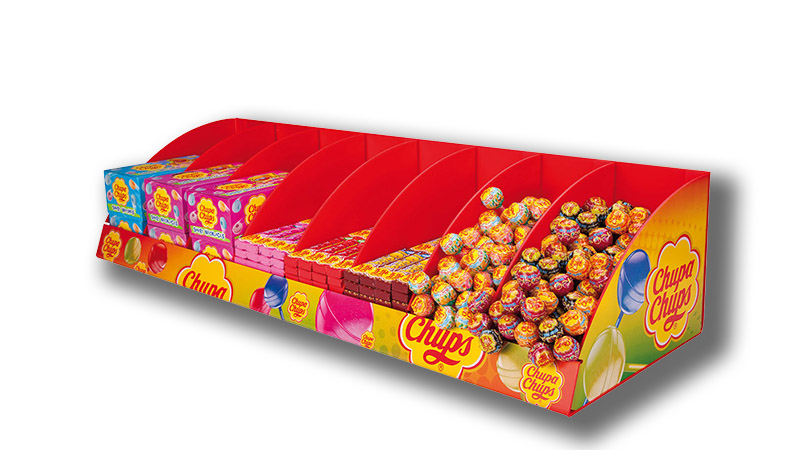
Counter displays are crucial for sales at the point of sale. Photo: VKF Renzel.
POS displays are indispensable in brick-and-mortar retail for making products visible and generating impulse purchases. The term covers all presentation systems placed directly at the point of sale, such as overhead hangers, freestanding displays, counter displays, and floor displays.
These can be made of cardboard, solid board, corrugated cardboard, plastic, metal, or hybrid materials. They are particularly common in home improvement stores, discount stores, and grocery stores, where they are used for product display, brand promotion, and conveying information.
POS displays are a matter of experience
“The production of POS displays requires a great deal of specialized knowledge,” says Uwe Stemmler, managing director of Stemmler Display Group GmbH & Co. KG. “Brands and retailers therefore typically turn to companies with experience in this field.”
While some online print shops do offer standardized POS materials such as ceiling hangers or small sales bins, developing or modifying a display from scratch requires a great deal of expertise. “This ranges from details regarding bleed and adhesive allowances to the load-bearing capacity of certain materials,” explains Stemmler. “Added to this are issues of structural integrity and stability. After all, a POS display fully loaded with merchandise can weigh several hundred pounds.”
What’s striking is that the quality of inquiries has changed recently. “About 10 years ago, roughly 80% of development orders came from advertising agencies. Today, startups and marketing departments mostly commission POS materials themselves. It often becomes clear quite quickly that they have very little expertise in printing.”
“Just gathering the key figures for a rough estimate can turn into an intensive brainstorming session on the basics,” Stemmler says, sounding exasperated. But the exact opposite is also becoming more common these days: “With these inquiries, we receive very detailed sketches created with the help of AI, which make communication much easier.”
Trends in Merchandise Displays
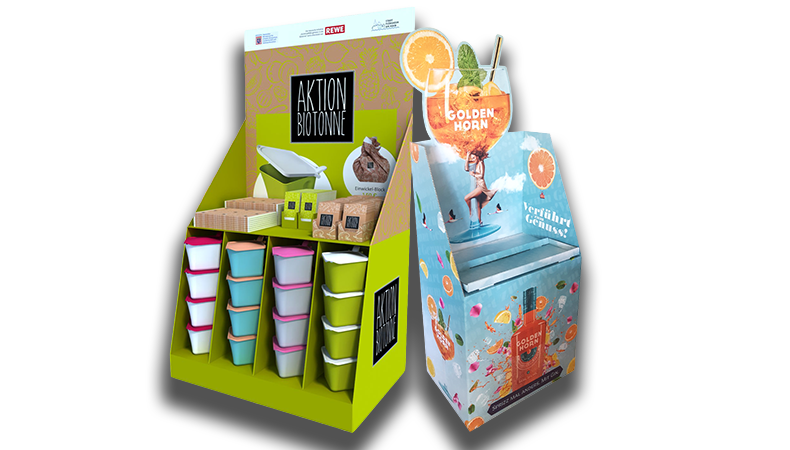
POS displays are used to interact directly with shoppers and prospective customers, so they are highly dependent on trends: “Today, displays are no longer just short-term promotional tools; they are increasingly viewed as long-lasting, brand-building presentation solutions. Consequently, the demands on quality, functionality, and design are rising.”
“A clear trend is the shift toward more durable and higher-quality materials. In addition to traditional materials, recycled plastics, metals, and wood, in particular, are becoming increasingly important,” says Joachim Ostendorf, managing director of VKF Renzel GmbH.
“Today, our customers are making much more specific requests for resource-efficient materials, recyclable designs, reduced material usage, and efficient logistics concepts. Sustainability is no longer just an additional consideration; in many projects, it has become an integral part of the development process.”
Uwe Stemmler has observed something similar: “In the past, customers were primarily concerned with using POS displays that appeared eco-friendly and ‘green.’ In reality, however, these solutions weren’t always truly sustainable. That has changed over the past two or three years: We now frequently receive development requests that include very clear specifications regarding materials and recyclability.”
“Some years, there are real trends here,” he recalls, “such as oval and elliptical shapes, or displays that are deliberately made from plain brown cardboard, often with minimalist printing.”
Designing and Producing POS Displays
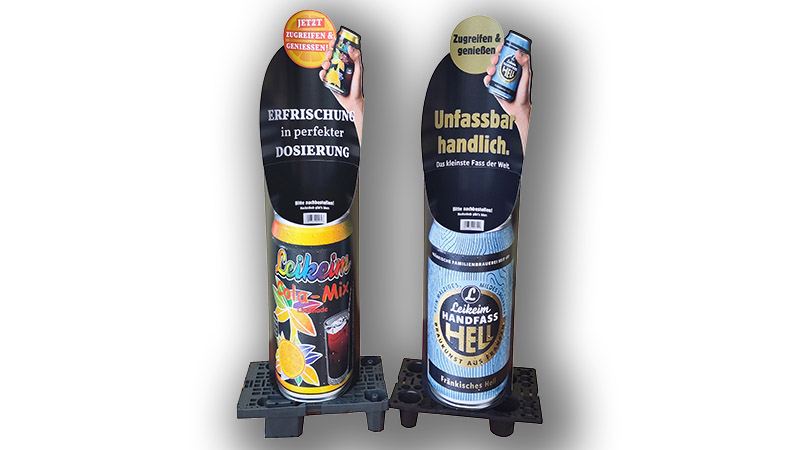
Retailers and brands request POS displays in a wide range of batch sizes: these can range from just a few units to several thousand. “We produce single pieces and small runs of up to about 20 units in collaboration with a prototyper; this is largely done by hand,” explains Stemmler. “For runs of up to about 500 units, we rely on digital printing and digital cutting tables; for larger runs, we typically use offset printing and die-cutting.”
So while production at the Stemmler Display Group is already highly automated, the design process still requires a great deal of (digital) manual work. Stemmler: “There still isn’t any good software for developing new displays. Skilled workers are scarce because training programs no longer meet the demand. We’ve had very good experiences with semi-skilled architects and engineers.”
VKF Renzel also laments the shortage of skilled workers: “Qualified specialists are hard to find, especially in areas where technical expertise, creativity, and hands-on production experience come together.”
The company has therefore strategically consolidated its development expertise within the group and operates in project teams that include, for example, technical drafters and 3D designers, as well as prototype construction and 3D printing specialists.
“Modern software has made development significantly more efficient in many areas. 3D visualization, digital design, and faster prototyping processes help us bring ideas to life sooner, evaluate variants more quickly, and shorten development times. Software is an important tool today—but it does not replace the experience and expertise of a strong development team,” said Ostendorf.
Changes to POS Display Requirements
As recently as the turn of the millennium, in-store POS displays were primarily set up by decorators or specially trained sales staff. Today, this task is often handled by sales staff—especially in the grocery industry—and sometimes by the brand’s sales representatives.
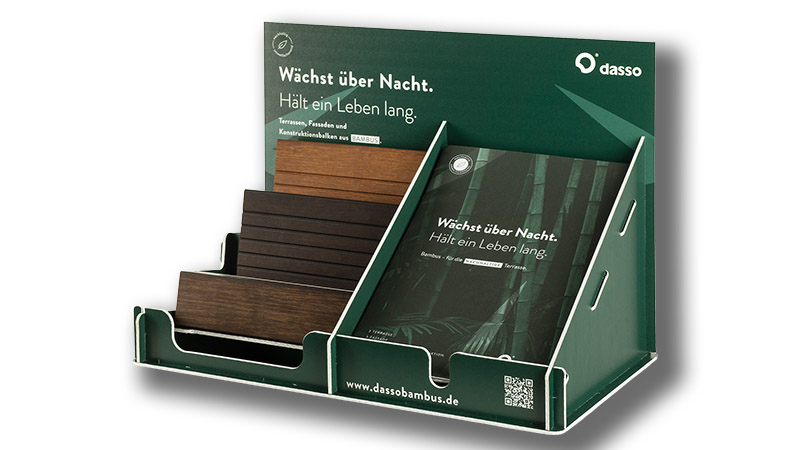
As a result, manufacturers are increasingly delivering large POS displays—as well as small counter displays—to retail locations already fully stocked and set up. However, to ensure that these displays can be transported safely and are not damaged in transit, additional protective measures—such as protective covers or packaging—often need to be incorporated into the design.
“The requirements for POS displays have changed not only in terms of design, printing, and finishing, but also beyond that: assembly, service life, and recycling are just as important,” Stemmler emphasizes.
Ostendorf also points out another aspect: “We’re seeing a clear trend toward hybrid and digital POS. Displays are increasingly being equipped with digital interfaces—such as monitors, interactive elements, or NFC-based communication.”
Conclusion: The POS market is undergoing change
Today, the production of modern POS displays is a complex process that combines creativity, technology, logistics, and sustainability. As a result, these services are usually provided by highly specialized companies.
For digital printing companies that specialize in large-format printing and signage, the barriers to entering this market are relatively high, which is why partnerships with established players are a logical choice.
Discover the latest content on substrates