The digital printing industry faces a critical challenge: striking a balance between high print quality and sustainability. Direct-to-film (DTF) printing technology for apparel has gained significant popularity in recent years. But how sustainable is this method really?
When it comes to printing merchandise, workwear, and T-shirts in small batches, there seems to be only one technology that’s relevant in digital printing right now: DTF. But is it also sustainable? This article examines the question from various angles.
“DTF undoubtedly offers many advantages,” says Andree Bölkow, managing director of easy inks GmbH. His company was one of the first in Europe to manufacture water-based DTF inks locally and offer compatible DTF film and transfer adhesives. “For starters, you can often continue using existing printers for DTF,” explains Bölkow. “So no new hardware is needed, which conserves resources. Because DTF also works well on all standard fabrics, most print service providers only need a single system for apparel printing.”
“However, it’s important to realize that, compared to screen and offset printing presses, for example, many digital printing systems are designed for a relatively short service life, so that puts things into perspective a bit,” he points out. “On the other hand, they consume significantly less energy per printed product than a high-productivity analog printing press that is not operating at full capacity.”

DTF is also suitable for sportswear, but especially for natural fibers. Photo: Sonja Angerer / KI
Use of Chemicals and Water at DTF
As a digital printing technology, DTF offers similar advantages to digital sublimation transfer printing and DTG (direct-to-garment) when it comes to water and chemical usage. This is because no print templates are required. This not only minimizes material usage but also reduces the need for hazardous chemicals and solvents, such as those required for screen coating and stripping. As a result, employees are exposed to fewer health risks.
As an added bonus, digital printing makes it easy to produce small batches and personalized clothing. In an optimized production process, there is also very little waste from test prints or misprints. Furthermore, there is no need to build up large inventories of textiles that may not find buyers.
This is because more and more companies are producing clothing “on demand”—that is, only after a customer places an order. For time-related reasons alone, this usually takes place close to the customer—that is, in Southern and Eastern Europe rather than in the Far East. This reduces CO2 emissions from transportation. In addition, valuable jobs are created in industry and manufacturing, which strengthens local communities: this, too, is part of sustainability.
Compared to “traditional” textile roll-to-roll printing—whether digital or analog—DTF, as well as DTG and sublimation printing, require significantly less water. This is because the clothing isn’t cleaned of any excess ink at the manufacturer’s facility. The end customer takes care of that when they wash their new shirt along with the rest of their dirty laundry.
“As a water-based ink, DTF ink also contains no volatile solvents that could be hazardous to health,” explains Bölkow. “However, DTF ink also contains many chemicals, such as agents designed to prevent settling, biocides, and, of course, dyes. Like any digital printing ink, DTF ink should be used with care and disposed of responsibly.”
Unlike DTG and sublimation printing, which are typically limited to synthetic fibers, DTF printing works very well on clothing made of cotton and other natural fibers. It doesn’t even require a primer, as is usually the case with DTG. Furthermore, DTF can be used to decorate clothing made from natural fibers without introducing additional microplastics into the environment.

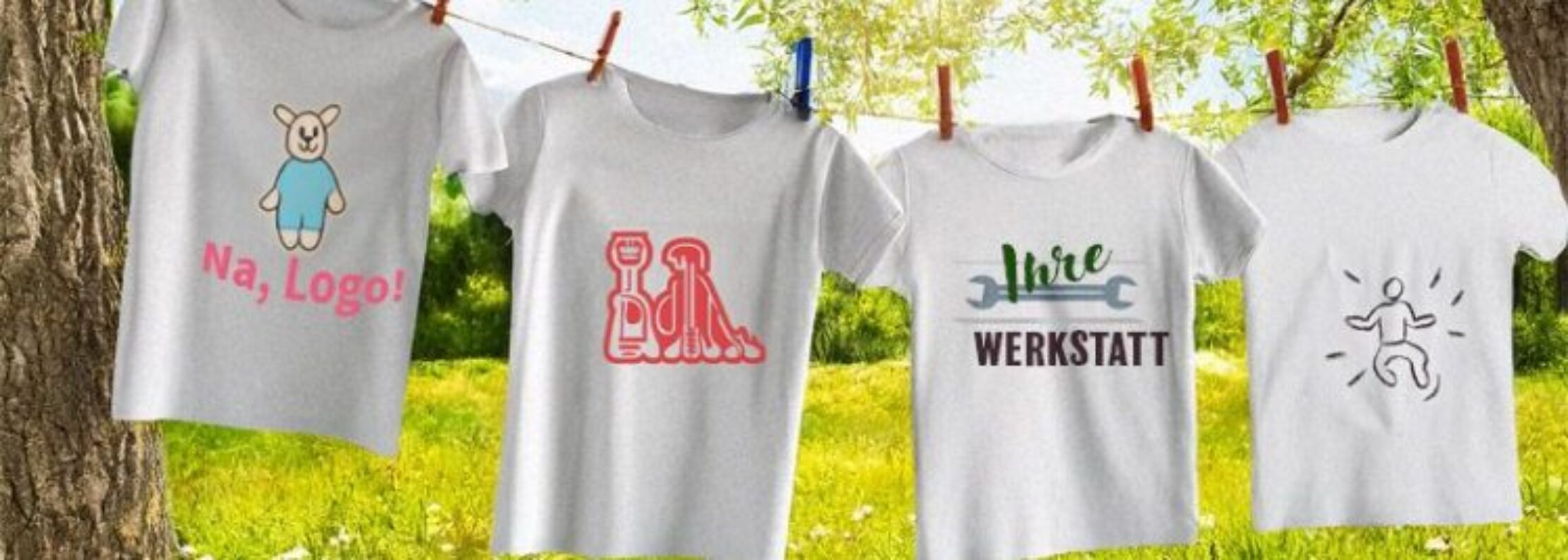
Thanks to DTF, T-shirts can be produced locally and on demand, which is more sustainable than conventional manufacturing. Photo: Sonja Angerer / AI
DTF and Trash
As a transfer process, DTF—much like sublimation printing—generates a significant amount of waste. However, DTF films are usually made of PET, which can be easily recycled. This does, however, require that the processor collect the waste by material type. “Nationwide, regulations for the disposal of production and commercial waste vary greatly,” Bölkow laments. “As a result, it cannot be ruled out that even carefully collected DTF film will ultimately end up in a waste-to-energy plant. That, of course, isn’t very sustainable. Unfortunately, DTF cannot be described as an ideal partner for sustainability either.”
With DTF, refill systems using bottles are common, resulting in less plastic waste and less electronic waste from ink chips compared to the cartridges typically used in wide-format printing. However, some manufacturers have recently begun offering DTF printers that use cartridges as well.
Dream Partner or Nightmare DTF?
As a digital printing process, DTF can play a significant role in reducing the fashion industry’s negative impact on the environment. According to the European Parliament, each EU citizen generates 270 kilograms of CO2 emissions annually to meet their clothing needs. This makes the textile industry one of the sectors with the largest ecological footprint worldwide.
As a process that can be used in a variety of ways in garment printing and enables the production of small batches on-site according to customer requests, DTF offers many advantages when it comes to greener production.
Nor should we underestimate the positive impact that DTF can have on local communities. The process enables local artists and businesses to produce customized products featuring newly created or traditional designs with minimal effort.
However, the disposal of waste generated (also) during DTF printing remains a problem. This also depends on the user. By optimizing processes, making effective use of film material, and sorting production waste by type, users can significantly help minimize the negative environmental impact of DTF.
So, it’s fair to say that DTF is currently neither a dream partner nor a nightmare when it comes to sustainability. It’s up to everyone—hardware developers, consumables manufacturers, and users—to ensure that the negative environmental impacts of DTF continue to decrease.