Every print job requires finishing, making clean cutting vital to prevent material waste. Print service providers must navigate various tools, from basic roll slitters to automated CNC cutting tables and routers. Balancing tool versatility, software integration, and robotic automation is essential to maximise throughput and prevent finishing from becoming a production bottleneck.
Every single print job will need to be finished once printed, which will mostly involve some form of cutting. There are different options depending on the type of substrate and the application involved but there are still issues that are common to all.
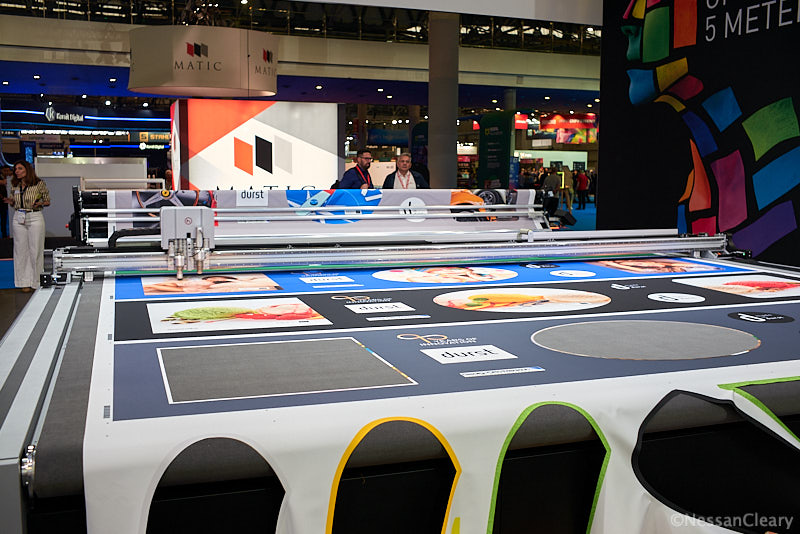
Chief amongst these is the need for a clean cut with no tearing, which would mean having to reprint the job, wasting not just the material but also the time already spent. For this reason, the cost of the servicing and support is just as important as the upfront investment in the machine itself.
The most basic cutting tool is perhaps the roll slitter though this is still a vital tool for many print service providers. These simply cut rolls down to the required width but can also be used to cut rolls into sheets. They can usually handle vinyl, banner or textile materials. Not to be confused with vinyl slitters, which are hand-held tools for trimming vinyl and are particularly handy for cutting down the panels for vehicle graphics.
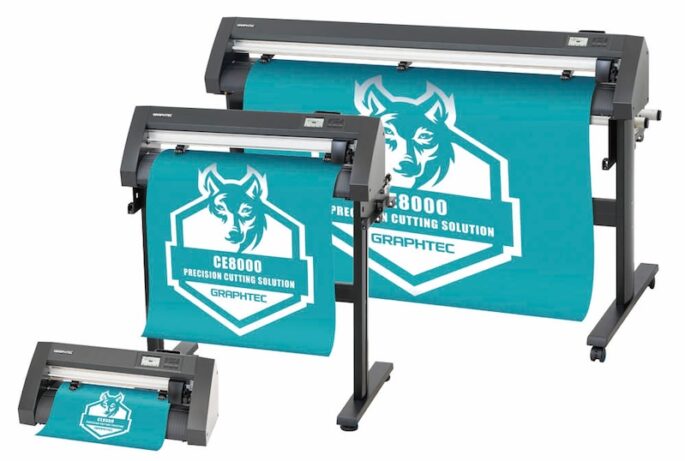
Then there is the cutting plotter, which is sometimes referred to as a vinyl cutter. These can cut out intricate shapes and are most commonly used with self-adhesive vinyl. The range of applications that can be finished on these devices largely depends on the cutting force they can bring to bear. In practice, around 120g of cutting force should be enough to handle paper and vinyl which will be suitable for producing things like stickers or for cutting out shapes such as lettering. For tougher materials such as reflective films you’ll need a more heavy duty solution with up to 600g of cutting force. Regardless, the cutting plotter should offer several cutting options, including cutting right through the substrate, kiss cutting through the graphic layer but not the backing material and perforating.
If you’re mainly producing stickers then there is a case for buying a dedicated printer with an integrated cutting unit. This should allow for better registration though for higher volume throughput you might be better off with separate devices since the two functions will run at different speeds.
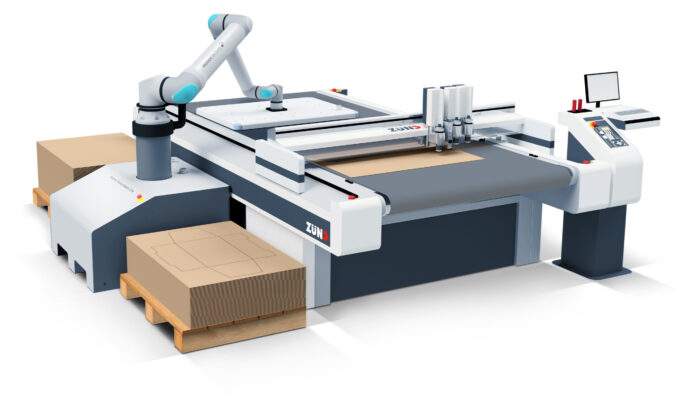
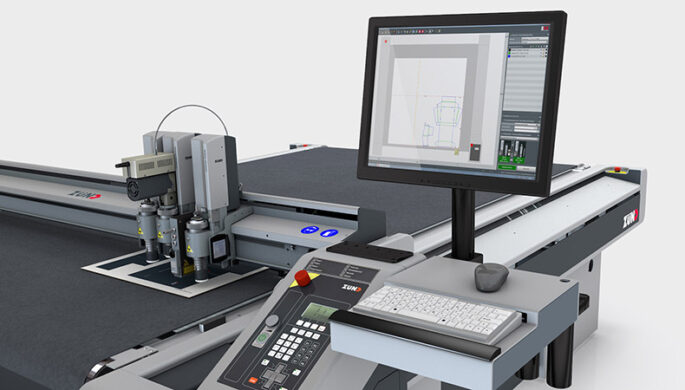
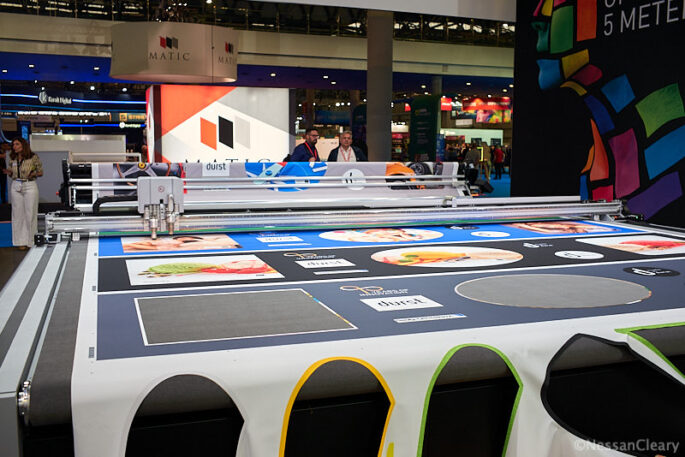
Next up is the digital cutting table, sometimes referred to as a CNC cutter. These are extremely versatile tools that can be used across several different applications. These use a Computer Numerical Control system to automatically move the cutting head into precisely the right position. This can produce extremely intricate cutting patterns, that can be repeated consistently for multiple identical copies. They can handle a range of different media, from vinyl and textiles through to foamcore. Some are better suited to specific applications such as packaging and even textile production.
The market for cutting tables has become extremely competitive in recent years thanks to a large number of Chinese vendors such as JWEI and iEcho as can be seen at any recent Fespa expo. That has prompted the more established Western companies, including Kongsberg, Zund and Elitron, to offer larger, more automated systems.
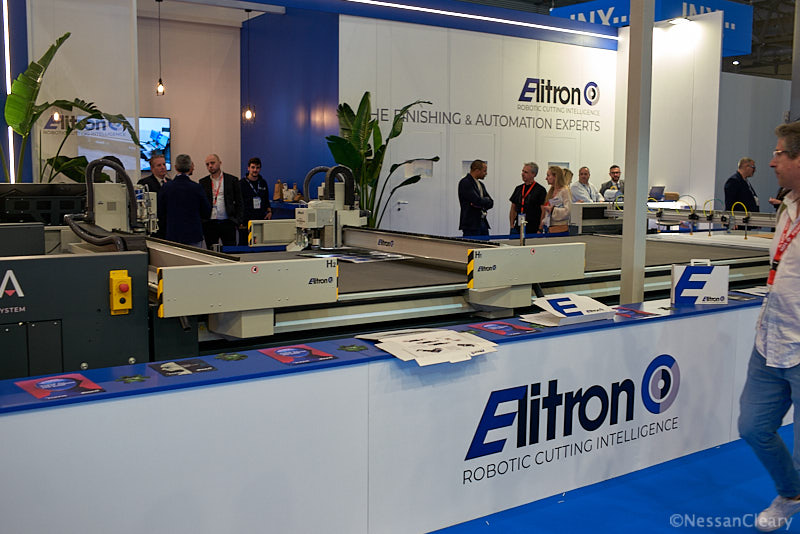
Nonetheless, the main issue to consider is the overall productivity to avoid the cutting table becoming a bottleneck in production. Most manufacturers will quote a cutting speed but this will be affected by the type of material, and the degree to which curves slow down the movement of the cutting head. The productivity is also affected by the time it takes to load materials onto the bed, locate the reference point and move the cutting head into position.
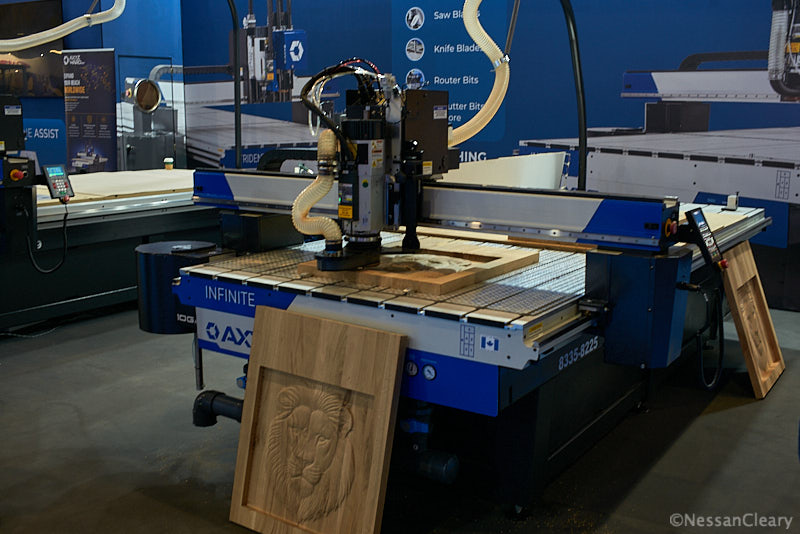
Lastly there is the CNC router, which is sometimes seen as just a more heavy duty cutting tool. It’s true that routers are best suited to denser materials that are difficult to cut through and as the name implies, they use a similar CNC system to the cutting tables. Many cutting tables can be fitted with a routing head, and some vendors offer hybrid models that can cope with a very wide range of substrates.
But there’s far more to routing than just cutting out shapes. Routers are designed to cut through much thicker, denser materials, such as acrylic, plexiglass and other plastics, wood, composites and in some cases non-ferrous metals like aluminium or brass. As such, CNC routers can be used to create dimensional signs as well as for engraving, and can do this at speed.
All CNC cutting tables and most CNC routers can cope with three axis of movement, allowing them to position the cutting head anywhere along the width and length of the table, as well as to control the cutting depth. In addition, some CNC routers offer up to five axis of movement, which allows the head to tilt or rotate for more flexibility in to the cutting angle. That might not be an obvious requirement for sign-making, but it does allow a print service provider to diversify into other industries.
Besides the cutting table or router machines themselves, you’ll need to ensure that there is a good range of tooling available. Most large format service providers will work with a range of different materials, including cardboard, foamcore and acrylic, all of which will need specific cutting tools to ensure clean cuts with sharp edges. You may also need other tools such as creasing wheels to create clean fold lines for point-of-sale displays or packaging. Most of these systems will now also include an automatic tool changing system, which can help reduce the degree of operator intervention required between jobs.
It’s becoming increasingly common to see robotic arms used with both CNC cutting tables and routers to automate the loading and unloading of materials. In theory this can help to increase throughput, especially with larger boards. But it’s also useful for reducing labour costs as it allows one operator to oversee several automated production processes.
Finally, you will also need to consider the software needed to run the cutting devices. Ideally this should integrate with the workflow software so that the cutting patterns can be set up along with the prepress preparation for each job. These days you will likely also need to factor in a maintenance or licensing contract to keep that software up to date.
Discover the latest content on cutting