As FESPA retains it ISO Certification for Sustainable Event Management for the third consecutive year, while also gearing up for its flagship event in Barcelona in May, Graeme Richardson-Locke, Head of Associations & Technical Lead at FESPA, highlights the importance of proof points when making sustainability claims…
Although sustainability has become one of the most widely discussed topics in the print industry, it is sometimes misunderstood. Too often, it is used as a marketing exercise or reduced to headline claims that are difficult to substantiate. Yet, at FESPA, we are focused on not only shifting the conversation away from aspiration and towards evidence, we are leading by example too.
At a macro level, the direction of travel is clear. The European Green Deal has set the overarching ambition for carbon neutrality, which is now being translated into tangible requirements through regulation. Initiatives such as corporate sustainability reporting directives are beginning to define how businesses must measure, manage and communicate their environmental impact.
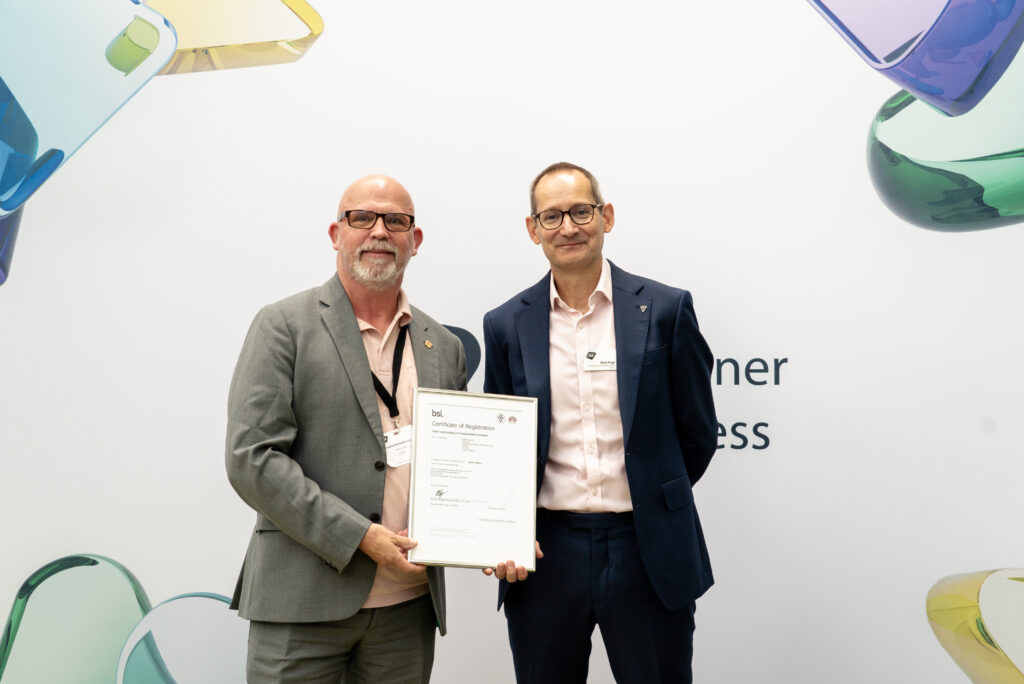
This marks an important transition, as we enter what could be described as the age of accountability – because it is no longer enough, or acceptable, to make broad sustainability claims. Businesses must now be able to prove them. Simply put: if you cannot evidence it, you should not claim it.
Measurement is key
Businesses can’t achieve sustainable operations overnight. Instead, they can develop thorough and better management practices over time. The starting point, therefore, is more accessible than it may first appear.
Understanding energy consumption, identifying operational hotspots and setting meaningful KPIs are practical first steps that businesses can and should take, as they move towards more sustainable practices. From there, incremental improvements can be made and, crucially, recorded. Over time, this creates a body of evidence that demonstrates genuine progress.
Avoid greenwashing
This approach also helps to address one of the industry’s most persistent challenges: greenwashing. Misleading claims, whether intentional or accidental, undermine trust and create confusion for customers. For example, terms such as “eco-print” or “compostable” are often used without clear qualification, which leads to misunderstandings about real-world performance.
Sustainability communications should be grounded in management, measurement and achievement – not broad, unverified statements. By focusing on data-led reporting, rather than marketing-led messaging, businesses can avoid this pitfall.
‘Sustainable comparisons’
There is rarely a simple answer to the question of which solution is “more sustainable”, because context matters. For example, a PVC banner designed for long-term outdoor use may, in some cases, be more resource-efficient than a lower-durability alternative that requires frequent replacements.
This is why binary thinking can be problematic. The more useful question is not which product is inherently ‘better’, but which is most appropriate for the intended application. Print businesses have a key role to play here, because they can guide customers towards informed decisions based on durability, use case and lifecycle.
This advisory role also creates an opportunity for printers. The sector has long been driven by price competition, often leading to commoditisation and shrinking margins. Sustainability offers a way to shift that dynamic. By investing time and effort into understanding materials, processes and impacts, businesses can differentiate themselves through expertise, rather than price alone.
A change in mindset
Research like FESPA’s most recent Print Census report (released in May 2026) indicates that while there is strong interest in sustainability, adoption is less consistent, particularly among smaller businesses. In many cases, customer demand is perceived to be low, which in turn limits the willingness to invest.
This creates a strategic challenge. Waiting for demand is not a sustainable approach in itself. Instead, businesses should actively shape demand by educating customers and offering more suitable and, where appropriate and possible, lower-impact alternatives. In doing so, they move from being reactive suppliers to proactive partners.
FESPA and its community
At FESPA, our role is to support this transition by providing practical, accessible guidance to our community. This year (2026), we launched our latest sustainabilty guide, titled ‘Understanding and Avoiding Greenwash’ and prior to that (in 2024), we released three guides on navigating sustainability legislation, titled: ‘Calculating Carbon’; ‘Sustainable Certification Scheme Guide’ and ‘Glossary of Terms’. In our guides, we communicate clearly and with empathy, because we know sustainability can be difficult and time-consuming to understand and implement – especially because regulations are ever-changing.
Incremental improvements are achievable, and each step forward provides a foundation for the next. Together, the FESPA community – and beyond – is building a credible narrative that can be shared with customers and stakeholders.
Ultimately, sustainability is part of a broader development that involves measuring how print businesses operate. Those who embrace the shift towards it, by collating data and demonstrating transparency, will be better positioned to navigate the challenges and opportunities that lie ahead.