Discover FESPA Global Print Expo 2026
Europe's leading trade show for screen printing, digital and large-format printing, textile printing, and signage. FESPA Global Print Expo 2026 is returning to Barcelona!
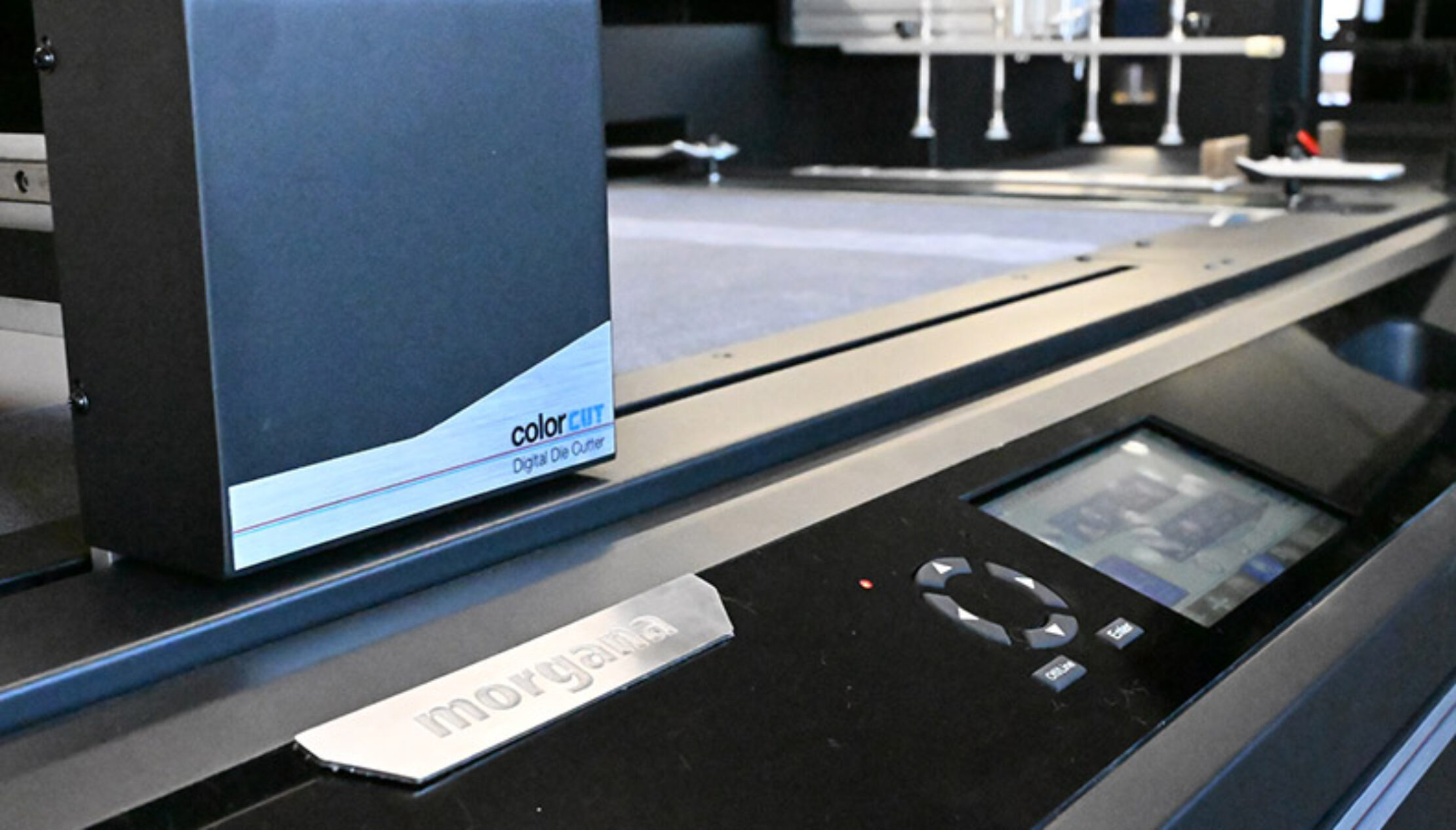
Modern packaging printing relies heavily on automation. This has long been the case for large-scale production. However, digitally printed packaging is also increasingly being produced on production lines or integrated into automated production processes. This article explains the opportunities and challenges.
100 boxes for the local organic cosmetics brand, 20 outer packages with display features for the bakery chain: Many digital printing companies occasionally fulfill small orders in the areas of packaging and product presentation. However, establishing a foothold in this lucrative and largely recession-proof segment requires more than that. Given the typically high pressure to meet tight deadlines and price targets, automation in packaging printing is essential—from file preparation all the way through to finishing.
Barcodes and QR codes have become essential management and control tools in packaging printing. They are no longer used solely for product identification but track jobs throughout the entire production workflow. As early as the prepress stage, jobs are assigned unique codes that are linked to MIS, ERP, or workflow systems.
Mark Baker-Holmes, Vice President of Packaging and Labels at Plockmatic, says: “Our machines come equipped with a software suite right out of the factory that automatically generates cut marks and QR codes for automation directly within design software such as Adobe Illustrator and Corel Draw.”
Compared to traditional barcodes, QR codes offer greater data capacity and are increasingly being used for variable data. Serial numbers, customized packaging, or campaign-specific codes can be generated automatically and integrated directly into the print data.
When combined with workflow software, this creates a transparent production chain that reliably supports both internal traceability and external requirements such as traceability and documentation obligations.
In addition, NFC codes have also been used for order tracking for some time now. One example is Eurolaser’s label module, which utilizes this technology. The advantages lie in the compact design and low cost of the RFID chips, which can also store a wide range of information. Furthermore, NFC tags can be read contactlessly without requiring a line of sight.
Digital printing is a cornerstone of automated packaging production. It enables short setup times, variable content, and cost-effective short runs. Digital printing really comes into its own when it comes to prototypes, promotional packaging, or personalized packaging.
Packaging materials are typically printed on solid board or various types of corrugated cardboard. As a result, many flatbed and hybrid machines—which are actually designed for traditional large-format printing—are also suitable for this purpose. However, providers of printing services in sensitive sectors such as food or toys must ensure that the inks used are suitable for the intended application.
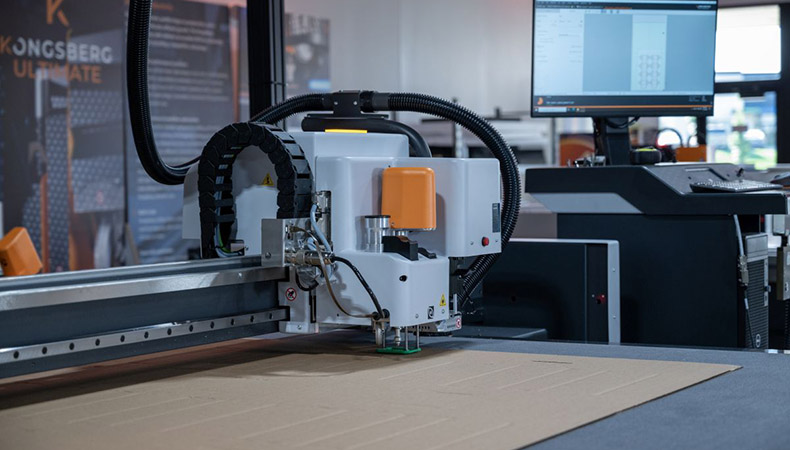
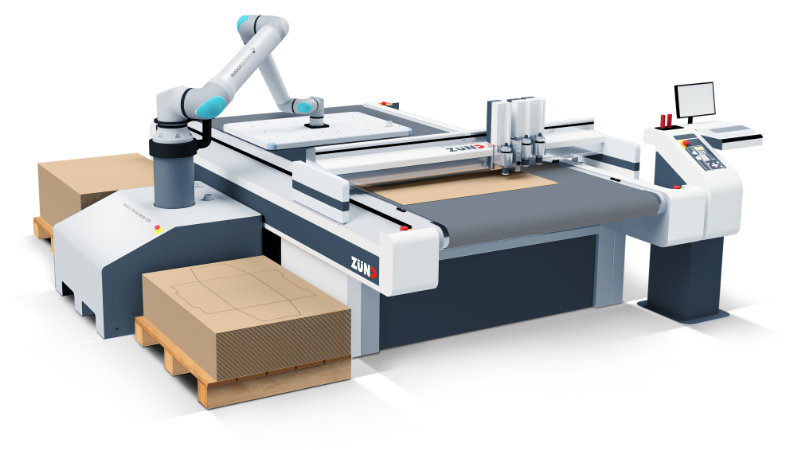
Digital cutting tables, such as those from Zünd, Bullmer, or Kongsberg, have fundamentally transformed post-press processing in packaging printing for short runs. They operate without fixed die-cutting tools and can cut, crease, mill, or perforate in a single pass.
Laser-cutting technologies, such as those from Eurolaser or Trotec, complement these systems. They offer particular advantages when working with intricate contours or delicate materials, as lasers cut without contact and with high precision. In packaging printing, laser tables are primarily used for prototypes, specialty packaging, or labels.
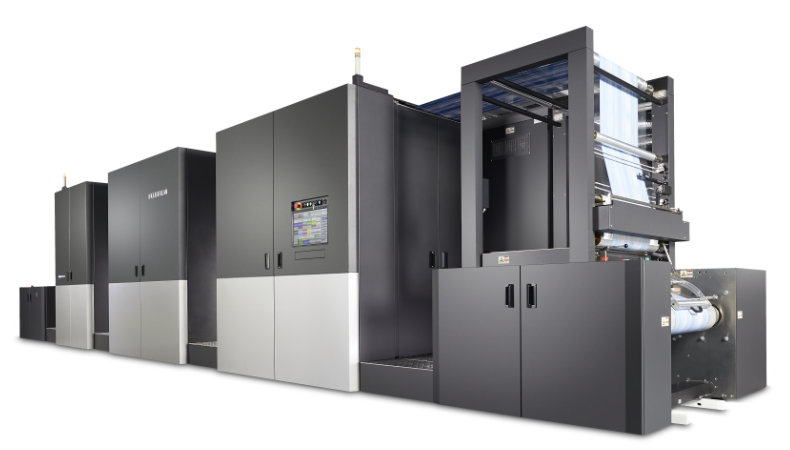
Digital printing presses specifically designed for printing larger print runs (“digital commercial printing”), such as the Fujifilm Jet Press 750 S, are engineered from the ground up to be compatible with a wide range of post-press finishing options, such as lamination, foil stamping, coating, and cutting. Such printers are often delivered as automated production lines complete with finishing options.
To this end, manufacturers of finishing machines typically develop compatible software plug-ins. For example, Plockmatic’s AccurioFlux Pro Connect ensures seamless integration into Konica’s AccurioFlux Pro workflow.
In digital packaging printing, automated processes offer significant advantages in terms of transparency, predictability, and cost control. As manual steps are reduced, labor costs decrease, as does waste. At the same time, digital systems provide detailed production data that can be used for cost estimation and continuous process optimization.
The resulting transparency regarding material consumption, operating times, and downtime provides a solid foundation for well-informed investment and production decisions.
Mark Baker-Holmes emphasizes: “User-friendliness and automation are shaping the future. The industry is constantly evolving. Print shops therefore want to make the most of their investments in machinery and software to increase profits. At the same time, the trend toward sustainability is driving the packaging industry away from label printing and more toward corrugated cardboard. For companies that already own a digital printer, this is good news.”
Even for smaller print runs, the future of packaging printing is increasingly shaped by the seamless integration of all process steps. Automated finishing solutions enable a production process in which printing, cutting, and assembly are coordinated without the need for manual handoffs.
Robotic systems can also be integrated into production environments via standardized interfaces. These systems perform tasks such as stacking and unstacking materials, either autonomously or as collaborative systems working alongside operators.
The ongoing shift toward networked, automated production systems will have a significant impact on the competitiveness of printing companies and packaging manufacturers. Companies should take a holistic view of automation and post-press processing and invest in integrated solutions. In doing so, they will lay the groundwork for efficiency, process reliability, and sustainable cost control in digital packaging printing in the years to come.

Europe's leading trade show for screen printing, digital and large-format printing, textile printing, and signage. FESPA Global Print Expo 2026 is returning to Barcelona!