Visit European Sign Expo 2026
At the European Sign Expo 2026, you'll experience the full spectrum of non-printed signage—from dimensional letters, 3D signage, and digital displays to architectural and illuminated signs.
What does the future hold for lighting and advertising technology, given the interplay between craftsmanship, creativity, and high-tech? We asked Frank Berenbrinker, the new ZVSL Federal Guild Master, for his insights.
Advertising technology is one of the oldest disciplines of visual communication. It is also considered one of the most dynamic. “The advent of digitalization in plotting and printing, CNC milling and laser machines, car-wrapping films, and, most recently, digital signage has continually reshaped the profession,” emphasizes Frank Berenbrinker, who has served as the new Federal Guild Master of the ZVSL since early April 2026. The Central Association for Signs and Illuminated Advertising (ZVSL) is the national guild association for the sign and illuminated advertising manufacturing trade in Germany. As such, it represents the interests of the trade as the leading craft policy association at the federal level.
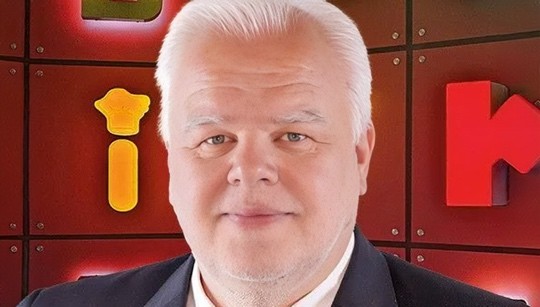
Despite all technological advancements, the foundation of advertising design remains firmly rooted in craftsmanship. “An understanding of lettering and typography, proportions, legibility from a distance, and the effect of light on shapes—that’s intuitive knowledge that’s built up over the years. AI can make suggestions, but whether a lettering design really works well is something only a trained eye can judge,” Berenbrinker emphasizes.
Knowledge of materials also remains essential: “Anyone who doesn’t know how aluminum, acrylic, PVC, or stainless steel behave when exposed to heat, UV radiation, and the elements will make costly mistakes—no matter how good the software is. An understanding of materials cannot be automated,” he is convinced.
The production and installation of illuminated signs—often at heights of several meters—also require technical skill and, not least, a solid foundation in electrical engineering.
Berenbrinker is therefore convinced: “The elimination of the master craftsman requirement in 2004 was a mistake whose consequences the industry has felt for many years. Its reintroduction was long overdue and objectively justified.” He explains: “Illuminated signs are electrical systems in public spaces. Faulty installations can cause damage or endanger people. The master craftsman bears personal responsibility here.”
As a result, since early 2020, Germany has once again required a master craftsman’s certificate for the sign and illuminated advertising manufacturing trade. However, companies that were established in the interim are granted grandfathering provisions.
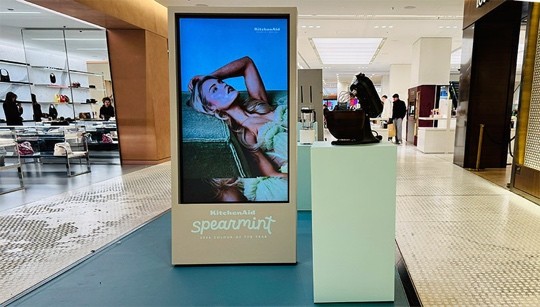
The industry is no stranger to upheaval. Currently, AI is driving change, particularly in the design process and, increasingly, in the automation of workflows.
Berenbrinker comments: “The companies that invest today—in machinery and in the training of their employees—will be the strongest tomorrow. Those who master both are irreplaceable. A ZVSL-certified company offers system expertise: Those who understand how machines work can use them optimally and identify errors.”
As a result, digital and analog skills are now closely intertwined in the profession of sign and illuminated advertising craftsmen.
Despite the growing importance of digital signage, traditional illuminated advertising remains emotionally relevant in its own right—the Federal Guild Master is certain of that: “Custom lettering—whether a handcrafted letter-by-letter sign or an illuminated banner—creates a feeling that no digital display can replicate. Nostalgia, warmth, and authenticity are not coincidences, but deliberate design elements.”
“Precisely because digital sensory overload is on the rise, people are seeking out what is authentic and tactile. Digital signage and smart wayfinding systems come into play where speed and flexibility matter. Traditional illuminated advertising retains its dominance wherever identity, atmosphere, and durability are key.”
This change, therefore, does not mean displacement, but rather a functional division.

Sustainability is a key issue for the future. It is no longer merely an added benefit, but a competitive advantage. The switch to LED technology is a milestone in this regard: In the best-case scenarios, it saves 70–80% in energy and reduces CO₂ emissions at the same time.
In addition, topics such as smart lighting control, solar integration, and recyclable materials are gaining importance. Modular construction methods demonstrate how strongly the industry is moving toward a circular economy. The range of sustainable alternatives is also growing steadily in the areas of films and printing materials.
“For ZVSL member companies, sustainability is no longer just an optional extra—it has long been a competitive factor and, in many cases, a regulatory requirement,” he emphasizes.
A paradox characterizes the industry: Although the profession is multifaceted and technically demanding, there is a shortage of young talent.
The work combines design, production, and installation—from digital printing to CNC manufacturing to car wrapping. At the same time, the results are visible and shape the cityscape. “I don’t think there’s a more varied apprenticeship,” says Berenbrinker. He began his own apprenticeship over 40 years ago and has held the title of master craftsman since 1990.
He is convinced that the problem lies less in the profession itself than in how it is perceived. In fact, many young people are unfamiliar with the field. The ZVSL sees a need for action here in the form of increased public outreach, social media, and partnerships with schools: “The potential is there—the industry just needs to make it more visible.”
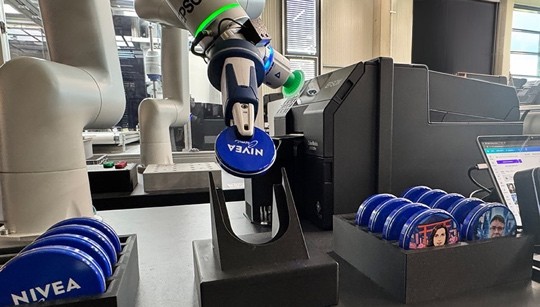
Looking ahead, the picture is mixed. The core business will remain, but future technologies such as AI, robotics, digital signage, and 3D printing will become increasingly important.
However, the most profound change is likely to be in internal processes: digital workflows, paperless operations, and new ways of working will shape our day-to-day lives.
Smaller businesses, in particular, are also struggling with ever-increasing documentation and compliance requirements, as well as lengthy approval processes: “This means significant consulting costs, long wait times, and project timelines that are difficult to predict,” laments the Federal Guild Master. The ZVSL is therefore advocating for a uniform, simplified nationwide notification procedure for advertising structures that comply with the statutes.
The sign and display industry finds itself caught between tradition and innovation—and that is precisely where its strength lies. “The industry is called upon to keep pace with this change and—as it always has—adapt to changing conditions,” he emphasizes.
Craftsmanship, creative sensibility, and technological expertise are increasingly merging into a holistic professional profile. The future belongs to companies that master both: the legacy of craftsmanship and the possibilities of the digital world.

At the European Sign Expo 2026, you'll experience the full spectrum of non-printed signage—from dimensional letters, 3D signage, and digital displays to architectural and illuminated signs.