
Today, companies in the signage and digital printing industries must fundamentally rethink their production processes. Digital workflows and automated processes are considered key drivers in this regard. What solutions are available to the industry, and what factors should be taken into account?

Short print runs, tight deadlines, rising costs … and yet another employee has called in sick. No wonder, then, that more and more companies in the digital printing and signage industries are considering a fundamental modernization of their operations. Automation is usually a top priority at every level of this process.
This is because software-supported processes throughout the entire value chain can help make the production of promotional materials, packaging, and point-of-sale materials more transparent, faster, and more cost-effective.
In software-controlled production, it is often possible to further reduce waste. Employees are relieved of routine tasks, and work schedules can be planned more easily. This leads to a better work-life balance and keeps jobs in the printing and sign industry attractive to both qualified professionals and young talent. That’s why not only medium-sized to large companies, but also—increasingly—self-employed individuals and small businesses in the sign industry are seeking automation solutions.
It all starts with DAM
At the heart of digital workflows are digital asset management systems (DAMs). These are used for the structured management of production data such as layouts, images, print PDFs, and videos. The precursors to today’s products were already in use around the turn of the millennium, primarily in advertising agencies and publishing houses.
The fact that they have now become highly relevant for prepress technicians and digital print shops as well is primarily due to changes in the purchasing behavior of print buyers. External design service providers are increasingly being phased out. Entire campaigns for major brands are created in-house and transmitted to the print service provider via a wide variety of channels—for example, as a download from a company server or file-hosting service, as customer data from an online store, or simply via email.
Adjustments are often still needed at this stage. This can lead to endless, confusing rounds of revisions. Proofreading and approval processes become difficult and prone to errors.
That’s why DAMs such as Adobe Experience Manager or Canto DAM are already worthwhile even for small sign-making businesses today. The software uses artificial intelligence, so time-consuming, manual tagging can be almost entirely eliminated. Through application interfaces, DAMs monitor data delivery. They connect to graphic design or prepress workflows. This creates a transparent workflow from the very beginning, without media breaks or the need to copy files.
Digitally Manage Workflows
DAMs streamline the delivery, creation, and prepress processes and make these steps more transparent. The challenges facing workflow tools in production are even more complex. This is because they must integrate job data, production parameters, and machine control in both printing and post-press operations. At the same time, digital workflows require organizational changes. Processes must be standardized, and responsibilities must be clearly defined.
Only then can comprehensive solutions—such as Dataline’s Multipress with Management Information System (MIS) modules and billing software, or AI-powered software for digital print shops like Gelato Connect —truly make work easier. Automated workflows that aren’t reliable, consistent, and dependable quickly lose acceptance among the workforce. This leads to unofficial processes and workarounds, ultimately causing the automation to fail.
Hardware and Software as a Unified Solution for Greater Efficiency
As automation becomes increasingly important in the printing and advertising technology industry, the workflow solutions offered by equipment manufacturers are also gaining in importance.
One example is Agfa Asanti 8. The platform is designed to serve as central control software for wide-format printing. The current version was unveiled to a broad audience at the FESPA Global Print Expo in Barcelona in May 2026.
It relies heavily on automation, such as rule-based job preparation, intelligent nesting, and tight integration with post-press systems. Features like StackFlow demonstrate how software can also support logistical processes by automatically sorting print jobs according to delivery destinations. Such approaches, similar to those found in Fiery Job Flow, are designed for industrial production with a high degree of repeatability. They are often offered as cloud solutions, meaning they are installed on remote servers and do not require on-site maintenance.
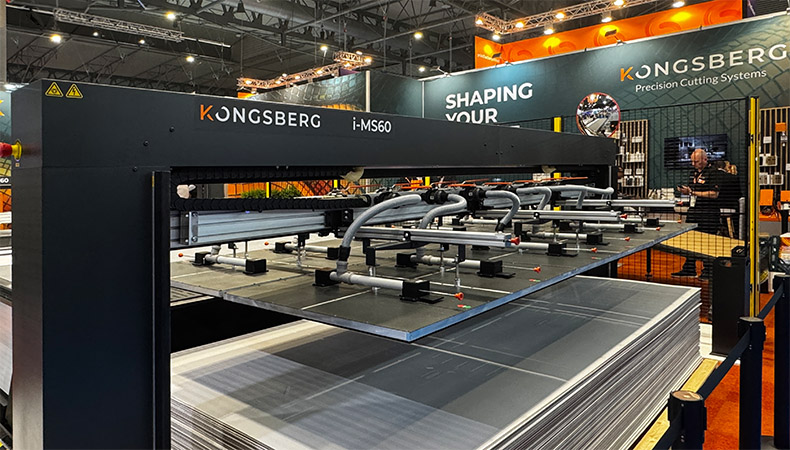
Automation is also a key issue in the area of post-processing. Cutting and milling systems such as the Kongsberg tables use the i-cut Production Console, a software solution that automatically retrieves production parameters from upstream data. Barcodes, material data, and predefined tool settings reduce the need for manual intervention and increase machine utilization.
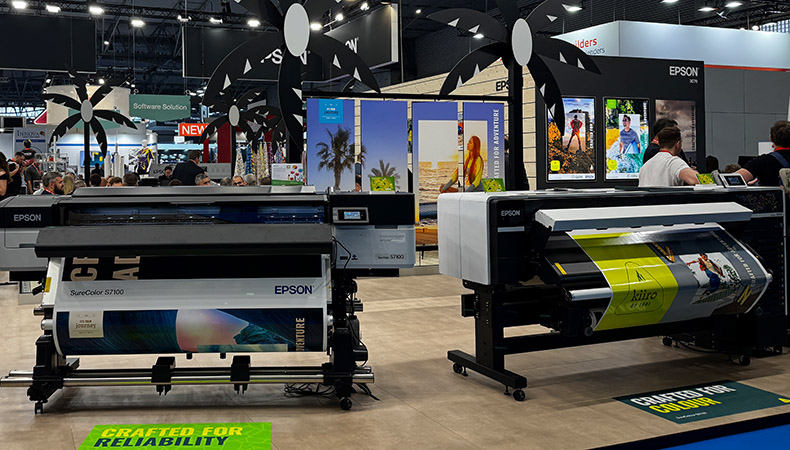
Virtually all hardware manufacturers in the industry offer similar solutions for streamlined and (partially) automated processes in printing and post-press . Examples include Zünd/Caldera Prime Center, Epson’s Cloud Solution (PORT), and Canon’s Prisma Workflow solutions.
The importance that hardware manufacturers now place on software is clearly reflected in their investments. For example, in mid-April 2026, Kornit Digital acquired the Dutch software company Print Factory. The goal is to further expand its own platform.
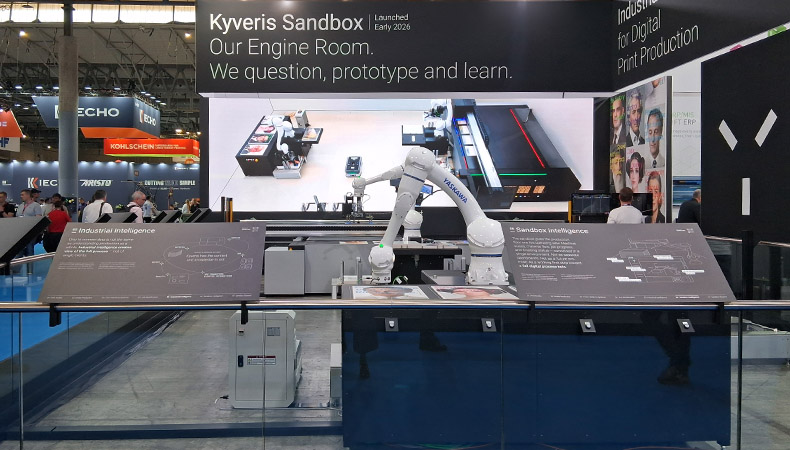
Currently, a number of market players are pursuing such strategies. However, this can easily lead to siloed solutions that force print shops to use only specific hardware and software if they want to maintain their automated workflow. That is why the Durst Group presented its Open Software Initiative (OSI) to a broad audience at FESPA Barcelona 2026. It is part of the Kyveris Sandbox project and provides open APIs as well as documented interfaces for integration with MIS, workflow, and finishing systems.
The goal is to establish a vendor-neutral, modular software ecosystem within the printing industry. Whether this concept will gain widespread acceptance, however, remains to be seen. This is because it places significant demands on integration and process discipline.
In summary, it can be said that automation in the advertising industry is less a single technology and more of a strategic approach. Digital workflows, DAM and MIS systems, and integrated production software can significantly increase efficiency and quality. This is particularly true in areas where AI can be used to make complex data actionable and apply it to predictive planning.
However, all investments in workflow improvement require financial investment, clear processes, and qualified and motivated employees. For smaller businesses, the transition can be made gradually, for example by automating individual stages of the process. There is no doubt that digital workflows have become a key competitive factor in the signmaking and digital printing industries.
Discover more content on the topic of automation