Is personalised print becoming a commercial necessity? Industry experts say yes. As brands seek differentiation, growth is shifting toward high-value “batch-of-one” production, textured finishes, and bespoke interiors. Driven by advanced DTO technology and user-friendly software, these tailored experiences are moving beyond novelty to become a core expectation for modern consumers.
Personalisation has moved beyond short-run novelty into a serious commercial opportunity for printers. Advances in digital technology and more sophisticated software are enabling businesses to produce tailored output at scale, without sacrificing efficiency.
At the same time, brands face increasing pressure to deliver more relevant and engaging experiences to customers. From customised promotional products and packaging to bespoke décor and industrial applications, print is playing a key role in helping companies connect with fragmented audiences.
However, while the demand is clear, the path forward is less so. Where should printers focus their investment? Which applications offer the strongest margins, and how can printers balance flexibility with profitability as personalisation becomes a core expectation rather than a value-added extra?
Short-run, high-value
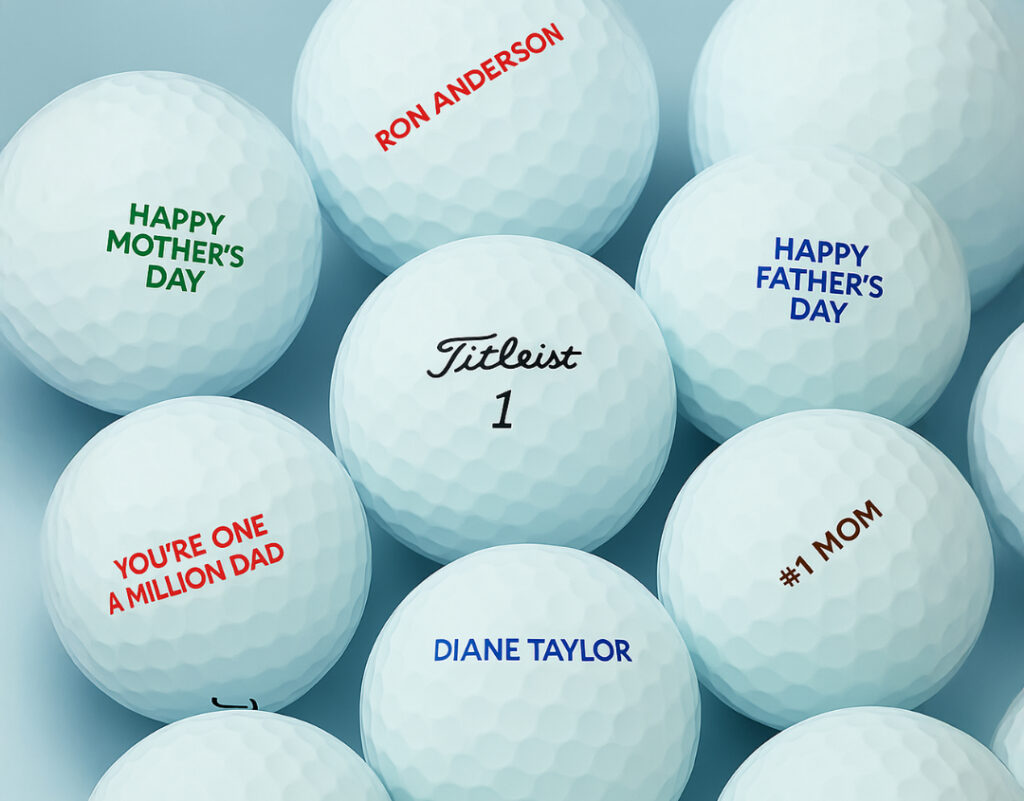
Stephan Heintjens, general manager of product, services and quality assurance at Mutoh, said at present, the strongest demand in personalisation is centred around short-run, high-value customised products. This, he said, includes promotional items, gifts, awards, phone accessories and other directly printed objects, where customers increasingly expect unique designs and fast turnaround.
Mutoh says brands want to enhance their products and environments through texture, special finishes and printing on a wider range of materials
“At the same time, we see strong growth in customised visual environments such as retail interiors, wall décor, exhibition graphics and branded office spaces,” he said. “Companies want their physical spaces to reflect their brand identity, which creates opportunities for digitally printed graphics produced in small quantities or even as one-off pieces.
“Another important development is the growing interest in value-added print effects, such as white ink on coloured or transparent substrates, spot varnish and textured finishes.”
According to Heintjens, personalisation continues to move toward smaller batches, faster turnaround and greater design flexibility, adding that customers increasingly expect products to be produced on demand, often ordered through online platforms and delivered quickly.
He also noted a shift from simple customisation toward premium, decorative applications, and that beyond adding a name or logo, brands want to enhance products and environments through texture, special finishes and a wider range of materials. In addition, he recommended printers monitor the rise of customised interior environments.
On this, Heintjens said several Mutoh technologies can support personalisation, depending on the application. Solutions include Mutoh’s UV LED flatbed printers such as the XpertJet XPJ-461UF/XPJ-661UF and XpertJet 1462UF, commonly used for customised items such as promotional products, gifts, awards, phone accessories and direct-to-object decoration.
For custom indoor graphics and décor, Heintjens recommended Mutoh’s HydrAton water-based UV technology, saying: “It combines the handling advantages of water-based inks with UV curing chemistry and enables PVC-free indoor graphics, wall décor and retail interior applications.”
Create emotional engagement
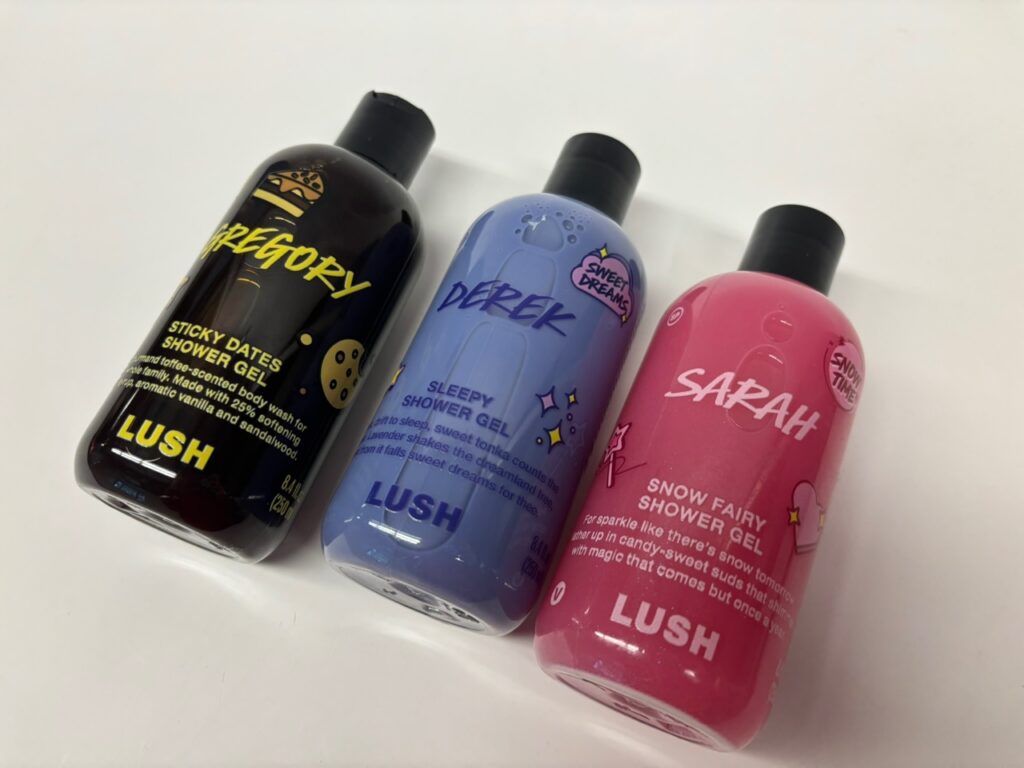
Elsewhere, Adriano Gut, key account manager at swissQprint, said that both personalised merchandise and memorabilia are seeing strong demand, with brands moving beyond adding logos to standard giveaways to increasingly personalise items for specific target groups, events or even individuals.
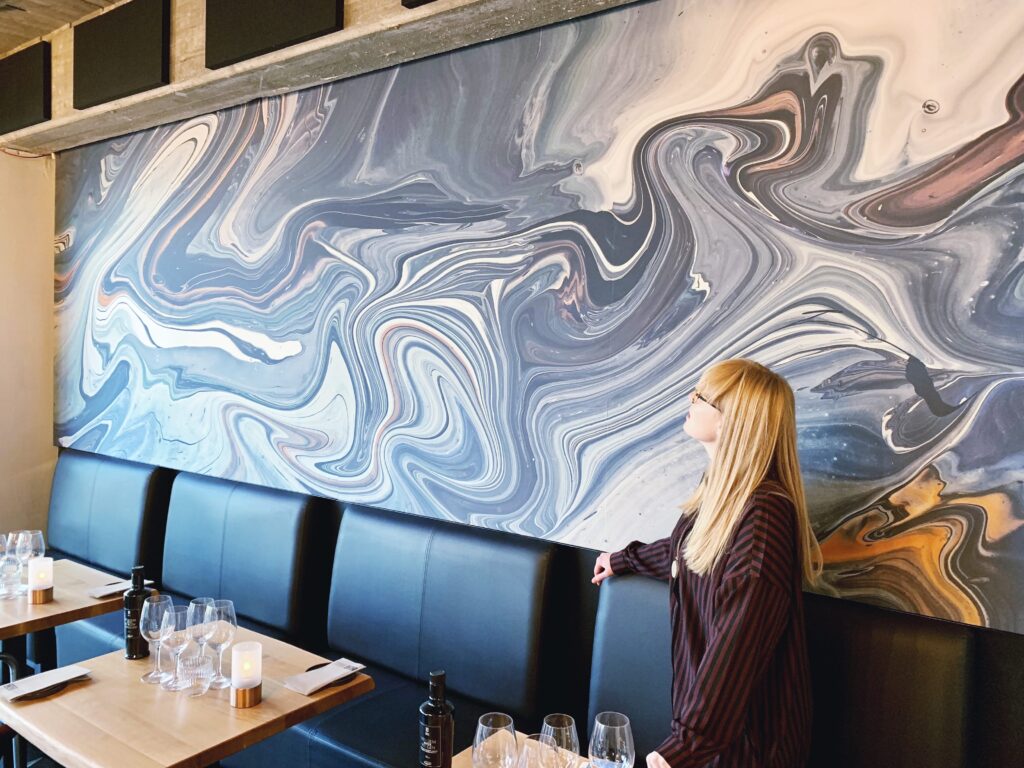
Denmark’s Damgaard-Jensen used a Nyala from swissQprint to create a personalised acoustic panel in disguise for use in Restaurant NO16 [Source: swissQprint / Damgaard-Jensen A/S]Typical applications, he said, include key rings, booklets and diaries, but the scope extends further into customised standees featuring popular characters such as Marvel or Disney figures.
“This shift reflects a broader trend: personalisation is no longer a marketing add-on, but a central element in creating emotional engagement and memorable brand experiences,” Gut said.
“At the same time, personalised print is gaining traction in interior design. Hospitality such as hotels, restaurants and event venues are using customised wall graphics, décor elements and themed installations to create distinctive guest experiences. Demand is equally strong in private homes and office spaces, where tailored designs help express identity, reinforce brand culture or shape unique spatial atmospheres.”
According to Gut, the market is “clearly” shifting toward higher-value, design-driven printed applications. He said that instead of generic promotional items or standard design elements, customers increasingly seek high-quality personalised prints with lasting value.
“There is growing demand for distinctive visual and tactile effects,” he said. “Relief prints, textured surfaces and other unconventional or “quirky” finishes are gaining traction, as they enhance perceived quality and create a more memorable experience. Personalisation is moving beyond variable data into premiumisation and sensory impact.”
As to how swissQprint can help, Gut said the manufacturer’s flatbed range is “ideally” suited for personalisation applications. He said: “Compared to desktop UV printers, flatbed systems offer significantly higher throughput, greater material versatility and consistent results across larger production volumes of merchandise and memorabilia.”
Maturing market
Meanwhile, Hendrik Koemans, European sales director at Inkcups, agreed personalisation has “really grown up”, with more examples being deployed in creative ways across marketing campaigns, packaging and promotional products. He said direct-to-object (DTO) printing has transformed the level of personalisation that is possible.
Inkcups’ X5-T High Throw allows for personalised prints on contoured, rounded, slightly curved, and irregularly shaped objects
“We’ve seen more and more brands using personalisation in brand activations, both at live events and in wider campaigns,” he said. “These aren’t mass customisation campaigns, but on-demand personalisation that creates a real connection with consumers.”
So, where is the market heading next? Koemans said one of the biggest advantages of DTO in promotional print is its suitability for producing one item for the same cost-per-item as fifty or five hundred.
“Many promotional items, such as reusable bags for example, are relatively inexpensive, so buyers often can’t justify a lot of expense to decorate them,” he said. “But with DTO, it is no more expensive to create ten different designs in ten different colourways – effectively one hundred different items – than it is to create a hundred items that look exactly the same. That is really changing the promotional print market.”
As to how Inkcups can help, Koemans highlighted the Helix One, which he said has been “breaking down barriers” to entry into drinkware printing since it launched in 2023. He also said it is an ideal first investment for those looking to take advantage of the growing demand for personalisation in print-on-demand, packaging or branded merchandise.
At the FESPA Global Print Expo 2025, Inkcups also launched the X5-T High Throw. Koemans said this significantly increases the ink throw distance between the printhead and substrate, meaning besides enabling personalisation on flat objects, it can deliver high-quality, accurate personalised prints on contoured, rounded, slightly curved, and irregularly shaped objects.
Unleash potential
Finally, Marcin Majda, CEO and co-founder of Antigro Designer, said the print capabilities to capitalise on opportunities in personalisation have existed for quite some time, although developments in DTO, direct-to-film (DTF) and inkjet digital printing are continually expanding what is possible.
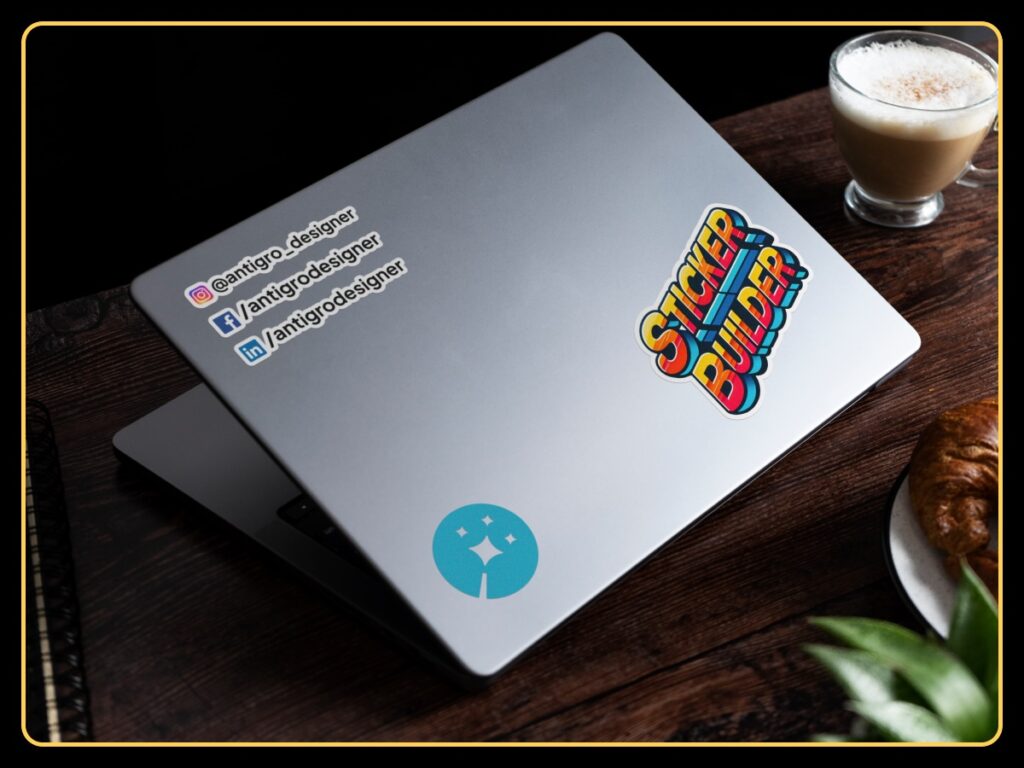
Antigro Designer updated its Sticker Builder solution in 2025
“From our perspective, what is really unleashing personalisation’s potential is enhancements in the software that defines the personalisation experience for users,” Majda said. “From smart templates to real-time previews, a more user-centric personalisation experience reduces the time consumers need to spend personalising items, ensures the experience is fun and delivers the quality of items they expect it to, and ultimately increases sales conversions for the print service provider or brand.”
Antigro Designer offers cloud-based print personalisation tools that enable businesses to offer editable templates with extensive personalisation options for a variety of products, integrating seamlessly with e-commerce channels.
The company also created Sticker Builder, which simplifies and enhances the production of custom die-cut stickers, as well as the original DTF Gang Sheet Builder, which automates the creation of sheets for DTF printing.
“When we updated Sticker Builder’s UX in 2025, design time for end users decreased 34% and conversions increased by 48%,” Majda said. “Mobile-friendly interfaces are also increasingly expected, with users wanting to edit templates, adjust designs and approve artwork in real time.”
For further insight into the latest trends in this market, visit the Personalisation Experience 2026, taking place within the FESPA Global Print Expo 2026 in Barcelona from 19-22 May. Click here to find out more.
Discover Personalisation Experience 2026
Discover the latest in personalisation and customisation, with conferences, networking opportunities and interactive opportunities. This is your chance to explore how the future of personalisation is evolving.