When it comes to car wrapping, laminates, protective films, and tinting films are absolutely essential. That’s because they make vehicle wraps resistant to UV rays, dirt, and the elements. For print shops, this means ensuring quality, taking advantage of warranties, and operating sustainably.
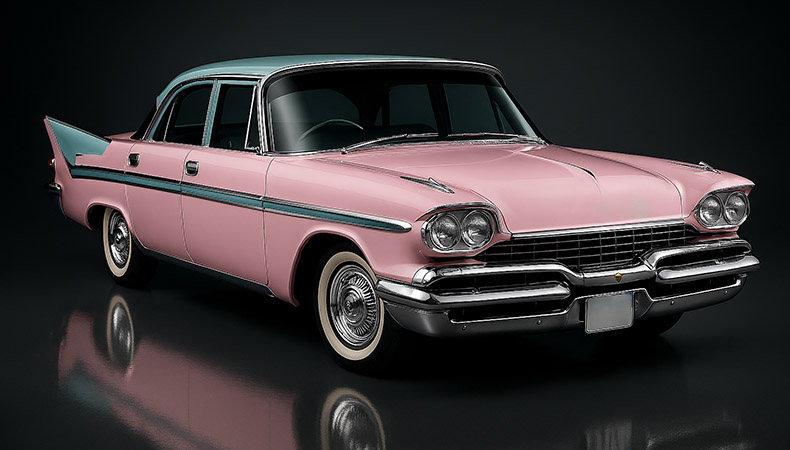
Vehicle wrapping is booming—whether as advertising space, paint protection, or a design statement. But only the right laminate makes printed films resistant to UV radiation, dirt, and mechanical stress. For print shops, the selection and application of the laminate are crucial to ensuring quality and durability, as well as meeting the requirements of modern warranty programs.
What is vehicle wrapping?
There are various types of vehicle wraps:
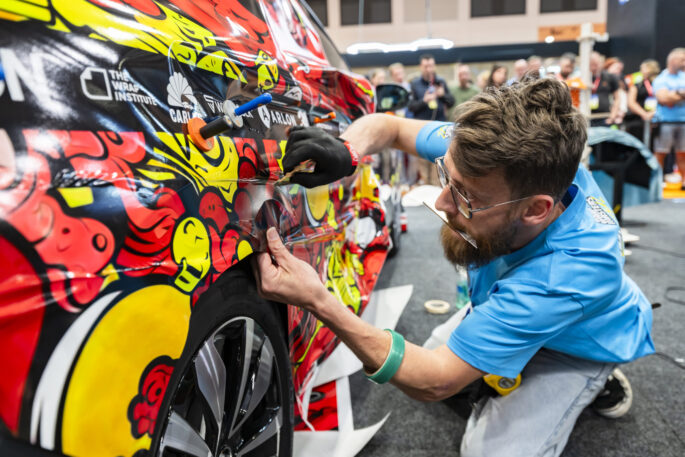
- Full-body wrapping replaces painting and is often used to change the color or to protect the original paint.
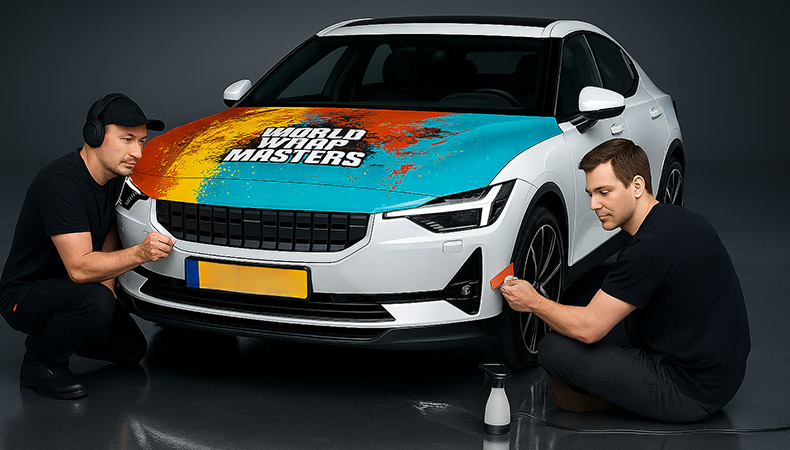
- Partial wrapping is limited to specific areas of the vehicle, such as the hood, roof, or doors.
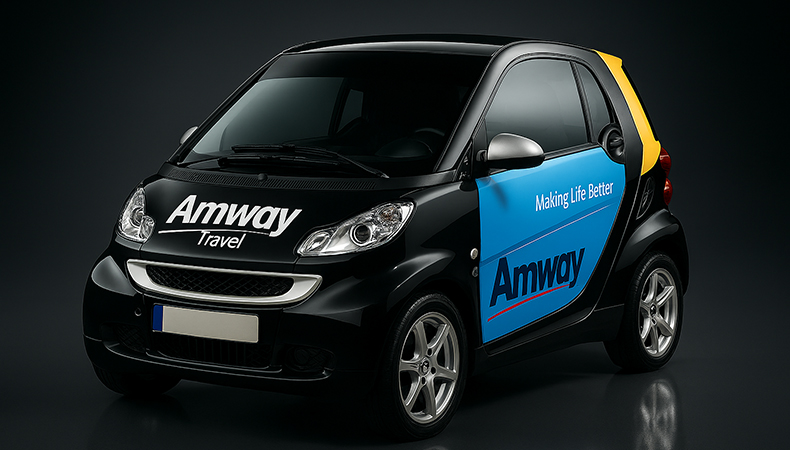
Both full and partial wraps are primarily used for advertising purposes. This means they feature logos, slogans, or product images, and are sometimes even personalized. Advertising car wraps are particularly common for company fleets.
Protective Films in Automotive Wrapping
End customers, in particular, like to have protective films applied to their vehicles:
- Paint Protection Film (PPF): This transparent, unprinted protective film is primarily used to protect the paint. It is usually applied to areas subject to heavy wear, such as door sills or the tailgate. Paint protection films are available from manufacturers such as Suntek, for example, or paint protection can also be achieved using tinted films. This has the advantage of allowing you to further customize the vehicle’s appearance.
- Window tinting films ( e.g., from Avery Dennison or Orafol) primarily provide protection against heat and glare. However, according to the ADAC, in Germany they are only permitted on side windows starting from the B-pillar and on the rear window. In addition, a tinting strip no more than ten centimeters wide may be applied to the upper edge of the windshield.
Why Use Laminates for Car Wrapping?
Vehicle wrapping films are exposed to extreme conditions. UV radiation, temperature fluctuations, mechanical stress—such as that caused by car wash brushes—and chemical influences, such as cleaning agents or road salt, continuously affect the surface.
Protective films, such as stone-chip protection films or tinting films for car windows, are typically designed to last 7 to 10 years. For colored films used in vehicle wrapping, a lifespan of three to five years is generally expected. However, there are also special colored films—such as those from Arlon—that last seven years or more.
For printed vinyl films used in vehicle graphics, durability depends heavily on the type of ink used. Solvent-based inks penetrate deeply into the vinyl. As a result, the designs are better protected against scratches and chemicals than when UV-curable or latex inks are used. This is because these inks form a thin layer on the film, so that even minor damage quickly becomes visible as light spots.
In general, however, manufacturers of printing substrates for vehicle graphics recommend using the films without a laminate for no more than a few weeks. This is because, without appropriate protective measures, the ink may fade, peel off, or the film itself may become brittle.
When Laminate Is Necessary for Vehicle Decals
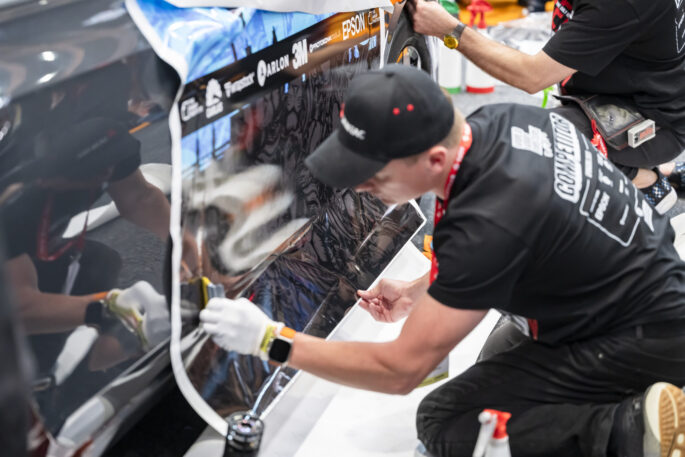
A laminate is a transparent protective layer that is applied to the film after printing. It protects the printed colors from UV radiation, mechanical stress, and moisture. For vehicle wraps, the use of a laminate is mandatory in most cases, especially for long-term applications or for film applied to high-stress areas such as bumpers or door handles.
Matte or glossy laminate film not only improves durability but also enhances the appearance. There are also some laminates that add special effects to the design, such as carbon fiber or glitter, for example, the 3M Wrap Series 8900 protective laminate.
A special type of laminate is what is known as a liquid laminate. These are protective coatings that are applied using specialized machines, such as those manufactured by Bürkle. They are typically used to protect large-format prints, such as graphics for semi-trailers or truck tarps.
Laminating Printed Vehicle Wraps: The Basics
Several factors are important when laminating vehicle wraps. However, it is always crucial to ensure that the drying time for the ink is fully observed. For designs produced with latex and UV-curable inks, lamination can begin after about one hour.
The dreaded “outgassing”—that is, the formation of bubbles in fresh laminate—is ruled out here. This is because it is caused by solvents that have not yet completely evaporated from the printed film. However, latex and UV-curing inks do not contain significant amounts of VOCs (volatile organic compounds).
For this reason, vehicle wraps printed with solvent-based or eco-solvent inks should be allowed to out-gas for at least 6–8 hours, or preferably up to 24 hours. This is the only way to prevent laminates from partially peeling off or the protective coating from bubbling.
Another common mistake when applying laminates is using unsuitable products. The film must be compatible not only with the printing substrate but also with the ink. Manufacturers such as Hexis therefore provide compatibility lists.
The wrong type of laminate can cause a variety of types of damage:
- Complete or partial peeling of the protective film
- Bubble Formation
- Deformation or shrinkage due to heat or cold
- Discoloration.
Often, using an unsuitable laminate can also alter the properties of the film. This means that, for example, it is no longer as easy to stretch or apply in 3D shapes during installation. Ultimately, this usually results in the entire installation not adhering reliably to the vehicle.
As a rule of thumb, you can say that a cast film should always be paired with a cast laminate, and a calendered printing substrate should be paired with a calendered film. The material should also be identical. This is particularly important for PVC-free film alternatives for digital printing, because very different types of plastics are used in these applications.
Other potential sources of errors when laminating automotive films include lamination speed, temperature, and contact pressure. These must be adjusted to suit the material in order to prevent bubbles, wrinkles, and discoloration.
Warranty Programs for Vehicle Decals
Manufacturers such as 3M and Avery Dennison offer special warranty programs for vehicle graphics. These programs guarantee the durability and quality of the graphics for several years. However, this is contingent on the use of certified printing materials, laminates, and inks. The 3M MCS warranty covers all components and guarantees a defined service life.
Avery Dennison offers a similar concept with its ICS Performance Guarantee, which is based on tested combinations. These programs are not only a quality promise but also a selling point for end customers. However, they require that the print shop use certified equipment and document the production process.
Sustainability in Vehicle Decal Application
Sustainability is also becoming increasingly important in vehicle graphics. Manufacturers such as Grafityp now offer PVC-free films or recyclable laminates. Reducing VOCs in adhesives is also a step toward more environmentally friendly production. Nevertheless, vehicle graphics remains a sector that uses a large amount of material. It is therefore important that an application lasts a long time. Laminates play a key role in achieving this.
Protective and decorative films can also be used to protect valuable—such as historic—auto paint. Compared to conventional painting, they also require fewer chemicals, raw materials, and water. As a result, protective films can help extend a vehicle’s useful life. This conserves valuable resources in the long run.
Conclusion
Laminates and protective films are indispensable in car wrapping. Not only do they protect printed inks and films from UV radiation, mechanical stress, and the elements, but they also play a key role in ensuring the visual quality and durability of the application. For print shops, this means that high-quality results can only be achieved through the proper selection and application of laminates—tailored to the ink, film, and specific application.
Learn more about full-vehicle wraps