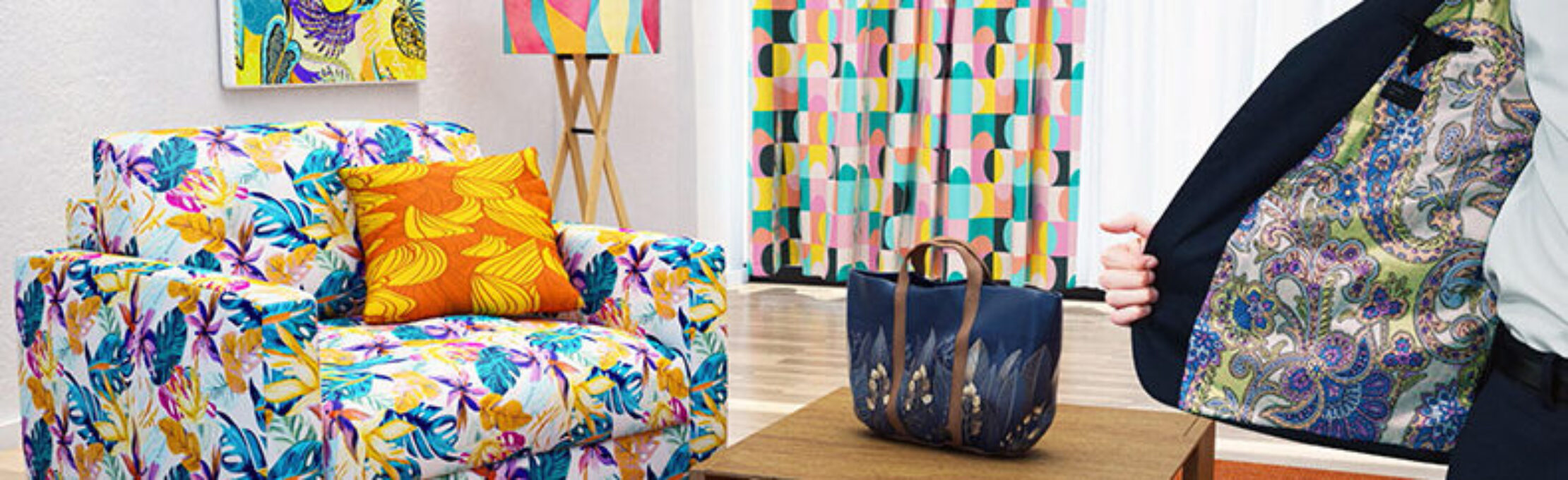
Technologies such as Subli films, DTF, and Mimaki TRAPIS expand the possibilities of digital textile printing—even beyond polyester.
Transfer sublimation printing has established itself in the textile finishing industry as a particularly color-rich and durable process. In this process, special sublimation ink is first printed onto transfer paper and then transferred to the textile under heat and pressure. The ink sublimates—that is, it transitions directly from a solid to a gaseous state—and in the process bonds permanently with the polymer molecules of the fabric.
However, this chemical reaction only works with synthetic fibers, particularly polyester. Natural fibers such as cotton or blended fabrics with a high cotton content do not have the appropriate polymer structures to absorb the dyes. The result: The colors do not adhere permanently, leading to poor wash fastness and faded prints.
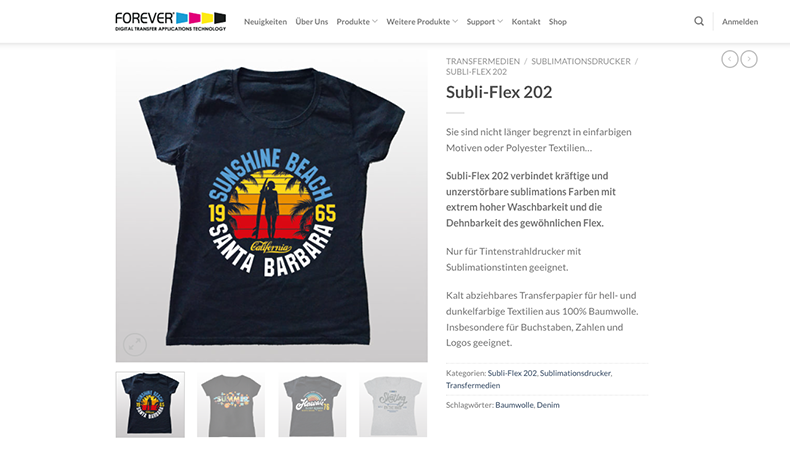 With Forever’s Subli-Flex-202 film, you can use sublimation ink to print on cotton and denim. Photo: Screenshot
Transfer Printing on Cotton – Tips, Transfer Media, DTF
Despite these limitations, there are now several methods that make digital transfer printing possible even on cotton and other natural fibers, as well as blended fabrics.
Transfer Sheets for Sublimation Printing
Forever’s Subli-Flex 202 transfer material is a film that is printed with sublimation ink. The contours are then trimmed by hand or with a cutting plotter. After that, the design can be transferred directly from the reverse-printed film onto cotton, denim, leather, or other synthetic and natural fibers.
This works because the ink does not sublimate directly into the fabric, but onto the top layer of the film. This film has an opaque white intermediate layer, so the process works on light-colored, colorful, and dark textiles. The result is a matte, highly detailed print. It is flexible and can be washed up to 50 times before the print noticeably fades. That is why Subli-Flex 202 is often used for personalizing promotional textiles.
A number of manufacturers also offer sublimation transfer films in other varieties, such as with glitter or as flock. However, these specialty prints can become quite thick and stiff, significantly altering the texture of the finished garment. For this reason, such films—also known as heat transfer vinyl (HTV) —are used primarily by hobbyists.
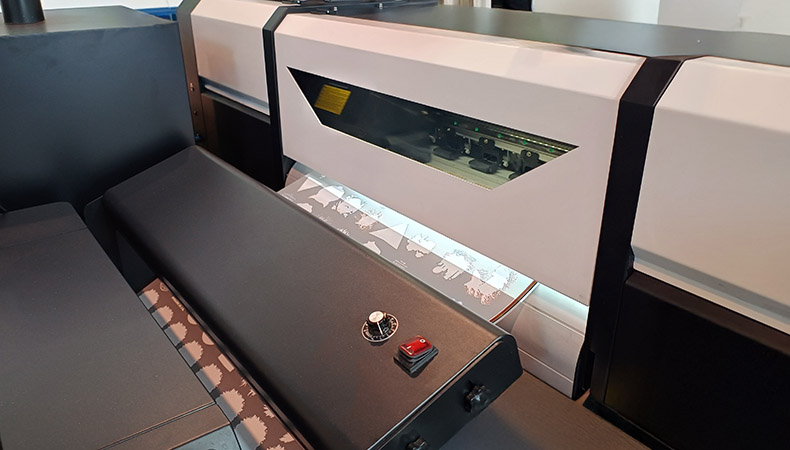 Since the late 2010s, DTF has been used on natural fibers, synthetic fabrics, and blended fabrics. Photo: Sonja Angerer
Direct-to-Film (DTF): The Flexible Alternative
The Direct-to-Film (DTF) process arrived in Europe in the late 2010s. In this process, a special DTF film is printed with pigment ink. The ink, while still wet, is coated with an adhesive powder. The film prepared in this way is placed on the textile. The photorealistic design is transferred in a heat press, typically at 150 to 165 degrees. The process takes only about 10 to 15 seconds and therefore consumes very little energy.
The process works not only on cotton but on nearly all types of textiles, such as polyester, blended fabrics, leather, and nylon. Since a white barrier layer is printed last, the design stands out just as well on brightly colored and dark backgrounds as it does on white and light-colored ones. The thin adhesive layer ensures that the print remains very flexible and does not alter the surface characteristics of the garment. At the same time, it is so versatile that there is no need to pre-treat (prime) the fabric.
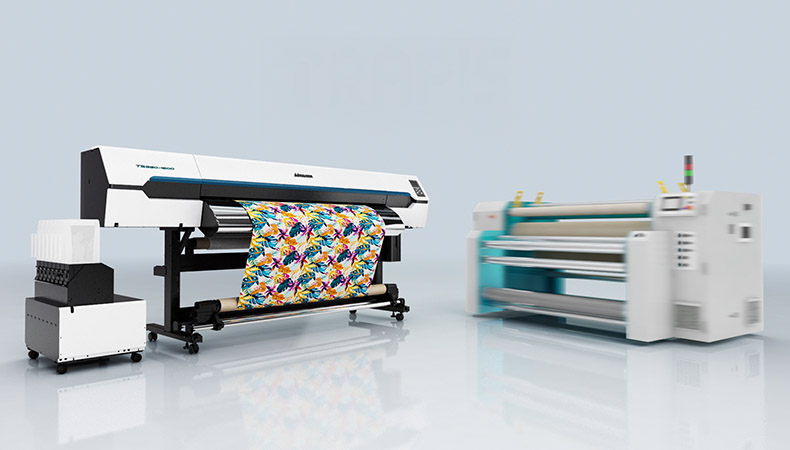 The Mimaki TRAPIS transfer process was developed specifically for blended fabrics. Photo: Mimaki
Mimaki TRAPIS: Sustainable Textile Printing on Blended Fabrics
Another innovative process comes from the Japanese manufacturer Mimaki: the TRAPIS system (Transfer Printing System). It is a transfer printing process that uses water-based ink and was developed with a focus on blended fabrics. Similar to the classic sublimation process, it is primarily intended for printing on roll stock.
TRAPIS uses a special transfer film that is printed with water-based pigment ink . The transfer is achieved through heat and pressure in a calender. The key feature: The technology works on a wide variety of materials, including cotton, polyester, and blended fabrics. No pretreatment is required, and water consumption is minimal compared to conventional textile printing methods. Mimaki therefore positions TRAPIS as a sustainable alternative to existing methods, particularly for fashion and home textiles.
Transfer Printing: Now Available on All Textiles
The days when sublimation printing was possible only on polyester are over. Thanks to innovative transfer materials and new processes such as DTF and TRAPIS, cotton and blended fabrics can now also be printed to a high standard using transfer methods—with brilliant colors, high wash fastness, and flexible applications. For print service providers, this means greater creative freedom, broader product ranges, and new business opportunities.
In the coming years, processes such as DTF and TRAPIS are expected to be further optimized, particularly in terms of production speed, environmental sustainability, and automation.
For companies specializing in digital printing, it’s worth testing these technologies early on and integrating them into their portfolio. After all, the demand for customized, sustainable, and high-quality textile prints is growing steadily—and with it, the demands placed on modern printing solutions.