The label market is expected to grow to $67 billion worldwide by 2028: so labels are all the rage. What should digital printers keep in mind if they want to enter this segment?
Stickers, decals, and labels have been part of people’s everyday lives for decades. They’re used not only on packaging but also as a marketing tool, for decoration, or to express opinions and a sense of belonging. This opens up many different markets for digital printing service providers. In most cases, these can even be handled using existing machines and current staff. This means the barriers to entry are low. Nevertheless, it’s worth clarifying a few aspects in advance. This article addresses the following questions:
- Printing Substrates and Technical Equipment
- Color Management and Quality Control
- Design and Marketing
In addition, environmental considerations are always taken into account.
Printing Substrates and Supplies for Printing Stickers
Choice of Materials
Choosing the right printing material is crucial for the quality and durability of any sticker. Paper is cost-effective and suitable for short-term indoor use, as well as for printing labels and tags for the packaging industry. Paper stickers are often disposed of with recycled paper. However, to be eligible for this, they must not be laminated or coated with a very thick plastic layer.
PVC, PE, and PU films are more durable and more resistant to weathering. They are also suitable for outdoor use and do not necessarily need to be painted or laminated for that purpose.
Adhesives
There are permanent, removable, and reusable adhesives, each of which is suitable for different applications. Permanent adhesives provide strong adhesion and are ideal for long-term and security applications, such as seals. Films and paper coated with removable and reusable adhesives can be easily removed without leaving any residue. This can be important for marketing stickers, decorative labels, and product labels.
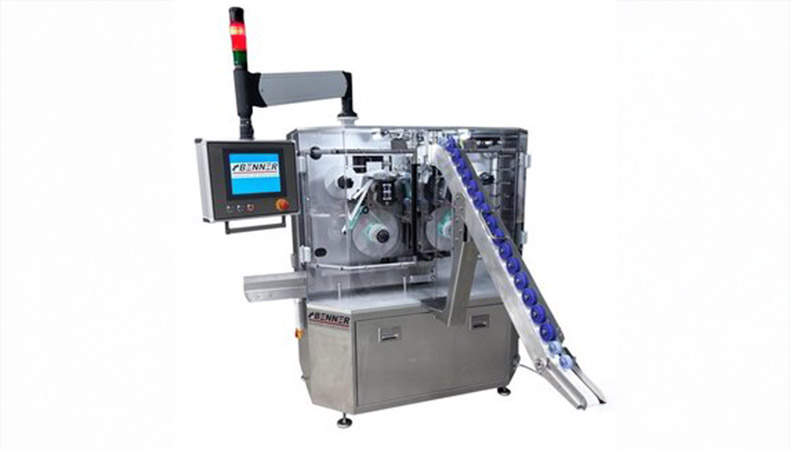
Labels are often supplied on rolls so they can be loaded into automatic packaging machines. Pictured: Benner MSA multipack machine with HERMA label applicator. Photo: Benner MSA
Printers and Ink
In principle, all printers commonly used in digital printing—whether flatbed, hybrid, or roll-to-roll—are suitable for printing labels. Print-and-cut machines, such as the Roland DG TrueVis and VersaStudio series, are particularly popular for printing stickers with complex shapes, as these can be produced in a single pass. They use eco-solvent inks.
UV ink is also used for printing vinyl stickers intended for outdoor use. Water-based and HP Latex inks on paper are more commonly used for labels in small print runs and for indoor stickers. When producing labels for food packaging, it is important to ensure that the inks are approved for food contact and have low migration.
Further Processing
Stickers, labels, and tags are printed on sheets or rolls. During the finishing process, they can be further enhanced using varnishes, laminates, embossing, or colored or metallic foils. Print service providers should take care to avoid producing stickers made of composite materials whenever possible. This is because such materials cannot be recycled separately by type. As a result, they end up in waste-to-energy facilities or landfills.
To cut sheets and rolls of stickers, you can use X/Y cutters (e.g., from Fotoba), cutting plotters (e.g., Mimaki), or cutting tables with various tools (e.g., Bullmer, Kongsberg, Zünd). Stickers with the same outline can also be die-cut. This requires creating a die first, so die-cutting is only worthwhile for larger or recurring label printing jobs.
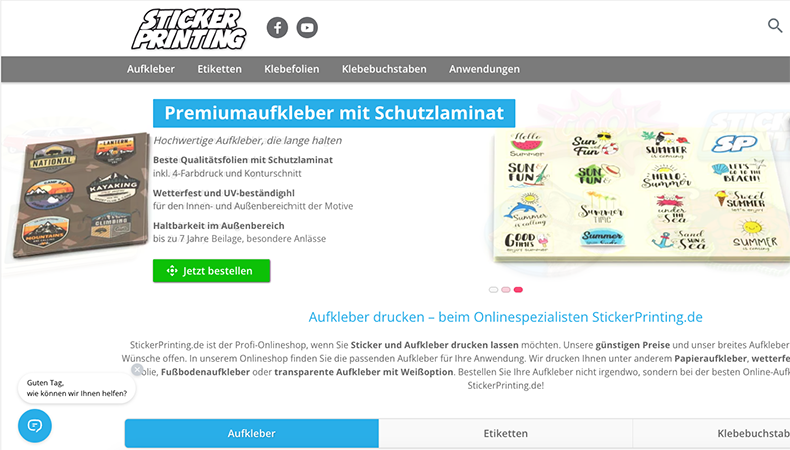
Specialty online retailers such as Stickerprinting.de offer stickers in many sizes and shapes. Photo: Screenshot
Color Management and Quality Control
Color management is crucial for ensuring that the colors on labels and stickers meet expectations. Color profiles and regular color calibrations help ensure consistent print quality on all sticker substrates. However, one should not rely solely on technical checks, as the subjective perception of color on different materials and under non-standard lighting conditions can vary significantly.
In addition, the processes involved in manufacturing stickers should be continuously monitored. This is the only way to ensure consistently high quality and avoid environmentally harmful production waste. This includes, for example, inspecting cut edges, as well as conducting adhesive and durability tests.
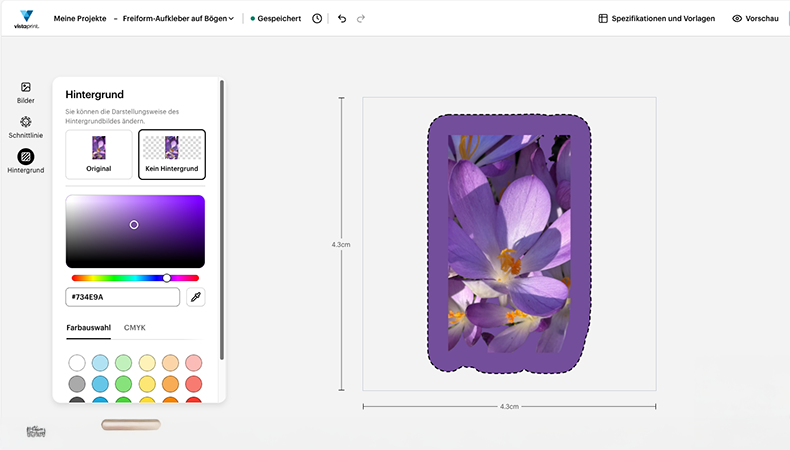
Vistaprint offers customers an online editor that can also be used to create die-cut stickers. Photo: Screenshot
Design and Marketing of Stickers, Decals, and Labels
Although stickers, labels, and decals are technically quite similar, the way these printing services are marketed can vary significantly.
Labels: Packaging labels are often simple designs that are needed in large quantities. The customer usually provides professional print files for the labels. Labels are often cut to size on narrow rolls so they can be loaded into automatic packaging machines. The profit margins here can be very small.
Stickers: Stickers are available in rectangular and die-cut versions, as well as in standard shapes such as round, oval, or heart-shaped. B2B customers typically order them as giveaways or as stationery products for resale. Professional buyers often calculate very tightly when it comes to stickers as well.
In addition, individual customers are increasingly ordering stickers as gifts, decorations for parties, or for clubs. In these cases, professional print files aren’t always provided. That’s why online stores for stickers and packaging often offer the option to design simple orders right in the browser. Better margins can be achieved with individual customers. This is especially true when attractive designs are offered that can be personalized with just a few clicks.
Finally, printing service providers can easily sell stickers and decals they produce themselves through online stores. Products that are regional or tailored to a specific community—and that can also be promoted on social media—are particularly successful. Examples include place names and signs, manga designs and slogans, as well as adhesive films for furniture and mobile devices.
Conclusion: Stickers and labels remain popular
For digital printers, the production of stickers and labels remains an attractive business. In the B2B sector, however, margins on standard products are low. For this reason, processes should be automated as much as possible.
On the other hand, when it comes to small quantities of stickers for private customers, attractive products can command good prices. However, this depends heavily on the design and marketing.
In the coming years, another key focus will be on producing labels and stickers in the most environmentally friendly way possible—for example, by avoiding the use of PVC and composite materials. Once that is achieved, nothing will stand in the way of further market expansion.