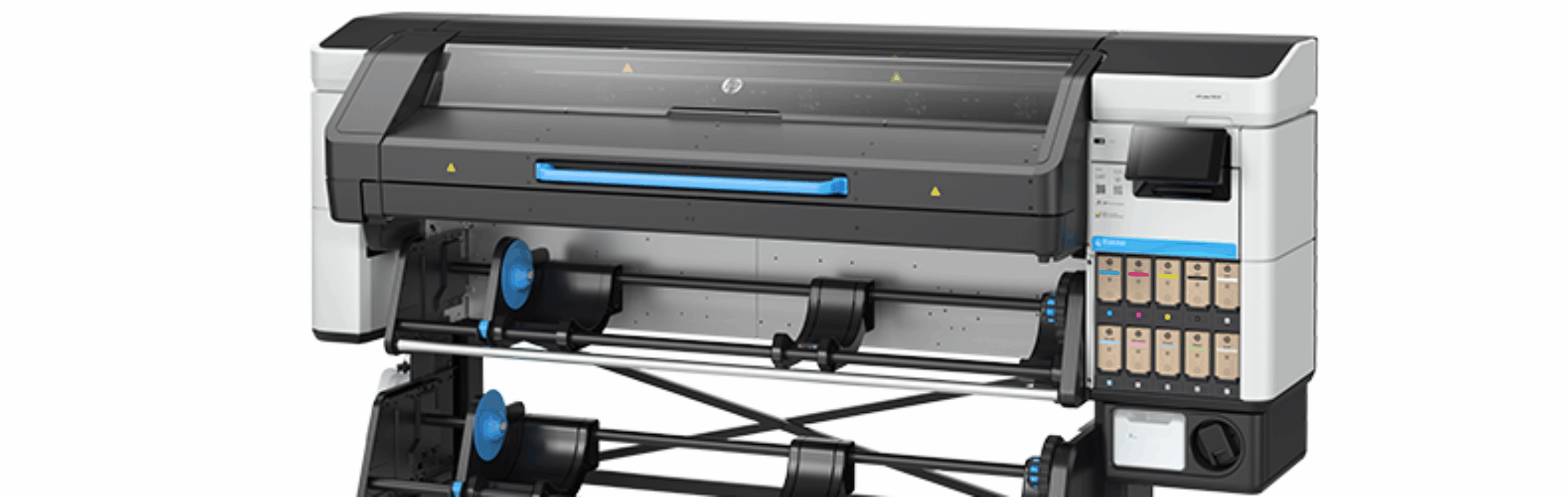
Large-format printers are indispensable in the advertising industry, photography, and industrial printing. As with any high-performance machine, their performance is closely tied to proper care and maintenance. Manufacturers such as Canon, Durst, HP, and Mutoh provide clear recommendations on how users should maintain their equipment.
A large-format printer is often the heart of a print shop. A breakdown can not only lead to production delays but also result in significant financial losses. Manufacturers therefore emphasize the importance of preventive maintenance to extend the service life of the equipment and maintain consistent print quality.
 Christian Casazza is Chief Customer Service Officer (CCS) at Durst Group AG. Photo: Durst Group AG
Get informed before you buy
Cleaning and maintenance intervals have a significant impact on the costs incurred by a digital printing press over its lifetime. For this reason, the topic is “explained in detail as early as the sales demonstration” at Durst Group AG, according to Christian Casazza, Chief Customer Service – CCS.
Print service providers would therefore be well advised to gather detailed information during demonstrations, since “detailed maintenance guidelines are generally not included in the sales documentation. These focus primarily on technical specifications, possible applications, and economic benefits,” explains Rene Matzinger, Service Manager – DP&S Field Management Technical Services at Canon Deutschland GmbH, regarding the procedures for Canon large-format printing systems.
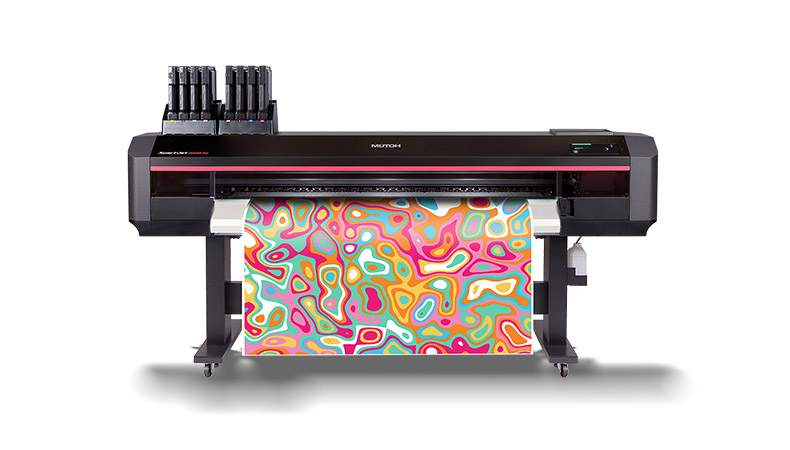 For Mutoh printers such as this Xpertjet 1682SR DS Pro model, the duration of maintenance contracts is usually determined by authorized dealers. Photo: Mutoh.
Maintenance tasks are clearly defined
Mutoh outlines routine tasks for users in the manual. For maintenance technicians, there are specific documents that list the guidelines for regular inspections. HP always includes an overview of maintenance procedures in Chapter 11 of the user manual.
“Customers receive all relevant information on maintenance and care as part of the product handover, as well as through user manuals, service videos, or direct communication with sales and service,” explains Matzinger on behalf of Canon.
At Durst AG, the operating software also reminds the operator of upcoming maintenance tasks. These can be checked off on the screen to ensure that no step is overlooked. “Our customer service team professionally handles specific service intervals for our customers on a semi-annual or annual basis,” adds Casazza, continuing, “This ensures the printer remains reliable in operation and maintains the highest quality over the long term. Regular maintenance also safeguards the manufacturer’s warranty and service coverage.”
“Compliance with the guidelines is important because proper maintenance has a significant impact on operational safety and service life. Failure to follow the recommended measures may, in some cases, affect warranty or service coverage,” Matzinger also emphasizes. Mutoh takes a similar approach and stresses that required maintenance must be documented in order to maintain warranty coverage.
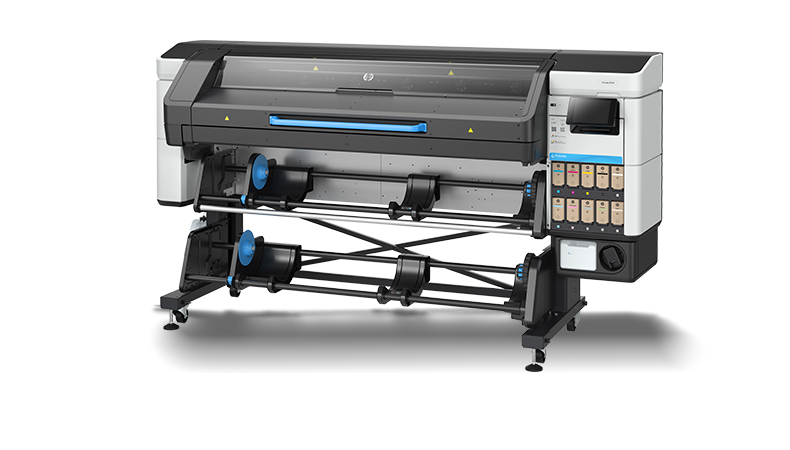 The HP Printer Manual (pictured: HP Latex 730 W) always groups maintenance tasks for users in Chapter 11. Photo: HP
Manufacturers, Specialty Retailers, and Users: Working Hand in Hand
Routine maintenance throughout the year is typically performed by the user. However, to cover the need for major repairs and service, hardware buyers are increasingly entering into maintenance contracts. At Mutoh and HP, these contracts are fulfilled almost exclusively by authorized resellers in EMEA. Both Canon Germany and Durst Group AG also rely on their own technicians. Factors such as location and the type of service plan play a decisive role in this regard.
Prices and terms of maintenance contracts can vary widely depending on hardware costs, contract term, and scope. According to Matzinger, for current Canon large-format printing systems, they range “between 0.5 and 0.8 percent of the purchase price per year, depending on the contract model. This makes them easy to budget for in relation to the investment amount. Contract terms vary by product series, typically up to 60 months with the option to extend for an additional 12 or 24 months.” For older machines, an extension depends, among other things, on the availability of replacement parts.
At Mutoh, authorized dealers determine the terms of the maintenance contracts, which are usually fixed. Extensions are only possible if the machine can be inspected beforehand. HP maintenance contracts typically last between 12 and 36 months; longer terms and renewals are possible provided the devices are technically suitable.
“Our maintenance contracts offer our customers complete flexibility and peace of mind and can be purchased for any LFP machine that is no more than five years old at the time the contract is signed. Older models are also eligible. Each contract has a term of 12 months,” explains Christian Casazza of Durst Group AG. The scope of these maintenance contracts can vary widely, ranging from the basic contract—which covers the cost of two maintenance visits per year—to the premium full-service contract, which includes all services, including printheads.
According to the manufacturers surveyed, the maintenance contract does not include costs for firmware updates or new versions of the included software. This is because these are generally free of charge for existing users. “Only optional add-on modules that expand the printer’s functionality may incur a fee,” said Casazza.
 Rene Matzinger is Service Manager – DP&S Field Management Technical Services at Canon Deutschland GmbH: Photo: Canon
Knowing When Repairs Are Needed
Maintenance contracts can help improve production reliability. This is because wear and tear and malfunctions are detected more quickly during regular inspections and can be corrected before they lead to machine downtime.
However, manufacturers no longer rely solely on maintenance staff and technicians. For example, using the Analytics software module, Durst’s customer service team monitors printers worldwide in real time. Canon also offers integrated monitoring and remote diagnostic functions.
HP’s PrintBeat software monitors printers on demand, and with PrintOS Live Production, you can even check production status in real time.
At Mutoh, supported models can be monitored via the “Club Mutoh” online platform. This allows users and their authorized dealers to proactively plan maintenance and inspections.
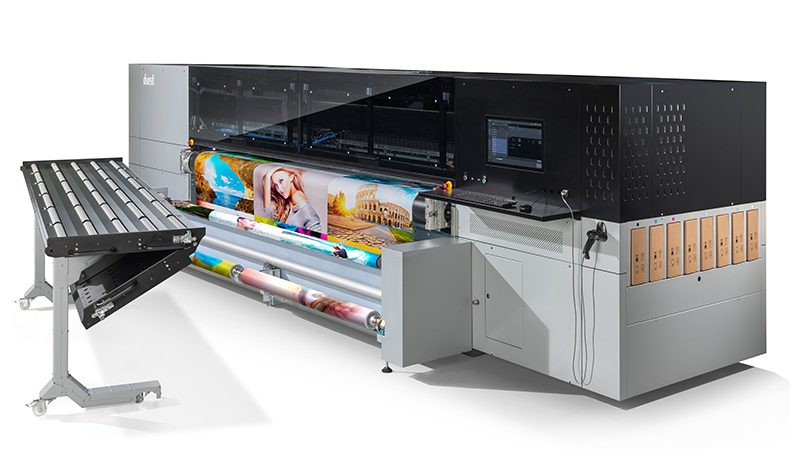 Durst offers the Analytics software module for its printers (pictured: Durst P5 350). This allows customer service to monitor the printers worldwide in real time. Photo: Durst.
Maintenance of large-format printers is changing
All participating manufacturers anticipated that remote monitoring and predictable maintenance and repair cycles will play an even greater role in the future. In some cases, Mutoh and Canon combine the necessary maintenance contracts with leasing, usage-based, or other financing models. Both manufacturers are convinced that demand for such models will grow even further in the future.
HP has also noticed that flexible models such as rent-to-own or subscription plans with maintenance contracts are becoming increasingly important, and is responding with new contract types such as the “Channel Plus Plan,” which replaces Basic contracts and offers more comprehensive support. These models provide customers with greater flexibility and better predictability.
According to Casazza, however, Durst customers often still prefer the traditional purchase model and possibly an additional maintenance contract, since this is usually the only way to qualify for government subsidies. Overall, however, it can be assumed that optimized and proactive maintenance—carried out by both the user and the supporting specialist dealer—will help make digital printing even more reliable, efficient, and, not least, environmentally friendly in the future.