Textile advertising sets new standards in appearance, sustainability, and efficiency. However, its production can be labor-intensive. Automated cutting and sewing systems minimize errors and increase productivity in soft signage production.
Materials such as polyester or blended fabrics are considered a high-quality and sustainable alternative to traditional PVC tarps for digitally printed advertising applications. In Europe, they are used for banners, flags, backdrops, and—above all—in frame systems. This is because textile advertising solutions are not only lighter and more space-efficient, but also more visually appealing. In addition, the graphics can be replaced very easily in existing frame systems without any prior knowledge. This keeps the costs of advertising campaigns at the POS low.
Challenges in the Production of Soft Signage
However, processing printed textiles into soft signage applications is more complex than with rigid materials or tarps. This is because the fabric must be cut and hemmed very precisely for use in frame systems. Attaching piping for frame systems also adds another step to the process. Errors in cutting or imprecise seams lead to fitting problems.
Manual labor is time-consuming and prone to errors, which is why automation is crucial. In addition, in many countries in Central Europe—including the DACH region—there have been virtually no significant industrial manufacturers of clothing, bedding, or table linens for decades.
As a result, there is a shortage of skilled workers with industrial experience. Trained tailors can only fill this gap to a limited extent. Following the reorientation of the “Technical Garment Maker” job profile (formerly: Plastics and Heavy Fabric Garment Maker) at the start of the 2011 training cycle, the needs of the digital printing industry in Germany were once again better addressed.
Cutting for Soft Signage Production
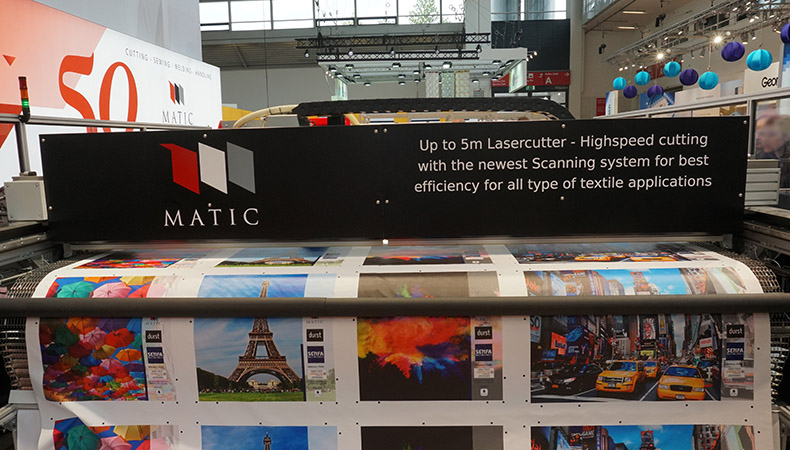
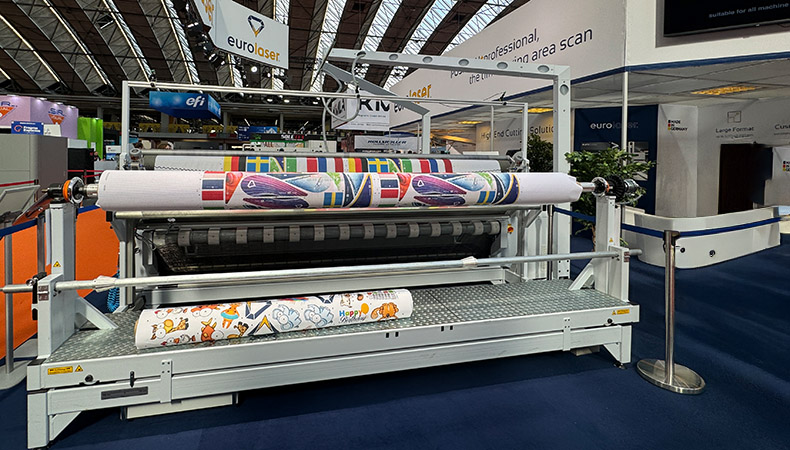
The ongoing shortage of skilled workers is leading more and more printing service providers specializing in soft signage to look for automation solutions. This starts with the cutting process: Automatic cutting tables and laser systems are indispensable for the precise cutting of textiles for soft signage applications. Manufacturers such as Zünd, Eurolaser, and Trotec offer systems with camera recognition, as well as the ability to integrate the machines into industry-standard workflow systems via registration mark recognition or QR codes on the material being cut.
Single-layer, elastic synthetic-fiber fabric is almost always used in soft signage production. If the material is to be processed from a roll, the cutting table must be equipped with a center winder or a unwinding unit. Various rotary cutters or laser cutting systems are available for cutting. The latter seals the cut edges of synthetic fabrics, which prevents fraying and eliminates additional steps in the process.
Sewing Machines for Textile Finishing
Printing companies typically use industrial sewing machines to hem and attach piping to textiles. Suppliers such as Dürkopp Adler, Union Special, and Matic SA offer not only sewing machines and automated systems but also multi-step custom solutions for specialized applications. Although these were often originally intended for the production of home textiles, technical applications, or the fashion industry, they can also be effectively used to produce large quantities of soft signage applications more quickly and efficiently.
Matic offers automatic sewing machines designed specifically for the digital printing industry that can be operated even by less-skilled personnel. Systems such as the Cronos series are specifically designed for piping and hems.
In addition to traditional sewing machines, welding equipment for piping and hems is occasionally used. Manufacturers such as Forsstrom supply high-frequency welding machines for textile applications made of PU or PVC. Similar to hot-air, heating-wedge, or pulse welding, however, HF welding is primarily used on solid tarpaulins with a textile core or mesh backing. Typically, these are not considered soft signage applications.
What investments in cutting and sewing equipment for soft signage are worthwhile?
Demand for soft signage applications for indoor spaces and point-of-sale (POS) is likely to remain strong in Europe in the future. As the retail landscape continues to consolidate around large chains and franchise systems, individual orders are expected to tend toward larger sizes. At the same time, however, designs are being broken down into smaller segments to accommodate seasonal and regional variations. The volume of orders can also fluctuate significantly.
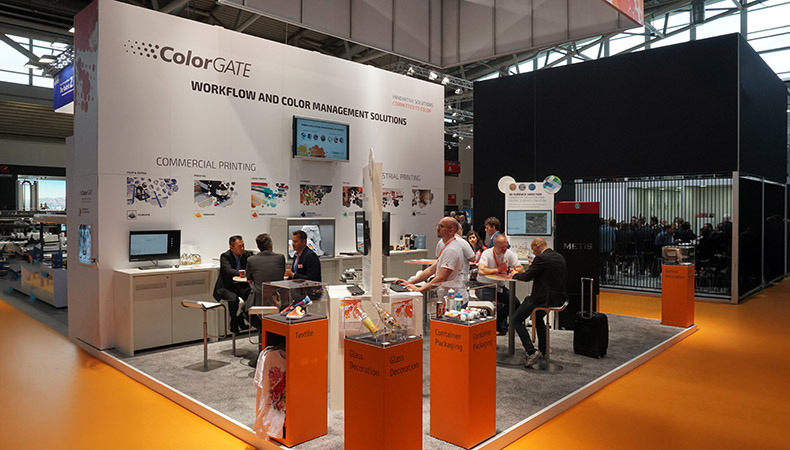
Print shops can only address this situation by investing in automated or semi-automated workflows for soft signage production. Similar to banner and panel printing, the right workflow software is at the heart of every process. That’s why manufacturers like Colorgate offer specialized modules that allow textile printing to be integrated into company-wide workflows.
However, existing, tried-and-true workflows for soft signage production often still involve numerous manual steps, particularly during cutting and sewing. The trend here is toward further automation and multi-step systems that enable higher throughput. Process knowledge and the ability to set up machines quickly and safely are thus becoming more important than manual skills. For digital print shops specializing in soft signage, this means that, in addition to investments in software, cutting machines, and sewing machines, ongoing training and professional development will also be essential for business success in the future.
Learn more about signage