Discover how to choose the right super wide-format printer to expand your business. Rob Fletcher shares insights from swissQprint and Durst, this guide explores critical investment considerations—including versatility, real-world productivity, soft signage growth, and workflow automation—to help you confidently select the ideal machine for long-term growth.
The super wide-format print market continues to expand as brands seek larger, more impactful graphics for applications ranging from billboards and building wraps to exhibition displays and retail environments. As demand grows, manufacturers are responding with faster, more capable machines that can handle a host of materials while delivering the quality and productivity customers expect.
However, investing in a super wide-format printer is a significant decision. With a wide range of technologies, ink types and configurations available, buyers must carefully assess their current workload, future ambitions and production requirements before selecting a machine.
So, how do you go about buying a super wide-format printer? Experts from two leading manufacturers from this sector sat down with FESPA.com to offer some words of wisdom and guidance to print businesses.
Clear point of difference
Up first is Erskine Stewart, managing director of swissQprint UK, who said the key question is whether super wide-format technology will help a business produce more efficiently, enter new markets or bring outsourced work in-house.
“The business case should be based on current and projected volumes, the balance between rigid and roll media, finishing capabilities, available skills and the types of applications customers are likely to demand,” he said. “This can be challenging because future demand is never certain.
“That makes versatility important. The right investment should support growth ambitions by giving the business room to adapt, while a more limited system could restrict future opportunities.”
With this, Stewart offered advice on how to avoid some of the most common mistakes when investing in this type of technology. He said some companies buy on headline speed alone, and while speed matters, it must be judged against real-world productivity: saleable print quality, uptime, workflow efficiency and operator confidence.
“An unreliable high-speed printer will not give a business the stability it needs to grow,” he said. “It can create waste, missed deadlines and pressure on margins.
“Another mistake is choosing a printer that fits current work too narrowly. Businesses should look for a system that can grow with them, support a wider range of applications and help them respond to changing customer demands.”
Stewart went on to say that at its core, super wide-format print gives businesses the ability to offer a wider variety of solutions and say “yes” to more customer demands. However, he also said no single application is driving all this growth, with the opportunity is in having the right technology in-house to respond quickly and confidently as customer requirements change.
“For many print businesses, the strongest potential lies in having a reliable production printer that can handle high-volume orders while maintaining consistent quality, workflow efficiency and turnaround times,” he said. “It should also be able to process short runs efficiently and enable value-added solutions that create a clear point of difference.”
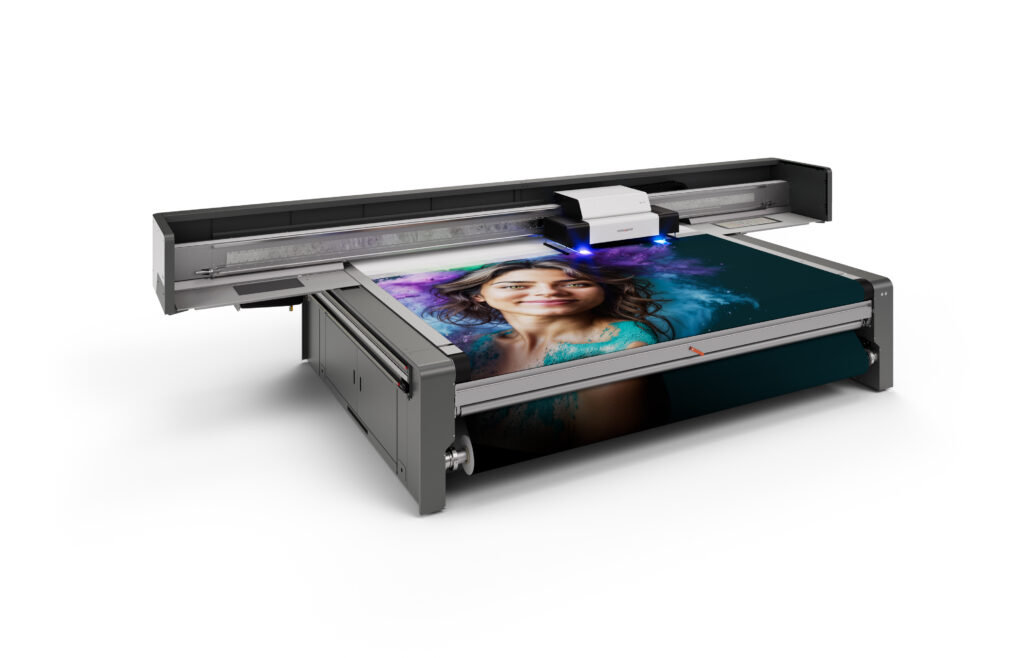
In terms of solutions from swissQprint, Stewart highlighted the Nyala, which he said has been Europe’s best-selling UV printer for the past 11 years – due to it enabling users to operate profitably and take on new work with confidence.
“Reliability is central to that,” he said. “As with all swissQprint systems, Nyala is built to support consistent production, helping customers reduce the cost and disruption associated with downtime. The versatility of swissQprint systems is also clear in the wide range of solutions customers can produce from a single machine.
“Quality is equally important. swissQprint systems are known for consistent, high-quality output. We even see brands contact us to find print service providers using swissQprint technology because they need reliable quality from their suppliers.”
Business model decision
Next, Johann Strozzega, director of global sales graphics at Durst Group, said the biggest mistake is to view super wide-format as a printer purchase – when it is in fact a “business model decision”.
“Companies should start by asking where their market is heading,” Strozzega said. “Are customers demanding larger formats, more complex applications, faster turnaround times or greater flexibility? If the answer is yes, super wide-format technology stops being an option and becomes a strategic necessity.
“The more relevant question is not about the investment itself, but about the opportunities it unlocks – new applications, new customer segments, new revenue streams that simply are not accessible with conventional equipment.”
If such an investment is deemed the right move, Strozzega said print companies must not fall into the trap of a “narrow evaluation framework. He said that some businesses focus on the machine itself – its speed, its format, its print quality – without fully considering how it fits into their broader production environment and business ambition.
“The right question is not ‘what does this printer do?’ but ‘what does this system enable?’” he said. “That means looking at workflow integration, automation potential, uptime reliability, operator requirements, and the ability to take on new applications and markets.

“Equally important is thinking beyond today’s order book. Markets evolve quickly, and a platform that perfectly matches current needs may become a constraint within a few years
“Choosing the right partner matters as much as choosing the right machine. A manufacturer with long-term commitment, strong service infrastructure and a clear technology roadmap is part of the investment – not just the hardware that arrives on day one.”
As for target areas, Strozzega agreed the market is moving towards larger, more impactful, and increasingly customised applications. He said soft signage, retail graphics, event graphics, building wraps and interior décor continue to offer strong growth opportunities, while at the same time, there is increasing demand from industrial and specialty applications where production efficiency and flexibility are critical.
“One of the clearest growth signals we see is in the events and exhibition segment, where the shift towards super wide-format soft signage – at three and five meters and beyond – is accelerating,” he said.
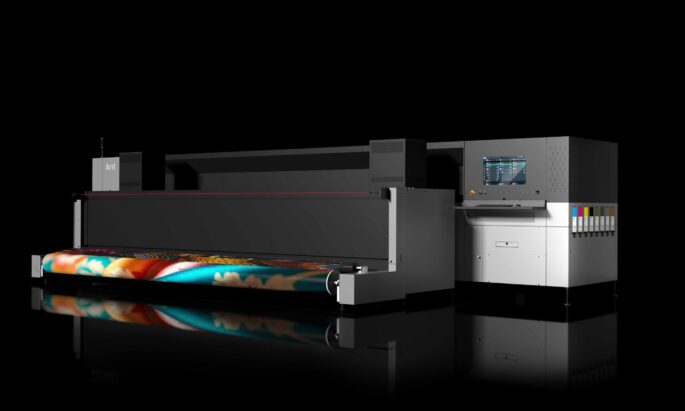
“Fabric-based displays produced with dye-sublimation offer a compelling combination of advantages: they can be folded rather than rolled or crated, dramatically reducing logistics costs and complexity. Sublimation also delivers exceptional colour vibrancy and consistency.”
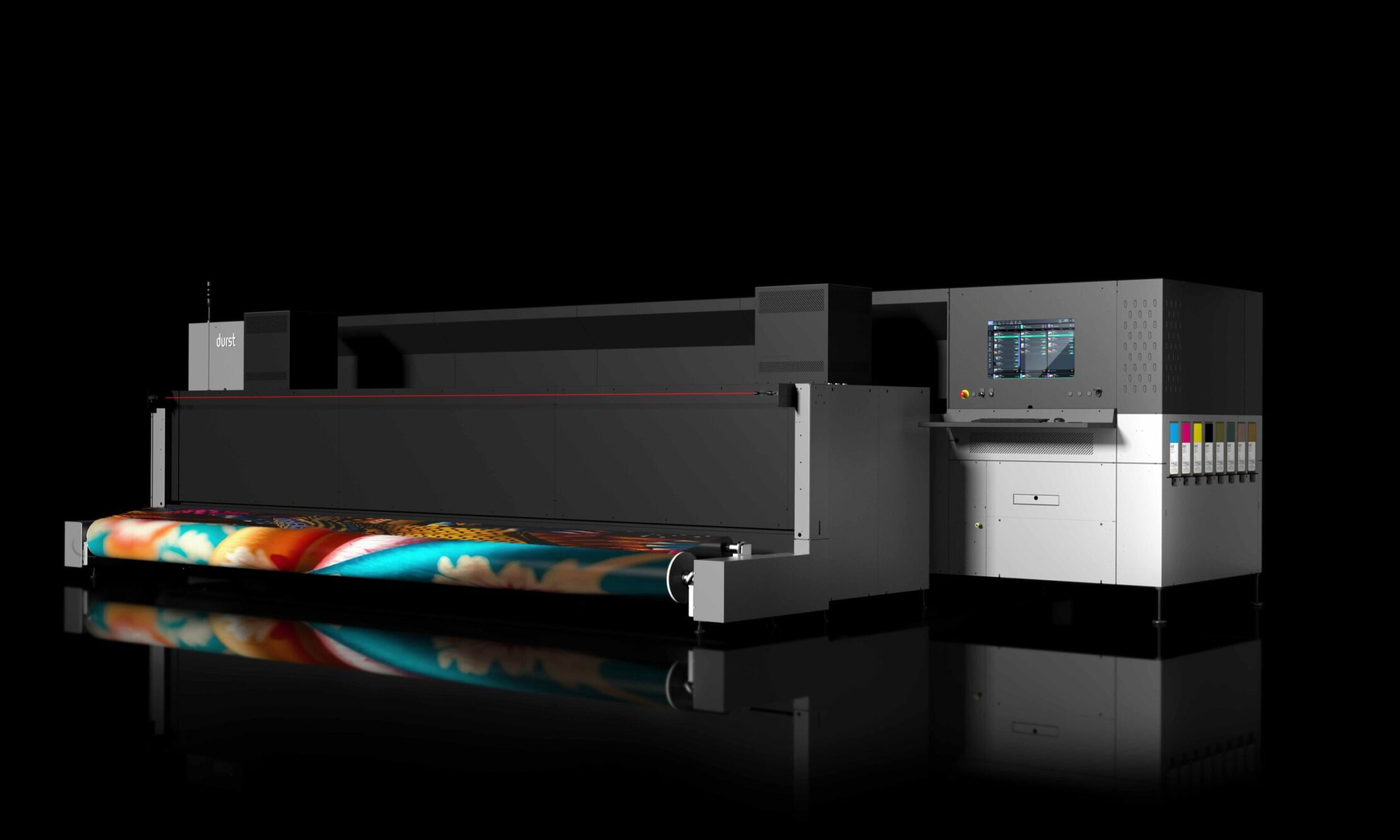
With this, he draws attention to the Durst P5 platform and the manufacturer’s ‘Extended Technology’ approach. With this, he said Durst focuses on extending performance, automation, production safety, and investment value throughout the entire lifecycle of the system.
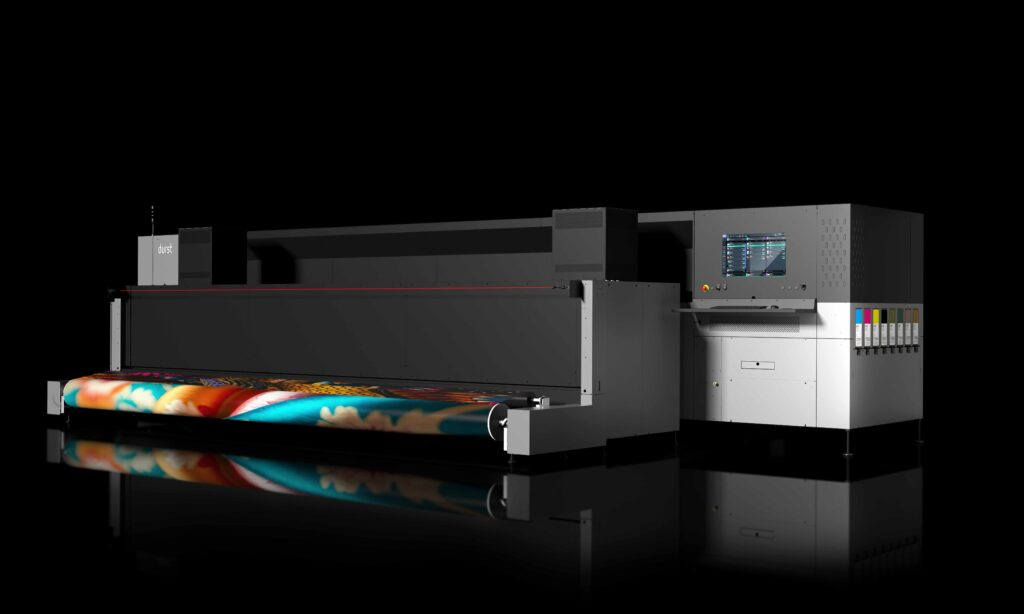
“At the centre of this strategy is Kyveris, our production intelligence platform,” he said. “We believe that the future of industrial printing is not defined by hardware alone, but by a system’s ability to learn, adapt, and continuously improve. Every print job generates valuable production data. With Kyveris, every job contributes to making the next one faster, more efficient, and more predictable. In other words, the system gets smarter with every square meter produced.”
While the appeal of super wide-format print lies in its ability to produce eye-catching, high-impact graphics, it is clear that successful investment decisions should be driven by long-term business goals rather than machine specifications alone. By choosing technology that offers flexibility, reliability and room for growth, print service providers can position themselves to capitalise on new opportunities as market demands continue to evolve.
Discover more content on wide format printing