Does digital printing technology make screen printing obsolete? That’s what many people thought for decades—and they were completely wrong. Here’s where screen printing can still demonstrate its advantages today, why hybrid workflows might even be the future, and what changes this brings for print service providers.
Screen printing—even to many professionals in the printing industry, that sounds more like a thing of the past than the future. And indeed, the history of screen printing in Europe dates back to the early decades of the 20th century.
In Germany in particular, many screen printing shops were established in the 1960s and 1970s. Around the turn of the millennium, many of these then evolved into digital printing service providers.
Even today, Germany remains one of the leading centers for screen printing inks, specialty chemicals, and printing presses. Companies such as EMM, Thieme, Marabu, and Kiwo continue to drive the development of this technology forward and open up new areas of application for it.
Screen Printing: From the Graphic Arts Industry to Industrial Applications
The greatest technical advantage of screen printing lies in the high ink deposit. This results in particularly vibrant colors, intense opacity, and long-lasting print results. Nevertheless, in the graphic arts industry, print jobs for posters, cardboard packaging, and signage have shifted massively from screen printing to digital printing over the past 30 years.
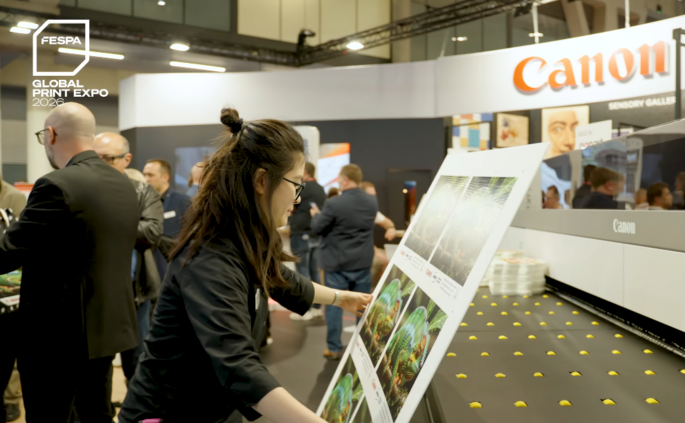
Since digital printing, unlike screen printing, does not require printing plates, it offers the advantages of speed and flexibility. In addition, many digital printing presses use a single ink set. This ink set works on a wide variety of substrates, such as textiles, glass, metal, plastic, or technical films. This saves time, as there is no need to change ink colors. However, this also means that many compromises must be made when using digital printing on specialized substrates.
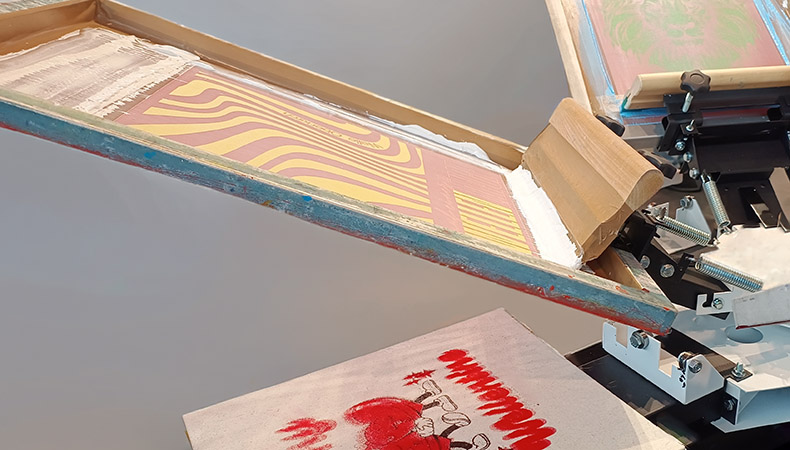
Screen printing inks and pretreatment chemicals, on the other hand, are developed specifically for certain applications, such as glass or textile printing. In high-build screen printing, layer thicknesses of up to 1 mm are possible. This has opened up new possibilities for screen printing beyond the graphic arts industry.
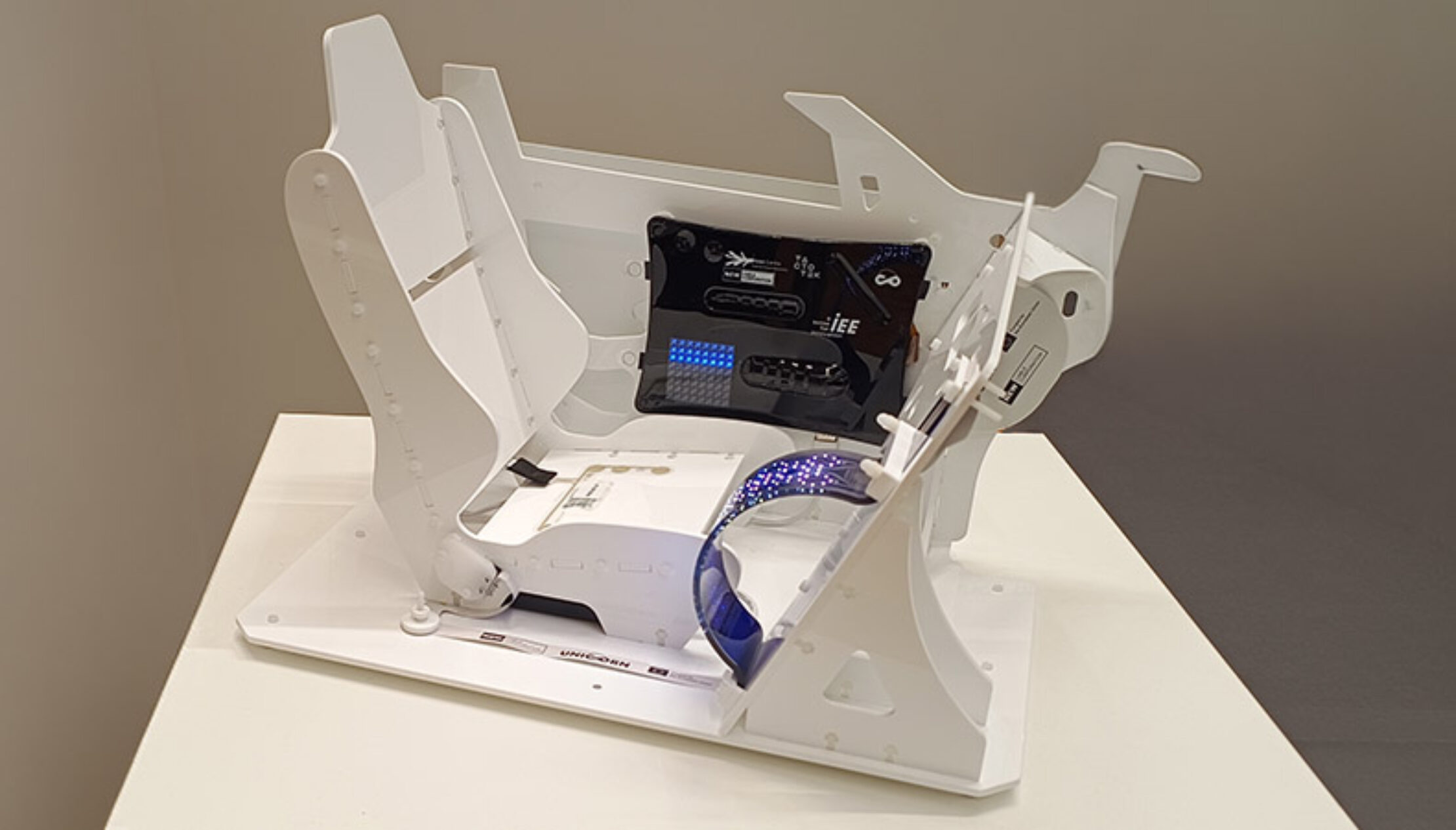
“The strengths of the screen printing process are now utilized and valued in industrial applications that go beyond traditional graphic printing. Examples include human-machine interfaces, functional labels, RFIDs and antennas, solar modules, as well as textile and T-shirt printing,” says Prof. Dr.-Ing. Nicole Lindenmann of the Stuttgart Media University.
Printed Electronics: A Driver of Innovation for Industrial Screen Printing
In fact, the field of printed electronics in particular offers enormous growth potential for screen printing. Here, it is evolving from a decorative printing process into a functional production tool.
Lindemann also emphasizes this: “In screen printing, this is a manufacturing process that enables high-quality, functional applications and serves fields of application with high material and quality requirements. This transformation is made possible by the fact that screen printing offers an almost unlimited selection of processable materials. This makes it possible to print features and functionalities that are difficult or impossible to achieve with other processes.”
Market analyses predict high growth rates for the industry in the coming years, making industrial screen printing one of the most exciting areas of innovation in the printing industry. For example, in a recent study, Credence Research forecasts a global annual growth rate of 7.5% for industrial screen printing through 2023.
For many screen printing companies, this opens up the opportunity to develop new business models. This allows them to offset the decline in traditional graphic design orders and even gives them the chance to grow in line with the overall market.
Existing machinery and production facilities can often continue to be used while new expertise is developed in the areas of quality assurance, electronics, and process control. Lindemann, too, therefore sees “enormous potential for this manufacturing process.”
Screen Printing for Textiles and Promotional Items
However, screen printing’s significantly greater resistance to abrasion, UV radiation, chemicals, and wash cycles compared to digital printing has ensured its continued use in other areas as well.
As a result, screen printing is still frequently used in the production of interior decor. For example, in the production of high-quality wallpaper and wall coverings, surface and floor laminates, or for sun protection products such as roller shades and awnings. In these applications, large quantities are produced per design, so the costs associated with screen production, setup, and pre- and post-production run-up are less significant.
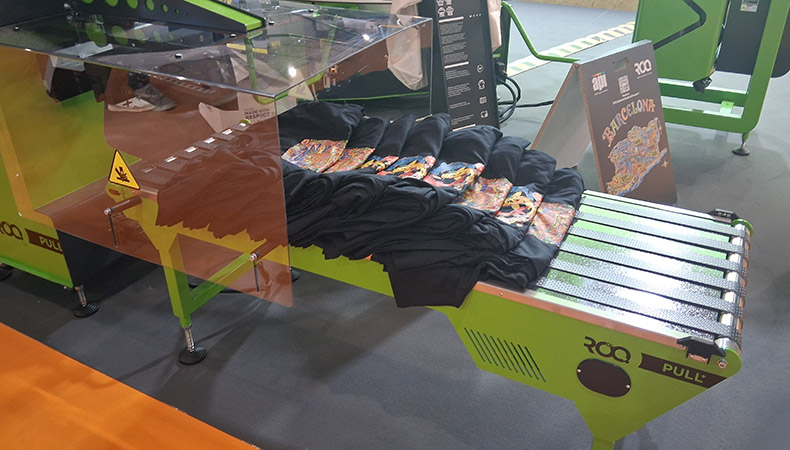
In textile printing as well, screen printing remains the preferred technology for many promotional T-shirts, workwear, merchandise, and club apparel. Particularly simple, abstract graphic designs with just one or two colors can be produced using certain screen printing carousels starting at order quantities of approximately 25 pieces at prices comparable to those of digital printing methods such as DTF. In addition, the screen printing process allows for the easy and durable production of exclusive prints, such as those with metallic or glitter effects.
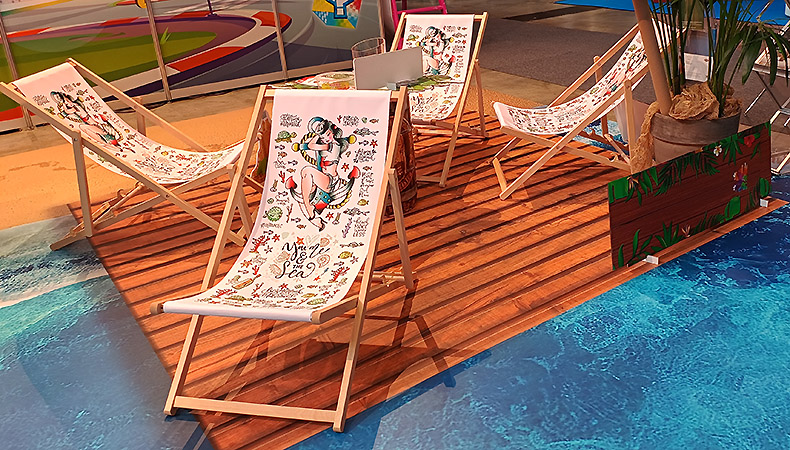
The same applies to personalized products and promotional items. Here, one- or two-color screen printing is primarily used on colored, flat plastic surfaces. Compared to UV inkjet printing with white ink, screen printing is often significantly more cost-effective for runs of 100 or more, while offering better opacity and durability. Since the added value of personalized and promotional items lies primarily in the printing of names or logos, this is a key advantage of screen printing.
It’s quite possible that the current trend toward sustainability will become a “sales booster” for screen printing, particularly for print jobs on home furnishings, consumer goods, and textiles. When consumers want or need to use clothing or household items for longer, a durable print becomes a real selling point.
Digitalization Is Transforming Screen Printing
The future of screen printing in the digital age does not lie in competing with digital printing. Modern printing companies rely on digital workflows regardless of the printing technology they use. Prepress and color management are often already largely automated.
This makes traditional processes such as screen making, job planning, quality control, and production management significantly more efficient. This reduces waste, speeds up turnaround times, and increases process reliability in screen printing.
Data-driven production processes and networked production systems represent the next step toward simplifying new, hybrid production models in which digital printing and screen printing combine their respective strengths.
The future of screen printing is digital and innovative
Screen printing in the digital age is not a dying technology, but one that is evolving. Thanks to digitization, automation, and continuous innovation, the process is opening up new markets and areas of application. The greatest potential lies in the intelligent combination of screen printing and digital printing.
But this is also changing the face of the industry, Lindemann emphasizes: “To what extent is it still ‘printing’? Of course, you need engineers and technicians who are proficient in printing technology but also have a sense of what these new functional applications will look like.”
She continues: “That is why here at the University of Media, we take the approach of teaching our students not only the technical aspects of printing but also its functional applications.”
For printing service providers, this means that the future does not lie in choosing between analog and digital. The companies that will be successful are those that combine both worlds.
Even in the medium term, however, this will also change the profile of employees in screen printing shops: skilled craftsmen will work side by side with process technicians and engineers. It is quite possible that this is where the greatest challenge for the future of screen printing lies.
Discover more content about screen printing