In 2026, digital printing will enter a phase in which materials and smart material concepts will have a greater impact on the market than sheer machine performance. Where is the industry headed—technologically, economically, and strategically? We spoke with two industry experts about this.
Today, digital printing is understood as an integrated system in which printing technology, ink, material, and post-press processing work together seamlessly. The underlying material concept describes the targeted coordination of all these factors for a specific application. This approach became the standard in 2026, as it is what makes the growing variety of substrates—from films and textiles for soft signage to interior materials such as wallpaper—reliably usable.
By and large, print buyers are also largely satisfied with the current offerings, says Rüdiger Maaß, executive director of the Fachverband Medienproduktion e.V.: “Basically, there are enough high-end technologies and materials on the market. Sure, there are one or two specialty items that could still be added, but overall, everything is there for now. The key for the future will be translating the available technologies and materials into solution-oriented applications.”
Digital Printing Trends in 2026: Is Sustainability No Longer Important?
In digital printing in 2026, the search for materials that are both sustainable and durable is key. In addition to PVC-based films, many material suppliers also offer alternatives, such as the 3M Envision product line or the Grafityp GEF series. However, although these alternative products have been on the market for several years now, they are still far from having replaced the PVC-based ones.
There are many reasons for this. For example, there may well be printing companies and sign shops that are reluctant to go to the trouble of adapting their workflow to new materials, such as those used in vehicle wrapping. This is because PVC-free materials sometimes require a significantly different approach.
However, ongoing price pressure and reduced demand for many print products are likely to be much more significant factors. Rising living costs and the ongoing uncertainty in global politics have led many consumers to cut back on spending. This is also affecting advertising spending in the B2B sector, for example, in the printing of point-of-sale materials.
Maaß comments: “Sustainability has lost its significance for most companies, which, in my view, is completely wrong. In this regard, our industry must examine which materials will become even more sustainable in the future and how, if necessary, a corresponding recycling system can be implemented. The overarching goal here is resource conservation.”
Christoph Splithöfer, Large Format Production Sales at HP Deutschland GmbH, notes, however, that HP and its customers continue to focus on sustainability: “Our strategy of prioritizing upgrades over replacements—and thereby enabling longer product lifecycles—is increasingly proving its worth. By 2026, sustainability will have to be demonstrated in a robust manner.”
In fact, for example, the amendment to Germany’s Unfair Competition Act (UWG) enacted in February 2026 means that, once it takes effect in September 2026, unverifiable general environmental claims will be prohibited in the future. Furthermore, advertising claims such as “climate-neutral,” “CO₂-neutral,” or “emission-free” may no longer be based on offset models. Since this is the implementation of EU Directive (EU) 2024/825, comparable regulations are already in the works or have already been enacted in many other European countries.
Splithöfer adds: “Print service providers can no longer rely on green buzzwords; instead, they must transparently demonstrate to their (corporate) customers that production was carried out sustainably. This makes reliable data, certifications, and traceable production processes a decisive competitive factor.”
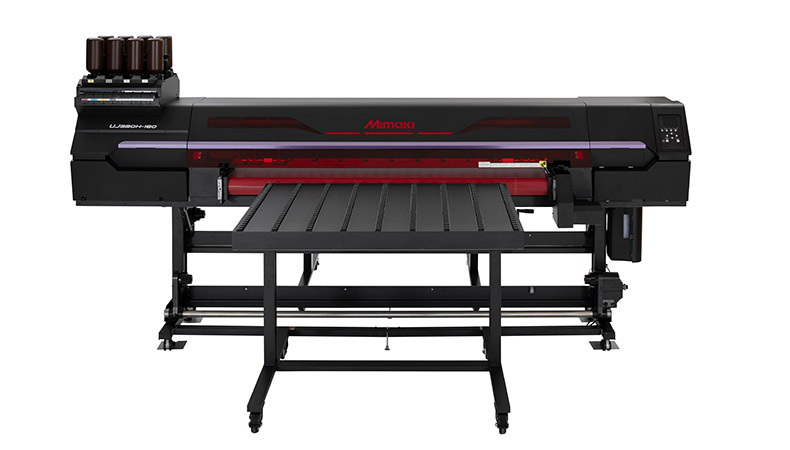
Mimaki has already announced the UJ330H-160, a hybrid printer that uses UV inks, for FESPA GPE 2026. Photo: Mimaki.
Printing Press Concepts: It’s Not Just About the Ink
Currently, UV-curing, solvent-based, and latex inks are primarily used in digital film and sheet printing. In textile printing for soft signage, sublimation printing dominates, while for apparel, DTF printing has largely replaced Direct-to-Garment (DTG) technology for individual items and promotional textiles.
That’s unlikely to change much in 2026 either. For the FESPA Global Print Expo 2026, for example, Mimaki has already announced the UJ330H-160, a hybrid printer with UV inks designed specifically for the sign and display markets.
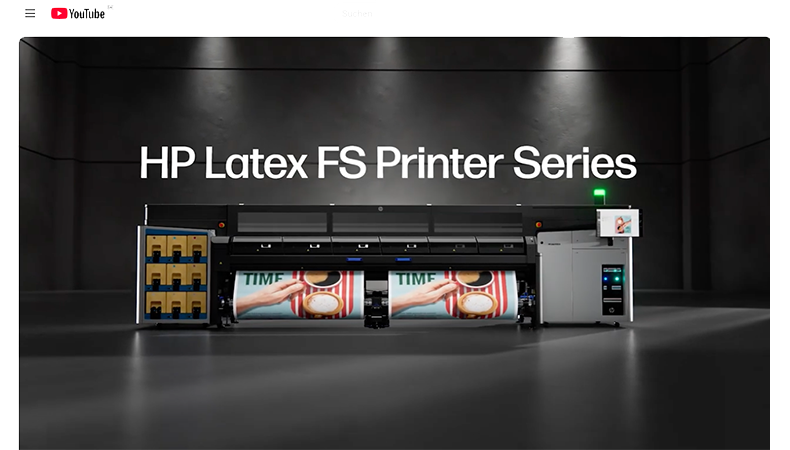
HP, on the other hand, has decided to completely phase out UV-curable and solvent-based inks in the LFP sector, according to Splithöfer: “Going forward, we will focus on our water-based Latex and Stitch inks. What began as an idea to create a more environmentally friendly alternative to other outdoor printing systems has evolved over the past 18 years into an established technology that tens of thousands of print service providers worldwide rely on every day. This development is far from over, and we expect exciting new advances in the course of 2026—possibly as early as FESPA.”
But when it comes to sustainability, the concepts for 2026 aren’t just about the inks. Above all, the construction of large, high-throughput digital printing systems consumes a great deal of valuable resources. Compared to screen printing systems, which can often remain in use for many decades, the service life of digital printers is still relatively short. In Central Europe, it’s rare for a machine to remain economically viable for more than ten years. This is because technology continues to advance rapidly. The print quality and speed of older digital printing systems simply can no longer keep up in a demanding market environment, such as the one expected for 2026.
Manufacturers are therefore increasingly turning to modular designs. For example, the SwissQprint Generation 5, introduced in 2025, can be modularly reconfigured and expanded even after its initial installation.
Splithöfer explains: “Sustainability is the north star of our compass—a non-negotiable priority in our daily work. Our Latex FS series is designed to scale with the service provider’s needs, for example through larger ink tanks or higher speeds. A longer service life increases the sustainability of the investment.”
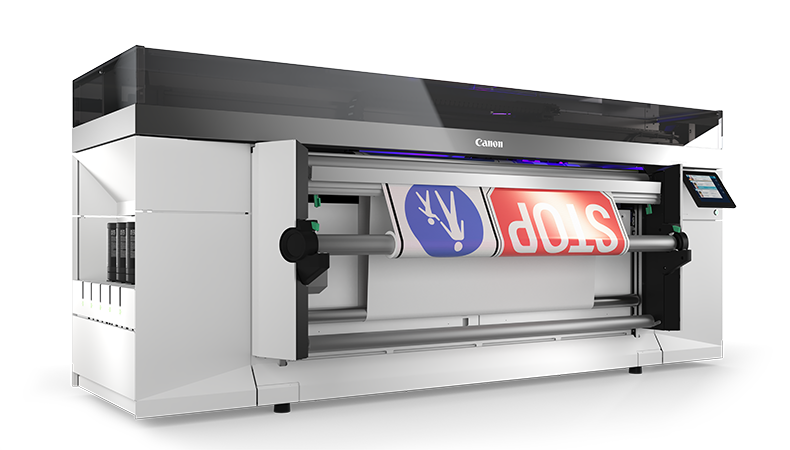
Canon launched the Colorado M-Traffic model in early March 2026. It was optimized for the production of traffic signs. Photo: Canon
Automation and Focus as the Foundation of Modern Concepts
Automated workflows are increasingly becoming a competitive advantage. This will be truer than ever in 2026. Current printing systems, such as the Durst P5 SMP launched in November 2025, are designed from the outset to be used not only as stand-alone machines for manual loading and unloading. Users can also purchase them fully automated right from the factory.
In addition, a clear materials strategy will also gain importance in 2026. Many printing service providers are deliberately reducing the variety of materials they use. They are focusing on tried-and-true media, thereby saving on storage costs and setup times. Sustainable or functional innovations are integrated only when they promise long-term benefits.
It is worth noting that, alongside digital printing service providers offering a comprehensive range of services, highly specialized companies are gaining in importance. Just how important these niches have become is easily seen in the interest shown by machine manufacturers. For example, Canon launched the Colorado M-Traffic model in early March 2026. It was optimized for the production of traffic signs. The latest Roland DG Dimense DA-640, designed for 3D embossed printing up to 2 mm in height, also targets a very specific market: high-quality wall decorations.
Conclusion: A Variety of Strategies for Success in Digital Printing in 2026 and Beyond
The digital printing industry is likely to have to adapt to a challenging market environment in 2026 as well. In addition to productive, sustainable, and reliable machines, materials that are versatile and easy to print on will remain important. They must also be reliably available. From the client’s perspective, however, Rüdiger Maaß also hopes for the following in 2026: “Today, it’s important to bring a creative service provider on board who is generally willing to think and work in a solution-oriented way.” So things will remain exciting—even in 2026.
Discover FESPA Global Print Expo 2026
Europe's leading trade show for screen printing, digital printing, large-format printing, textile printing, and signage. FESPA Global Print Expo 2026 is returning to Barcelona! Visitors can secure Super Early Bird tickets for €55 through April 20 using the code FESG601.