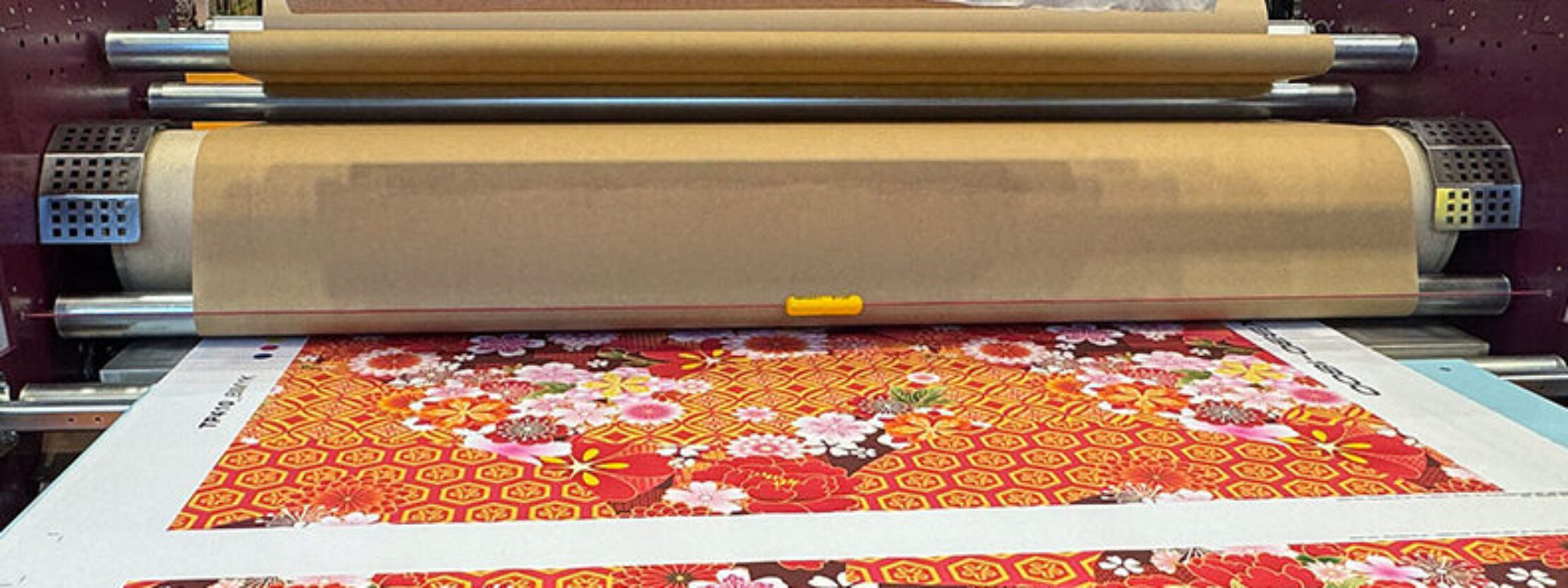
Calenders are essential for digital sublimation textile printing, such as for soft signage. This article explores the technical aspects and provides 10 practical tips for safe, cost-effective, and sustainable use.
Calender: The Basics
In the printing and textile industries, a calender is a machine used for the thermal and mechanical treatment of materials. Calenders typically consist of one or more heated rollers through which textile material, as well as transfer paper and, if necessary, cover paper, are fed. After passing through the machine, the finished textile web, along with the used transfer and cover paper, is rewound back into the machine.
In sublimation transfer printing, the design is transferred using pressure and temperatures of approximately 180 to 210 degrees Celsius and becomes embedded in the fibers. In direct sublimation printing, a calender is used primarily for fixation.
Roll calenders are typically offered as standalone machines by manufacturers such as Klieverik or Monti Antonio. However, particularly for digital flag printing in long runs, the printing unit and calender are sometimes combined into a single production line.
In some models, the rollers in calenders are heated directly by electricity. However, roller calenders for digital textile printing often use models with heat-transfer oil. This is because the heating cylinders in calenders designed specifically for large-format digital printing are up to 5,200 mm long. Temperature variations along the cylinder must be minimal to ensure that the finished sublimation print does not exhibit color variations. This is most easily achieved with an oil-filled system.
Calenders with a work table and a conveyor belt for cut pieces are less commonly used in the production of soft signage. However, similar to heat presses and hybrid products, they are used in the manufacture of printed interior decorations and apparel made from polyester fabrics.
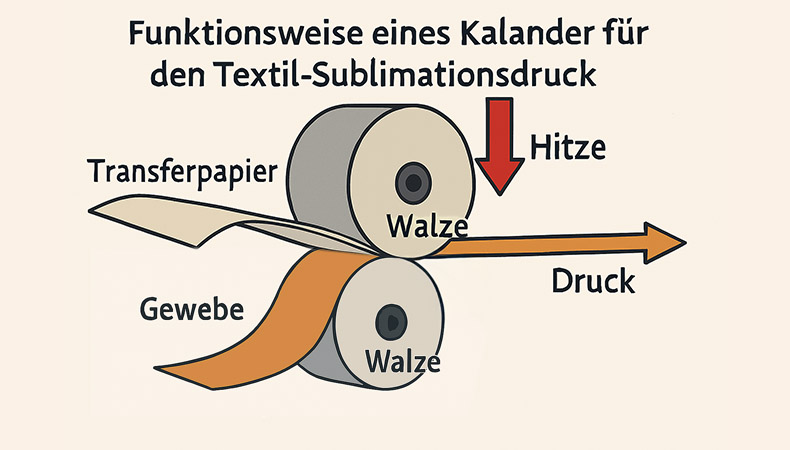
Diagram: Transfer from transfer paper to fabric in a calender. Graphic: Sonja Angerer / AI
10 Tips for Using Calenders in a More Sustainable and Safer Way
Energy Efficiency
- Invest in an energy-efficient model. Depending on its size and heating system, a calender consumes between 10 and 30 kW. Models with oil-filled rollers are generally more energy-efficient than those with direct heating.
- Avoid heating up too quickly, especially with oil-heated cylinders. Depending on the cylinder diameter and heating system, you should wait 45 to 90 minutes before running the first print job. If the temperature is distributed unevenly along the cylinder, this can result in material damage, ghosting, and color variations.
- Use timers or the automatic shut-off feature when the calender is not in use.
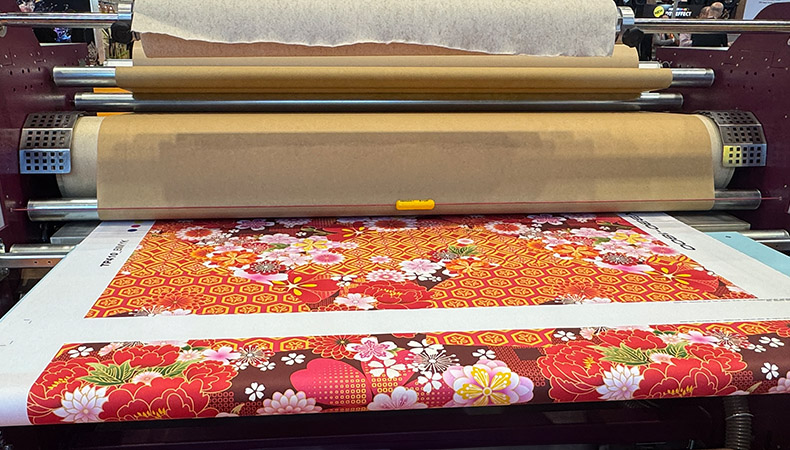
Covering paper in the calender. Photo: Sonja Angerer
Quality Assurance
- Use the built-in sensors or an external thermometer to monitor the temperature. Calibrate regularly to prevent temperature deviations. This helps prevent printing errors and material waste.
- Textiles placed in the printer should be dry and smooth. This is because moisture can interfere with heat distribution and affect the print quality.
- Clean the roller regularly to prevent buildup.
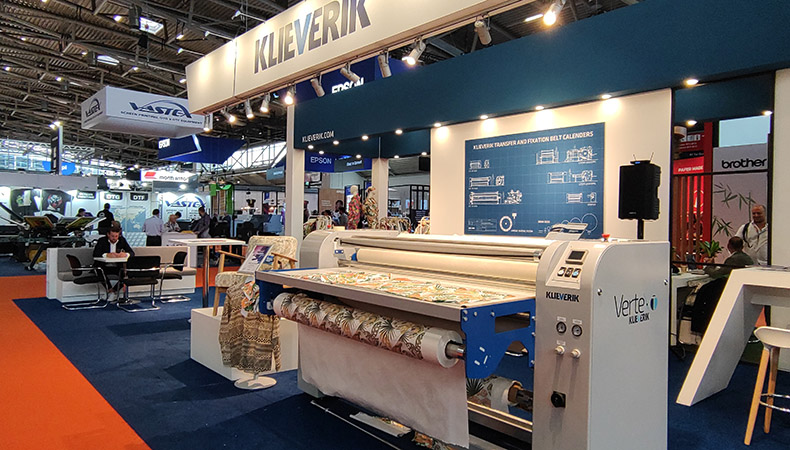
Klieverik is one of the leading manufacturers of calenders for soft signage production in digital printing. Photo: Sonja Angerer
Workplace Safety
- Regularly inspect the calender’s heating systems, sensors, and insulation. Due to the high power consumption, there is a significant risk of electric shock and fire. Make sure that the safety systems always function as expected.
- Have repairs performed only by qualified personnel using genuine replacement parts.
- When working on the calender, always make sure to wear personal protective equipment (PPE), such as gloves and slip-resistant footwear. Clothing should be form-fitting, and hair should be tied back to prevent it from getting caught or pulled between the rollers.
- Only allow qualified personnel to work on the calender. Every operator must be familiar with the required safety distances and know where to find the emergency stop switch.
Conclusion
Calenders are indispensable for digital sublimation printing. Choosing the right model and precisely controlling temperature and speed are crucial. Energy-efficient technology, appropriate working widths, and well-trained staff can not only improve production but also make it more sustainable. A calender is more than just a machine—it is the heart of a successful textile printing operation.