Visit Corrugated 2026
Coming to Fira Barcelona, 19-22 May 2026, Corrugated is a new dedicated exhibition with curated conference content aimed at corrugated converters.
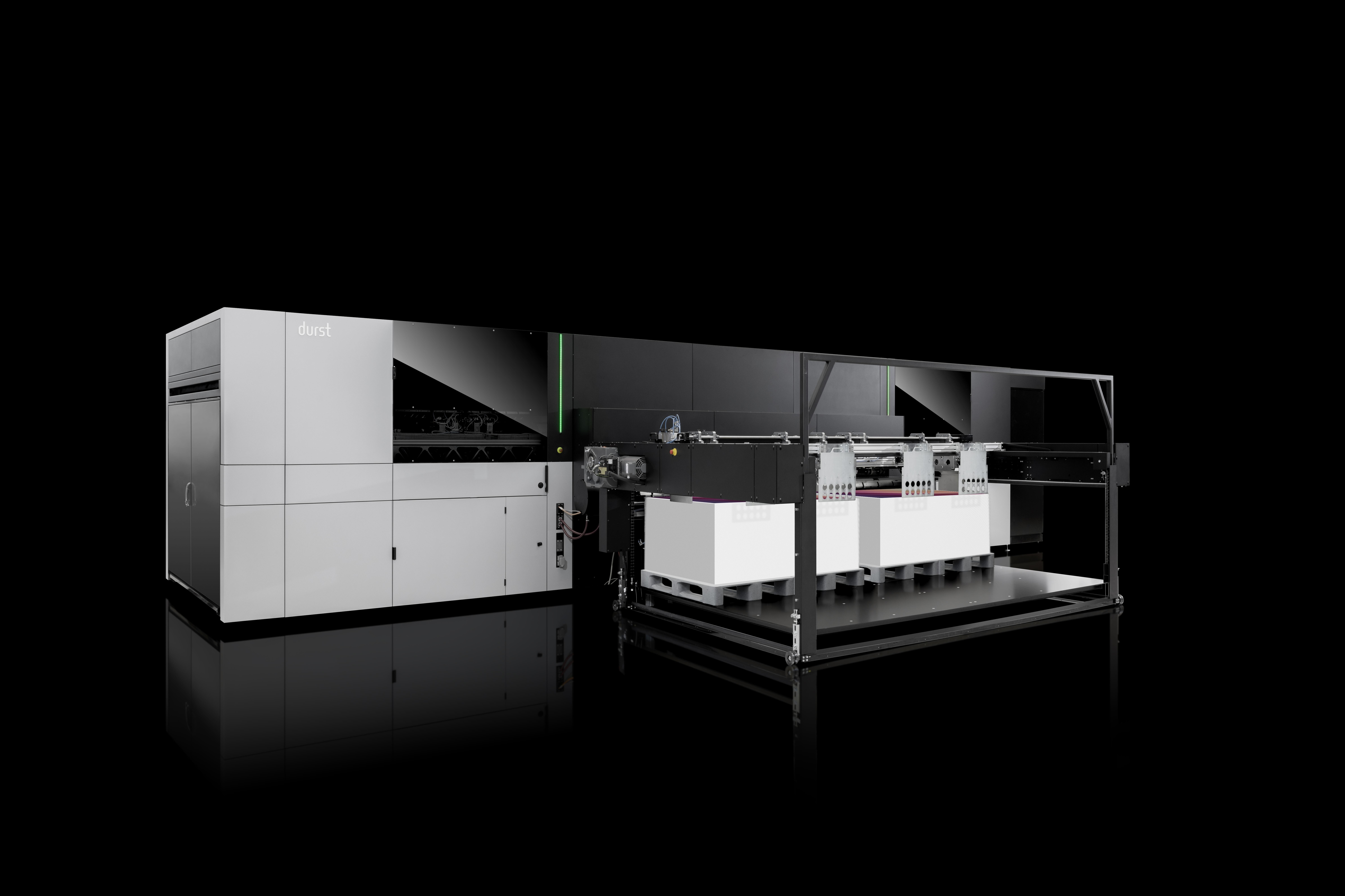
The corrugated sector is evolving rapidly, driven by e-commerce and sustainability. This article explores how digital technology, such as Durst’s single-pass systems and Canon’s inkjet solutions, allows converters to handle shorter runs and complex graphics profitably. Success now depends on choosing the right ink, automation, and high-potential market segments.
Corrugated has long been the backbone of transit packaging, but its role is expanding. No longer confined to brown boxes and bulk logistics, the sector is being reshaped by changing consumer behaviours, regulatory pressure, and advances in digital production.
For print companies and converters, this creates a more complex, but potentially more lucrative, landscape, where growth is no longer evenly distributed but concentrated in distinct, high-potential segments.
E-commerce remains the most visible driver, pushing volumes up while demanding higher-quality, brand-ready packaging. At the same time, sustainability is shifting from a marketing advantage to a baseline requirement, accelerating demand for recyclable, fibre-based solutions across industries. Together, these forces are not just increasing demand but redefining what corrugated must deliver.
Against this backdrop, the challenge is not simply to grow, but to grow in the right places. From fresh food and fast-moving consumer goods to industrial uses and premium retail, each segment brings its own opportunities—and demands. Understanding where investment, innovation, and capability align is essential to capturing the next phase of corrugated growth.

One of the manufacturers at the forefront of corrugated production is Durst. Christian Harder, vice president of sales at the company, picked up on the “three forces” that are driving growth in the sector: e-commerce, sustainability and high-impact displays and POP/POS material. He said that what this means for print companies is a “fundamental shift” in how corrugated is produced.
“In the current market, brands want shorter runs, faster turnaround, seasonal versioning and regional customisation, both in packaging and displays,” Harder said. “The economics of long static flexo runs no longer fit those needs alone.
“This is precisely where digital steps in, and where Durst has been building its portfolio for years, giving print companies the tools to respond to what brands actually need today: agility, quality, and the ability to scale from a short-run display job to high-volume packaging production within the same ecosystem.”
While digital is playing a major role in the market’s evolution, Harder said it is not replacing flexo, but instead expanding what corrugated production can do. He said flexo remains the right tool for long, static and high-volume runs, but the moment you introduce short runs, versioning, personalisation, or the elimination of plate costs and lead times, the economics shift decisively towards digital.
“At Durst Group, we cover the full spectrum,” he said. “For displays and short- to medium-run packaging, our P5 Pack multi-pass platform uses Durst UV-LED inks, delivering outstanding colour brilliance, scratch resistance, and versatility across a wide range of corrugated substrates – with a lower entry investment.
“For high-volume industrial corrugated packaging, our Koenig & Bauer Durst single-pass Delta SPC platform runs water-based inks, meeting strict food safety and sustainability requirements, while competing directly with flexo on throughput and adding all the agility that digital brings.”
On quality, Harder said that the gap with offset litho has closed rapidly. He highlighted the introduction of water-based white ink on the Delta SPC a “genuine milestone”, enabling full colour impact even on brown board, which was the last remaining quality barrier for industrial digital corrugated.
“The real reshaping is happening at the business model level,” Harder said. “Digital allows converters to take on jobs that flexo simply cannot service profitably, and to build stronger, more responsive relationships with brand owners. That is where we see the biggest long-term shift.”

As for those looking to enter the corrugated market, Harder said there are several factors to keep in mind that could make or break their move to the sector. First, he said, printers will need to consider where they want to focus: corrugated packaging or corrugated displays. He said both are strong opportunities but have different production requirements, customers, and commercial models.
Aside from this, he picked up on ink technology as a fundamental decision that follows directly from that choice. He said: “For displays and shorter-run applications, Durst UV-LED inks deliver outstanding colour brilliance, scratch resistance, and substrate versatility. For packaging, where food safety and sustainability compliance are increasingly non-negotiable, Durst water-based inks are the right answer, designed to meet current and future regulatory requirements. The wrong ink choice for your target market is a costly mistake.”
In terms of a production standpoint, Harder said that the key is investing in the right level of automation and material handling from day one. He set out how consistent board feeding, precise registration, stable stacking, and reliable throughput are what separate a profitable corrugated operation from a struggling one.
“This applies equally to hardware automation, from the Durst Multiflex system through to full robotics integration, and to software, where workflow integration, real-time monitoring through Durst Analytics, and MIS/ERP connectivity are what enable truly industrial-scale production,” he said.

Elsewhere, Jennifer Kolloczek, senior director of marketing and innovation for production printing at Canon EMEA, said the future of corrugated packaging will be defined by agility, adaptability, and intelligent production, not scale alone.
“As demand patterns become more dynamic and complex, digital printing enables a more responsive, future‑ready production model; one that balances efficiency with flexibility,” she said. “By removing the need for plates and reducing make-ready time, it enables efficient shorter runs for high-graphics applications.
“Flexo, on the other hand, remains cost-effective for long runs, but as run lengths shrink, plate costs and set-up time become harder to justify. In reality, the two technologies complement each other for different purposes. Digital delivers flexibility and speed, while flexo continues to provide scale and efficiency.”
For those looking to gain a foothold in the market, Kolloczek referenced recent research by Keypoint Intelligence, which found packaging is a converting business, not simply another print application.
“Production environments, it states, are operationally complex, capital-intensive and tightly integrated into manufacturing workflows,” Kolloczek said. “Success depends not on print quality alone, but on how well a technology fits into finishing processes, substrate handling, supply chains and overall production economics.
“Historically, many digital systems result in compromises across productivity, quality or cost, making it critical to assess how new technologies fit within the broader production ecosystem.”
As for opportunities, Kolloczek picked out the high-graphics retail packaging and more sustainable production models, setting out how brands are looking for ways to reduce waste and improve efficiency, so the demand for customised, on-demand packaging will continue to grow.
“The market is moving toward higher complexity,” she said. “Competitive advantage comes from maintaining efficiency as complexity increases. This is valid across all types of applications and vertical market segments.
“The biggest opportunity in corrugated is to manage complexity without losing efficiency by aligning production capabilities with market dynamics. Digital printing is a key lever to restore flexibility and competitiveness – an area where technologies such as Canon’s corrugated inkjet solutions are increasingly playing a role.”
Clearly, there is plenty of scope for opportunity in this sector, with the onus on printers to identify the best route for their business. For further insight into the corrugated market and to find out more about the core growth opportunities that this sector offers, visit the FESPA Global Print Expo, which is taking place from 19-21 May in Barcelona, Spain. Click here for more information.

Coming to Fira Barcelona, 19-22 May 2026, Corrugated is a new dedicated exhibition with curated conference content aimed at corrugated converters.