Nessan Cleary explores the lucrative market for decorating small promotional and gift items. It details various techniques, including Direct-to-Film (DtF) for textiles, UV DtF for rigid objects, Direct-to-Object (DtO) printing for cylindrical items like mugs, and UV flatbed printing for items like pens and phone covers. Success depends on automating production to handle the high volume and low margins of these goods.
It’s the thought that counts – so the saying goes – but we all know that nothing really makes that point quite as well as a gift, be that something meaningful from a friend, or some small keepsake given away as part of a marketing campaign. It’s human nature to keep such things close, on our desks or in our cars, a constant reminder of where they came from.
Better still, producing these small items offers an excellent business opportunity, one that most large format service providers are well-positioned to take advantage of. Perhaps the most obvious place to start is with textiles, such as t-shirts and jackets. There are plenty of options here, from Direct-to-Film and Direct-to-Garment, as well as dye sublimation and screen printing. There’s a balance between cost, quality and run length. Generally speaking, screen printing will produce excellent quality over longer run lengths but DtF will give the lowest cost over short runs, with good enough quality for promotional items. Don’t forget that the same print processes can also be used for bags, hats and other items. DtF, for example, can be particularly effective for adding logos to umbrellas.
There’s also a variation on this theme, called UV DtF, which uses UV-curable ink instead of water-based ink. It applies a similar principle but is meant for rigid objects. It’s a very cost-effective way of producing small decorated objects such as tiles or coasters. The idea is to print to a clear film and then add a protective layer that allows the print to be handled. To apply the graphic, just peel the top layer off, press the graphic against the object you want to decorate and rub it to force the ink in the graphic to transfer. Some versions also include a foil layer that can make for quite striking graphics.
Sawgrass has developed a transfer system, called VersiFlex, that is said to combine sublimation, DTG, and DTF in a single machine. As such, it’s able to print to a wide range of substrates, from cotton and linen to ceramics, wood, metal, acrylic, and vinyl.
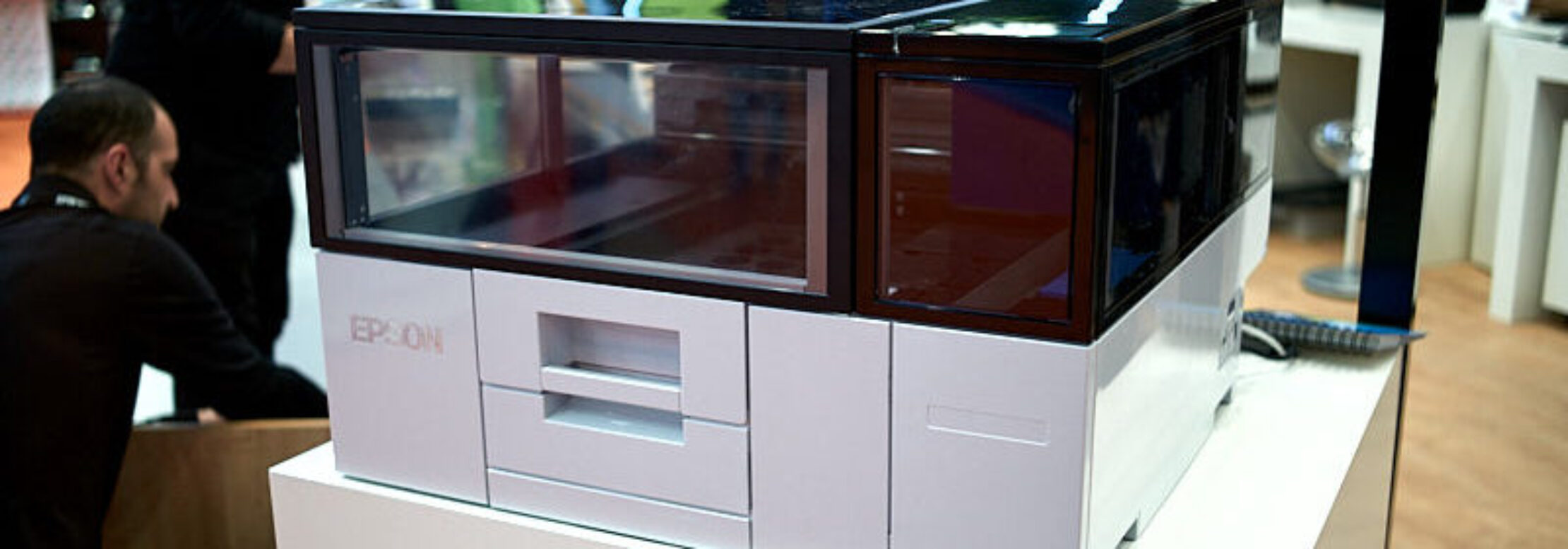
Then there are a number of Direct-to-Object printers that are mainly designed to handle different cylindrically-shaped objects. This typically means things such as mugs and glasses, as well as flasks, water bottles and even candles. There are quite a number of these printers, so it’s worth checking the diameter and length of the objects they can hold, and the print area covered. Most will print CMYK plus white, and some will also offer extra channels for primer and varnish.
For most print service providers, UV flatbed printers will be the backbone of the business and these can certainly print to a wide range of different substrates. However, for small promotional items you may find its more cost-effective to invest in a small flatbed and leave the larger machines for those applications that need the size. Most of these will have the ability to raise or lower the print carriage to handle thicker or taller objects, but some more so than others with some Roland DG printers able to take objects up to 242mm in height.
Again, some will offer extra channels for primer and varnish, and some may offer a choice of inksets for more rigid, or more flexible and stretchable, objects. Typical applications include things such as pens, smartphone covers, USB sticks and stress balls. Other ideas include printing to magnetic sheets to create small fridge magnets or to print to small metal tins for sweets or other treats; in both these cases the UV inks can be layered to produce a very tactile effect. You may need to put together a jig to hold some of these objects, depending on their shape, to ensure the right facet is presented to the printheads. It’s a good idea to have several jigs so that you can load and unload the items to one jig while printing with another in order to keep up the throughput on the printer.
So far we’ve only considered printing but there’s plenty of scope for using the digital cutting tables and routers that most print service providers will already have. It’s fairly straightforward to rout patterns into wood or acrylic, either for a decorative motif or a company logo to give a more tactile, textured feel than a straightforward print. This can be used to create picture frames, coasters, pen holders or even a wooden cover for a notebook to reinforce the use of sustainable materials.
In addition to these large format print equipment, there are plenty of outside-the-box tools that can be put to good use in this area. You could for example print labels, either on a small roll-fed large format printer or a narrow web desktop label printer. Those labels can then be used to apply promotional messages to a whole range of small items such as hand gel bottles or sweet boxes.
Brother has developed a useful all-in-one machine for creating bespoke badges, complete with a metal base and pin clip. The BB1-5700 uses water-based inks, and prints to paper, which is then stamped onto a metal button, all in just a couple of minutes.
Finally, you could explore 3D printing, and create small objects in bespoke shapes, perhaps to match a customer’s corporate logo. Even better, if you can craft these into something genuinely useful, like a bottle opener, which is exactly the kind of thing that people will hang onto for years.
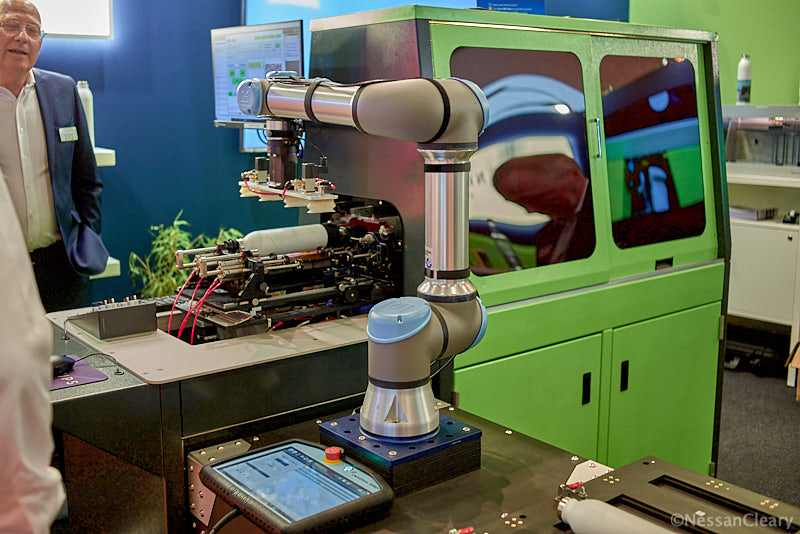
So, in conclusion, there are a lot of different ways to approach the market for promotional and gift items. But ultimately the key to this market lies in automating the production processes because these small items will each have very low margins so the only way to turn them into a profit is to produce in volume with the minimum amount of interaction per order. Combining an effective online ordering system with automated production and fulfilment can potentially lead to a decent turn over.
FESPA World
With over 30 years experience, FESPA World offers the latest features, industry news, blogs, press releases and podcasts relevant to the print community. The content covers a wide range of sectors including screen printing, digital printing, textile printing and more and is sent once a month.