Today, customers expect their suppliers to contribute to efforts to protect the environment. But how can a printing company reduce its CO2 emissions when its budget is tight? Here are three unconventional suggestions.
Climate change is forcing many industries to rethink their approaches, and the printing industry is just one of them. However, the many crises currently plaguing the European economy have dampened companies’ willingness to invest. Fortunately, there are ways to reduce a company’s environmental footprint even with limited resources. In this article, I’ll discuss three cost-effective options that are often overlooked:
- Transition to More Environmentally Friendly IT
- more efficient commuting
- Greener cafeterias and break rooms.
Reducing CO2 Emissions in IT
In recent years, many printing companies have already switched to more sustainable energy sources. They have purchased more energy-efficient machines and switched from conventional light bulbs to LEDs. However, one area seems to have been largely overlooked. In most printing companies, computers and IT are the second-largest consumers of energy after printing and finishing.
An average desktop PC used for office applications consumes up to 200 watts per hour. High-performance computers with dedicated graphics cards—used, for example, for fast rendering of print data or 3D illustrations—can draw up to 800 watts at peak. An average on-site server has a power consumption of about 400 watts per hour. At most locations, it runs around the clock, 365 days a year.
Checking the power-saving settings on existing computers is a good—and completely free—first step toward saving electricity in IT. It would be even better to replace older computers with modern laptops when they are due for replacement. This is because laptops, on average, use only about half as much electricity as a desktop PC with the same processing power. Laptops are also much better suited for enabling employees to work remotely.
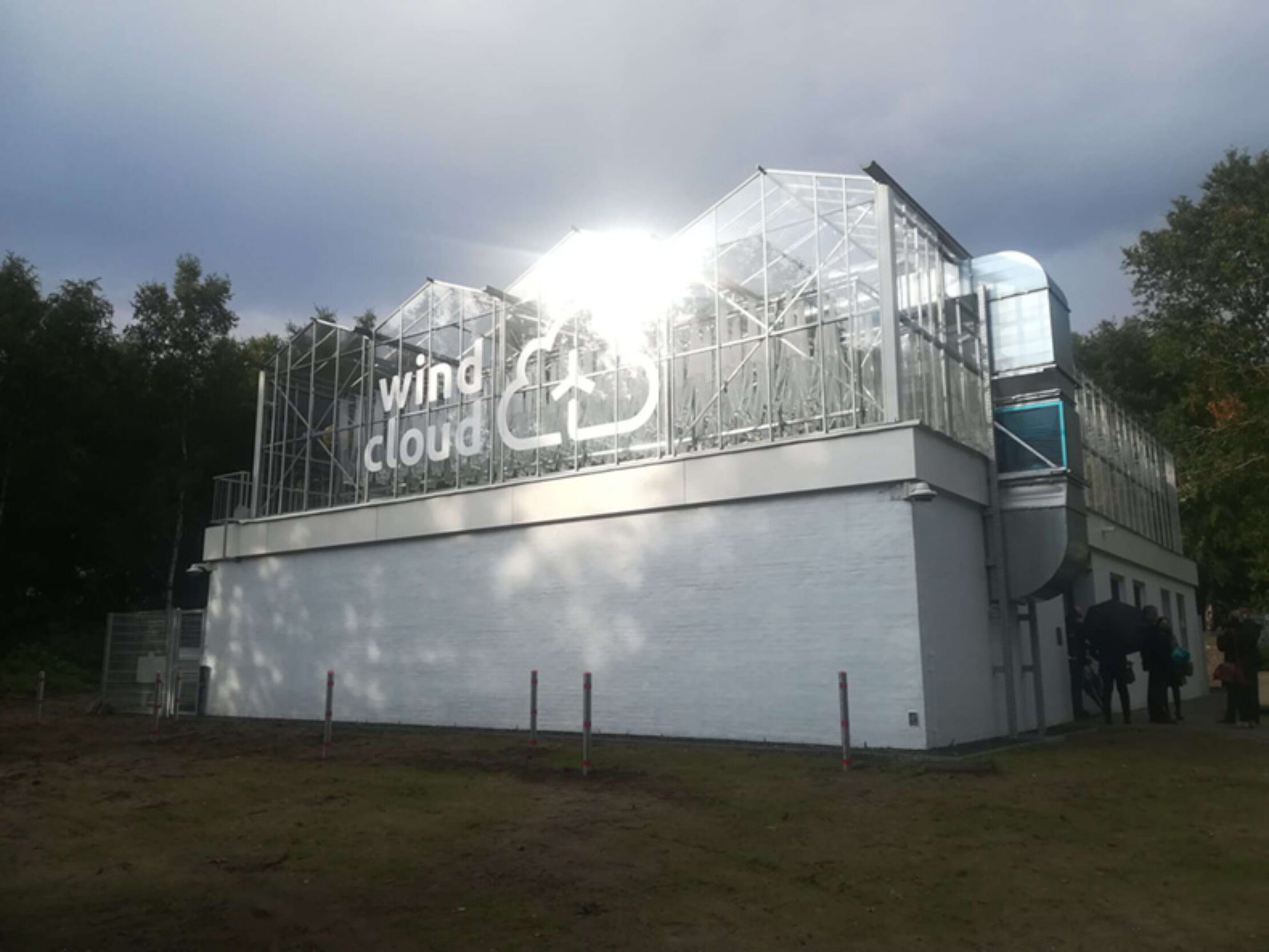
But it’s not just on-site IT—cloud servers and network connections, such as those used for an online editor on a website, also consume a lot of electricity. Providers like AWS, Google, and Microsoft have already taken steps to make their data centers more energy-efficient. One small Frisian provider, however, outdoes them all, as it has set out to offer 100% climate-neutral hosting and colocation. To achieve this, Windcloud uses electricity from nearby wind farms. The inevitable waste heat from the servers is also used to power an algae farm. If more data centers follow a similar path, energy-efficient cloud computing could become an even more attractive option for the printing industry.
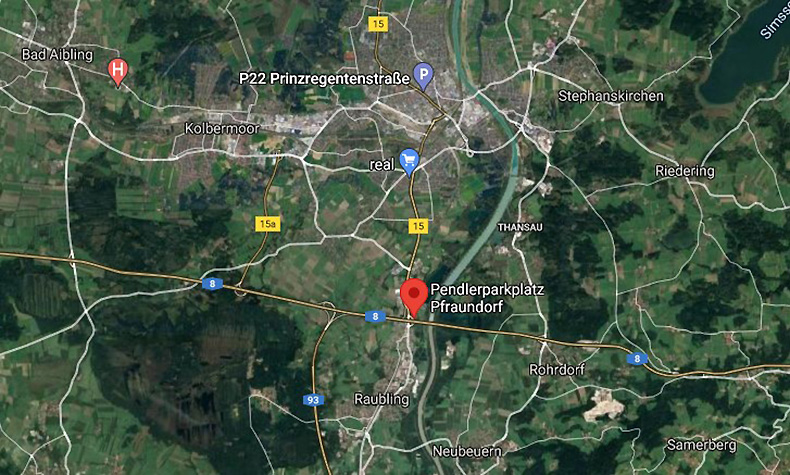 Encouraging employee carpooling can help reduce fuel consumption. This also has a significant impact on a printing company’s carbon footprint. Photo: Google Maps
Printing Companies Reduce Their Mobility Footprint
According to a 2021 study by Agora Verkehrswende, the average distance traveled by a German worker to get to work in 2017 was about 16 km (round trip). Based on 200 workdays, that amounts to about 3,200 kilometers per year. That’s slightly less than the distance from Berlin to Nicosia (Cyprus). About 63 percent of commuters use their own cars to get to and from work. For a printing company with 20 employees, this amounts to about 40,000 kilometers driven per year or up to 6 metric tons of CO2 emissions from commuting alone.
That is why printing service providers can also take steps to reduce the negative impacts of commuting to and from the company, for example:
- Encourage carpooling
- Subsidize monthly public transit passes or the Deutschland-Ticket
- Provide shower facilities for cyclists and pedestrians.
But those are just the most obvious measures. There are many other, often overlooked options:
- Site Selection: While a warehouse on the outskirts of a small town with poor transportation links may be inexpensive, it means that almost all employees and customers have to drive there.
- Working from Home / Remote Work: Offer it on a day-by-day basis or full-time.
- Part-time positions: Combine very small jobs involving only a few hours into larger part-time or even full-time positions.
- Coordinating Shifts and Work Schedules: This Makes It Easier for Employees to Form Carpool Groups.
- Follow the schedule: Plan shifts so that public transportation can be used.
And best of all: Most of the ideas mentioned above don’t even cost much.
 A cafeteria that serves healthy food can help reduce a company’s carbon footprint. Photo: S. Angerer
Reducing CO2 Emissions in Print Shops: Lunch Break
At lunchtime, many small businesses resemble a beehive. Vehicles swarm off in all directions as employees head out to eat or pick up food. One thing is clear: this, too, contributes to a company’s carbon footprint.
But there are alternatives. Printing service providers could, for example, team up with neighboring businesses and invite food trucks. Or they could look for a mobile vendor offering snacks and meals. Or why not simply turn the break room or kitchenette into a full-fledged cafeteria? This not only saves travel time—which employees could better use for relaxation—but also reduces unnecessary traffic on the roads.
Larger companies in the printing industry may already offer a cafeteria where their employees can choose from a variety of lunch options. However, the selection of meals often does not seem to meet modern standards. Using regional ingredients and reducing the fat, sugar, and meat in meals does more than just lower the carbon footprint. Employees eat better and, as a result, become happier and healthier—at minimal additional cost.
Seeking New Approaches to Reduce CO2
Reducing harmful environmental impacts is one of the most important challenges that global industry will face in the future. The printing industry is no exception. Optimizing workflows, investing in energy-efficient printing and finishing equipment, and sourcing more environmentally friendly energy are key components of this process.
But there are many other options—such as more environmentally friendly IT, reducing commuter traffic, and optimizing food services—that are just as important. After all, they can make a big difference, and they don’t even cost much. So it’s high time to get creative!