Sustainable printing is establishing itself as the new standard in an industry that combines innovation, creativity, and environmental responsibility.
Sustainability has evolved from a trend to a cornerstone of the large-format printing industry. From the use of recyclable materials to energy efficiency, every stage of the process is evolving toward more responsible models, driven by both customer demand and companies’ environmental commitments.
Today, printers seek to balance visual impact and sustainability by integrating solutions that minimize waste, reduce emissions, and optimize resource consumption without compromising the quality of the final product.
Sustainable Substrates: New Alternatives to PVC
PVC, which has been the dominant material for years, is being replaced by more environmentally friendly options such as FSC-certified paper and cardboard, PVC-free fabrics, and recycled polyester (rPET). These alternatives offer the same technical performance with a lower environmental impact.
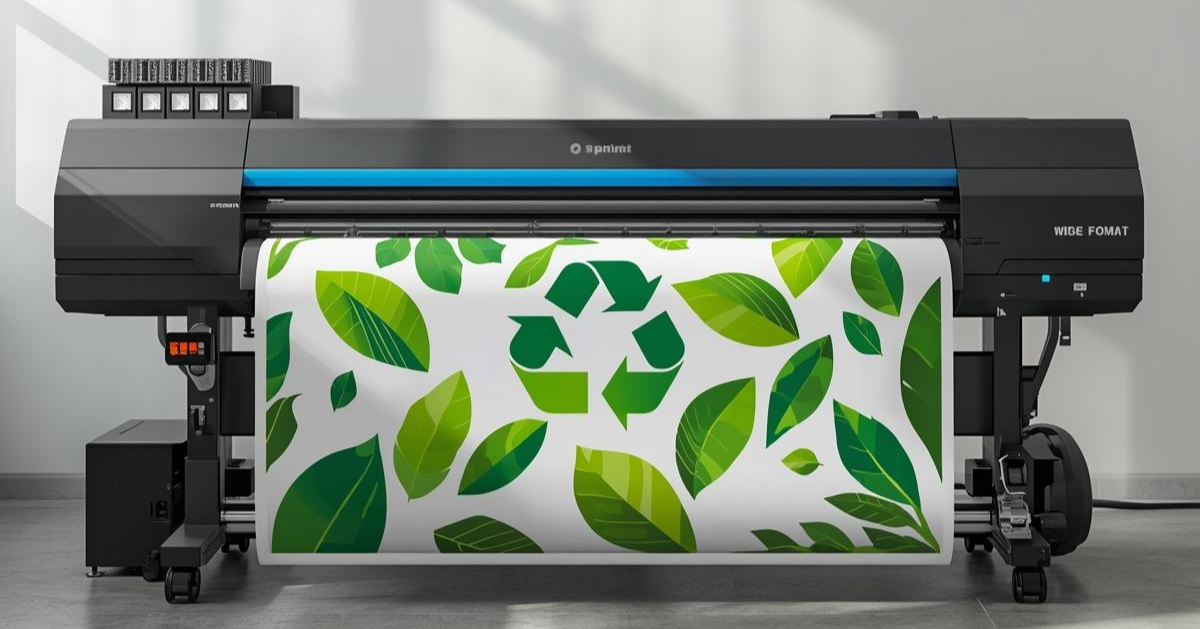
Brands such as Kavalan, Berger Textiles, and Neschen are leading this shift with recyclable and compostable materials for use in retail, signage, and interior design.
Eco-friendly inks and lower ink consumption
The shift toward water-based, latex, or UV LED inks is significantly reducing VOC (volatile organic compound) emissions. In addition to being safer, these inks offer vibrant colors and excellent adhesion on a wide range of surfaces.
Its efficiency is complemented by printers that use energy-efficient LED curing, which delivers long-lasting results with lower energy consumption.
Energy and Efficiency in the Workshop
The new smart printers automatically adjust power and temperature based on the type of job, reducing waste and costs.
In turn, workflow automation helps minimize errors, optimize time, and reduce material usage, thereby strengthening operational sustainability.

A Commitment That Creates Value
Adopting sustainable practices in large-format printing not only enhances a brand’s reputation but also opens up new business opportunities for customers who prioritize environmental responsibility.
From substrates to inks to energy, the path toward greener printing shows that innovation can go hand in hand with sustainability.