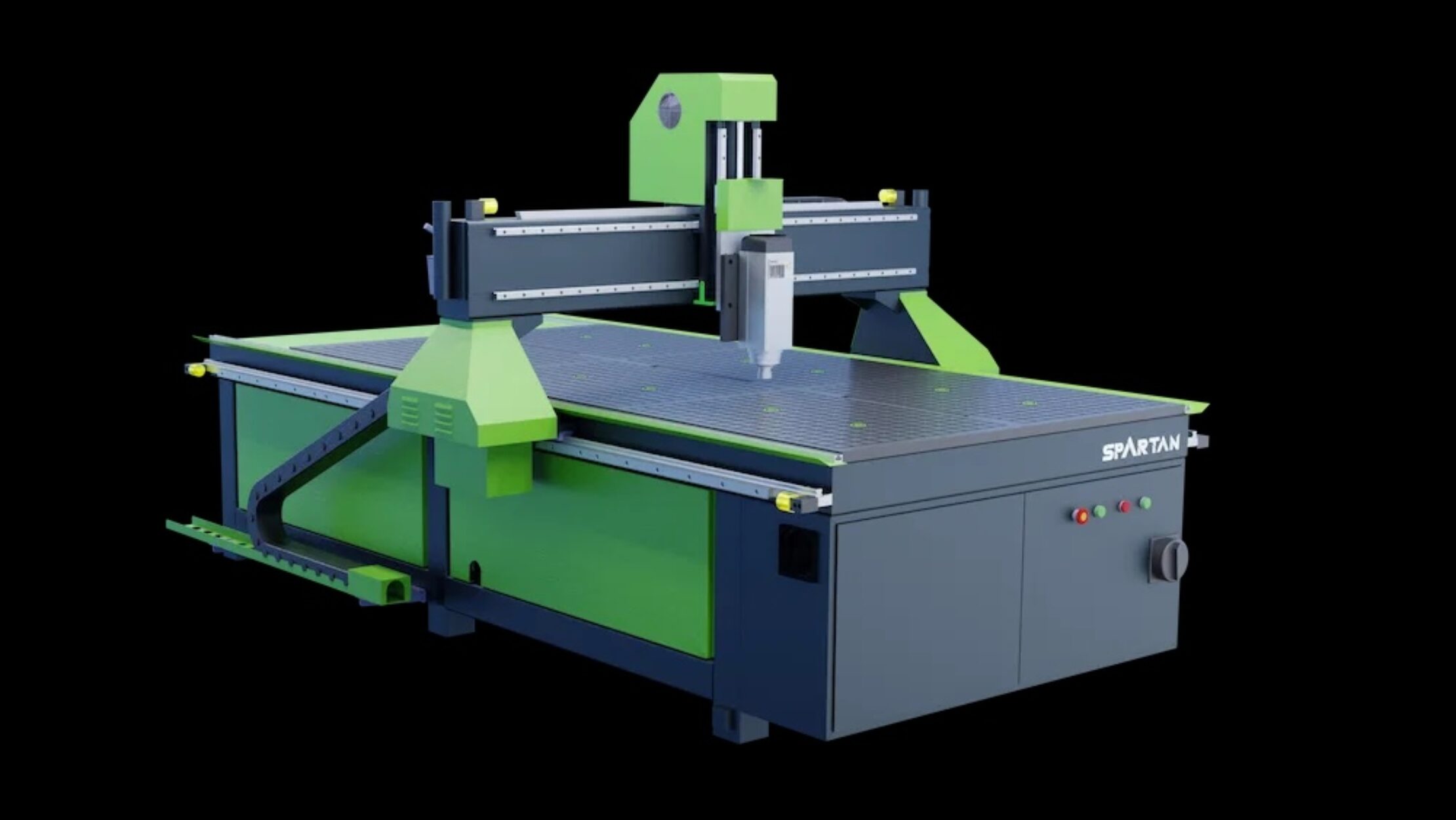
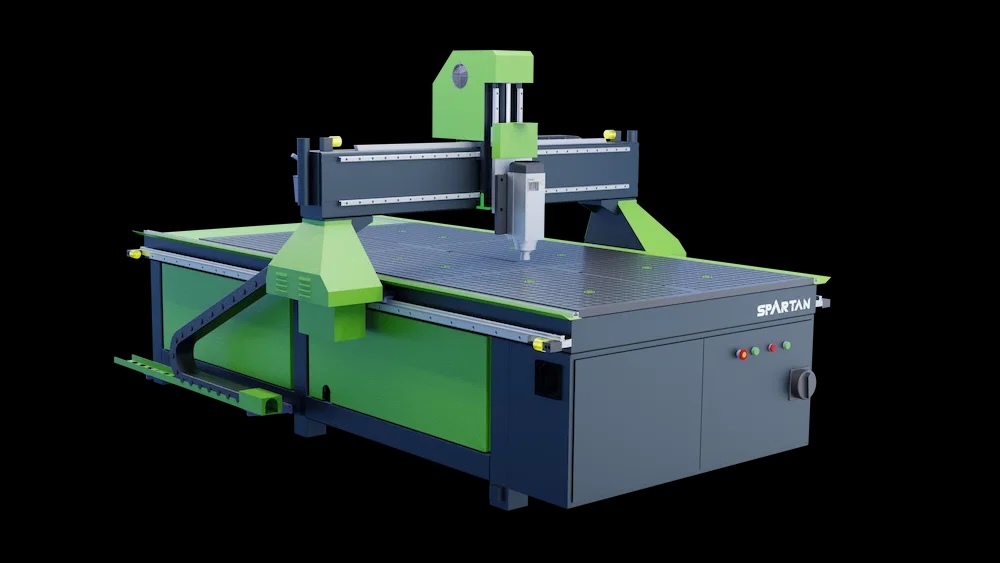
For anyone involved in wide format display graphics, particularly sign making, a CNC router is going to be one of the most versatile and long-lasting pieces of equipment to have at your disposal.
CNC routers might lack the cachet of the latest inkjet, but the sheer range of work they can produce makes them an essential accessory for many printers so it’s worth taking the time to understand exactly what a router is and what features to look for when investing in one.
CNC stands for Computer Numerical Control, which essentially means automating the positioning of the cutting tools through computer controls to give far more precise and intricate results than can be achieved manually. More importantly, the cutting patterns can be repeated with every copy exactly the same. You’ll also need a CAD program to create the graphical cutting pattern and translate this into the G-code that moves the spindle. For a standard three-axis movement that will include the X and Y movements along the length and width of the table, as well as the Z axis for the depth. That could mean cutting through a substrate or carving a design into that media.
One obvious question is whether to choose a router or a cutting table. There is a lot of crossover between CNC routers and digital cutting tables, with both being highly automated, CNC-driven devices capable of delivering very precise cutting. Many vendors offer both CNC routers and digital cutting tables and this means that you can find similar features across both types of devices such as tool changing and vacuum systems for holding the substrates in place. Other similarities include the software, the user interface and the integration with CAD/CAM design tools to generate the cut paths.
Both systems do offer a range of cutting tools, with plenty of knives available for routers, while there are also routing heads sold for cutting tables and some vendors selling hybrid systems for both routing and cutting. But the two types of cutting systems are designed for quite different applications, despite the degree of crossover between them so it’s best to pick the one that best suits the majority of work that you have.
Material difference
The difference lies mainly in the type of materials. Digital cutting tables are sometimes sold as finishing systems, which accurately describes their main purpose – finishing off a job. They can handle…
...