Visit Personalisation Experience 2026
Discover the latest in personalisation and customisation, with conferences, networking opportunities and interactive opportunities.
Workflow automation is essential for scaling personalisation, transforming complex customer journeys into seamless, error-free processes. Industry experts highlight how AI and automated routing unblock bottlenecks in artwork prep and production. By reducing manual touchpoints, businesses minimise waste, ensure consistent quality, and achieve the rapid fulfilment modern consumers expect.
Personalisation has moved from a competitive advantage to an expected requirement. But, delivering meaningful, personal experiences at scale is simply not feasible without robust workflow automation in place.
Automation enables business to orchestrate complex customer journeys, unify data across touchpoints and trigger timely, relevant interactions without manual intervention, which leaves teams able to focus on tasks involving strategy and creativity to ensure.
Is workflow automation a central pillar of any truly successful personalisation strategy?
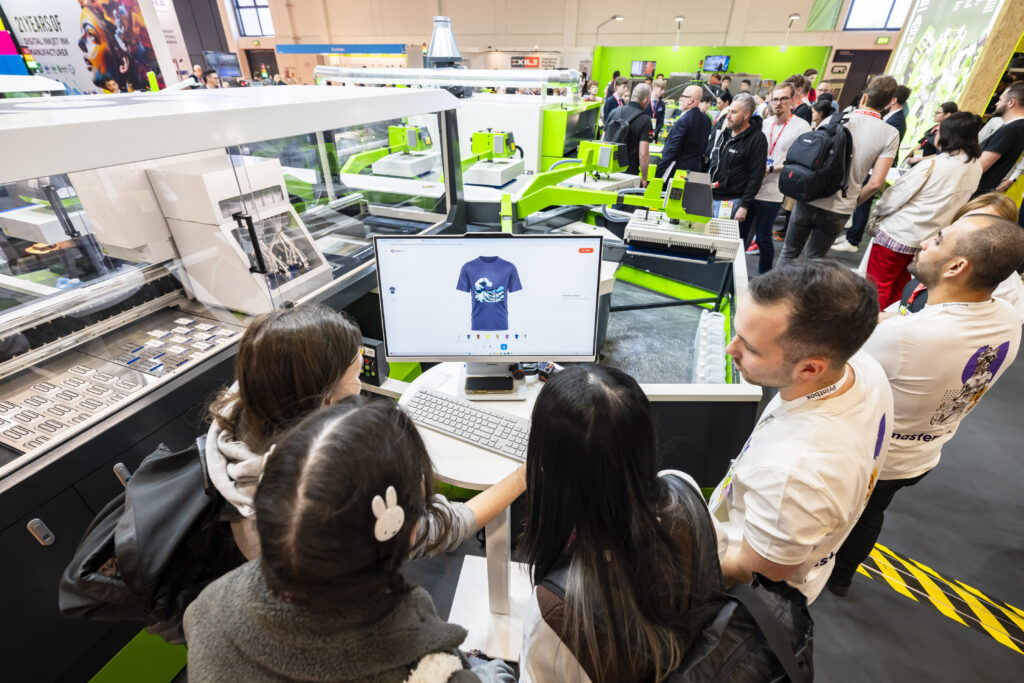
We spoke to industry experts Jakub Kuśmider, Head of Product for Masterpiece AI, Printbox; André Albrecht, Software Development Manager and Head of Myze Workflow Solution, Brother; Giselle Robeson, Senior Product Marketing Manager, Fiery: and Jayson Tompkins, Founder & Chief Digital Officer, STAHLS’ Fulfill Engine to find out more.
Which stages of the personalisation workflow benefit most from automation today – and where do you still see manual processes holding businesses back?
André Albrecht: For us, some of the biggest benefits of automation sit at the intersection of order intake and production routing.
For example, when an order comes in via a connected shop, Brother’s Myze software automatically pulls the artwork, assigns the correct production method (DTG, DTF, embroidery, sublimation), generates a QR-coded label, and routes the job to the right station – all without human intervention.
Giselle Robeson: The biggest gains from automation today are in setup and output preparation – the work that happens before and after a file hits the press queue.
For example, Fiery FreeForm Create develops personalised jobs with varied text, image and barcode options. Once a job is ready to produce, it requires the correct print settings for colour output, media selection and imposition or layout to be applied – decisions that are normally made manually. Fiery server presets and workflows solve this. You define those settings once, and then you can apply them in FreeForm Create when you’re ready to print, or even drop a saved job into a Hot Folder. Your VDP job goes from file to press-ready without an operator having to manually configure anything.
Jakub Kuśmider: For Printbox, we’re at a point where almost the entire personalisation workflow can be automated, from artwork, to layouts, to designs.
Put yourself in the eyes of the consumer: you’re scrolling Pinterest or Instagram, you see a graphic and think, “I’d love this on a t shirt.” Printbox’s Masterpiece AI enables users to prompt or upload images, and convert it into production ready artwork. As a result, the design is unique to that customer.
This is exactly where artificial intelligence provides businesses with an advantage. Consumers can take the designs already in use and convert them into a starting point for personalisation, providing increased flexibility for each individual’s own creativity.
That shift – from a rigid product to an adaptable one – is where automation delivers the most value right now.
Jayson Tompkins: Automation impacts at workflow handoffs – order intake, artwork handling, production routing, and fulfilment – where it removes friction and keeps jobs moving via rules instead of manual chasing.
The bottlenecks are in the gaps: artwork prep, exceptions, inventory, and prioritisation still rely on human judgment. The big opportunity is connecting the entire workflow so decisions happen automatically and consistently end to end.
André Albrecht: Variable data doesn’t have to slow things down or introduce risk. With the right automation, every personalised order transitions from customer to production – accurately and consistently.
For Myze, the artwork a customer creates is exactly what reaches the printer, with each step verified along the way, to ensure the correct design is used every time.
When it comes to dropshipping and multi-location production, automation brings clarity to complexity. Orders are routed intelligently based on rules, so everything runs smoothly at scale – which is exactly what mass customisation demands.
Giselle Robeson: As each design is unique, variable data jobs naturally introduce more opportunities for missing data, formatting issues, production mistakes or inconsistent output. Automation standardises this process and reduces dependence on manual intervention.
An example of this is FreeForm Create feeding into Fiery JobFlow Pro, which enhances consistency across the entire workflow. The automated preflight flags issues early, while batch splitting, data swaps and file routing happen seamlessly to reduce manual touchpoints and risk.

Jakub Kuśmider: By definition, variable data and personalisation are complex because every order is different and must maintain high quality.
For example, every design generated by Masterpiece AI automatically goes through a set of rules: content limits, brand‑safety checks, and technical requirements for a given product. The platform enforces resolution, aspect ratio, safe areas, bleed, and colour space before a file ever reaches production.
As a result, you get fewer revision cycles, less waste from misprints, and faster turnaround times.
Jayson Tompkins: Automation is what makes mass customisation scalable. Variable data quickly adds complexity, and without it, errors and delays pile up. By standardising workflows and tracking every step, automation reduces risk, improves consistency, and turns a chaotic process into something predictable and repeatable.
André Albrecht: The expectation of same-day or next-day fulfilment of personalised products is becoming standard. That pressure pushes automation deeper into every step. Businesses that can produce closer to the end customer, triggered automatically, will have a structural advantage.
On-demand production is already a more resource-efficient model than batch manufacturing because you produce what’s sold, not what’s forecast. But, optimising printing on DTF sheets to minimise waste, ink consumption analytics and routing jobs to the nearest production site to reduce shipping distance are vital.
Personalisation goes beyond print-on-demand into more complex decoration techniques and each adds workflow complexity. The platforms that will lead are those that can reduce the requirement for human intervention.
Overall, workflow automation is set to make creative ambition operationally viable.
Giselle Robeson: Automation is bringing creativity and production closer together. Instead of separating design and manufacturing decisions, future workflows will intelligently choose layouts, print paths, materials and processes, based on each job. This will help marketers and print providers launch more targeted, personalised campaigns faster – and with less manual work.
Templates, rules-based automation and smarter data handling will make it easier to produce multiple versions without increasing labour. At the same time, sustainability will play a bigger role, with automation reducing waste, minimising setup changes and optimising energy use.
Jakub Kuśmider: End‑to‑end automation can support an idea, from concept to product, that’s ready to sell. The system creates the design, maps it to the right products, prepares print‑ready files, and publishes everything to your store – either as print‑on‑demand products or with built‑in personalisation options for the end customer.
In a world where products more or less “create themselves” automatically, the system should understand what’s trending – styles, colours, themes, and aesthetics – and use that information to continuously evolve your catalogue. This way, businesses can adapt in real time without anyone hand‑curating every detail.
The role of the business shifts from “we manually create and manage products” to “we define the creative boundaries and rules – and let automation handle the rest.”
Jayson Tompkins: Workflow automation is shifting from rule-based, to intelligent systems that make real-time decisions for routing jobs, optimising production, and even handling artwork based on demand and capacity.
This enables greater creative flexibility, faster on-demand production, and more sustainable operations with less waste and localised fulfilment. The end goal? A fully connected workflow where commerce, production, and fulfilment move in sync, making personalisation easy to scale.

Discover the latest in personalisation and customisation, with conferences, networking opportunities and interactive opportunities.