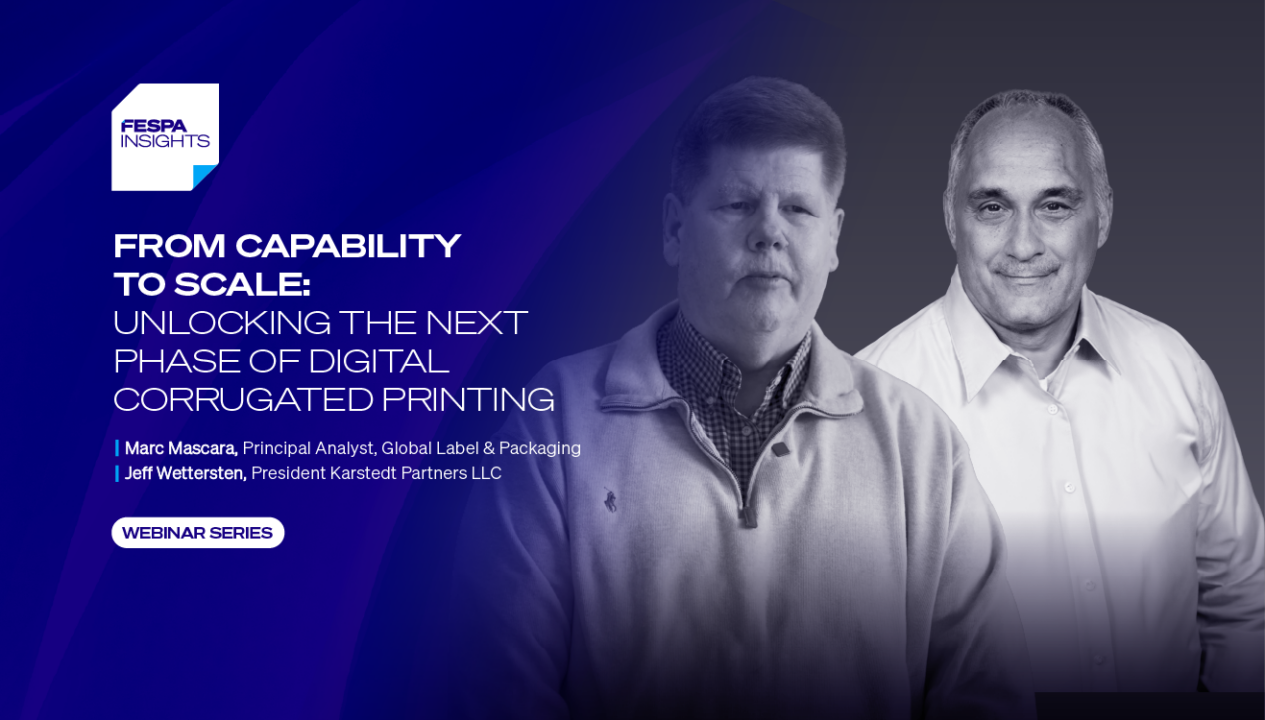


The speakers explain how the packaging industry is transitioning from technology validation to production integration, driven by changing market pressures including supply chain flexibility needs and rapid response requirements from brands. They share a detailed case study of a converter who achieved 22–24% cost reduction and significant productivity gains by implementing digital preprint workflow across nine facilities. The discussion covers how converters are using digital printing to reduce operational friction across their entire manufacturing process, not just the print stream. Key themes include the shift from asset utilisation to workflow optimisation, the importance of manufacturing integration over print capability alone, and how different market segments are adopting digital solutions. The speakers also address technical considerations like water-based inks for food packaging and substrate requirements for digital printing. The session concludes with insights about future trends including increased production complexity, hybrid analogue-digital strategies, and the critical importance of workflow integration and automation in the next phase of digital adoption.
Here is what you will gain from watching this webinar:
- Industry Evolution: How the packaging sector is moving from simply validating technology to full-scale production integration.
- Cost and Productivity Gains: A detailed case study of a converter achieving 22–24% cost reductions and major productivity improvements across nine facilities.
- Operational Efficiency: How digital printing can be used to reduce friction across the entire manufacturing process, rather than just within the print stream.
- Strategic Shifts: The transition from focusing on asset utilisation to prioritising workflow optimisation.
- Technical Knowledge: Essential considerations regarding water-based inks for food packaging and specific substrate requirements for digital print.
- Future Trends: Insights into upcoming industry shifts, including hybrid analogue-digital strategies and the necessity of automation in the next phase of adoption.
Watch more FESPA Insights webinars