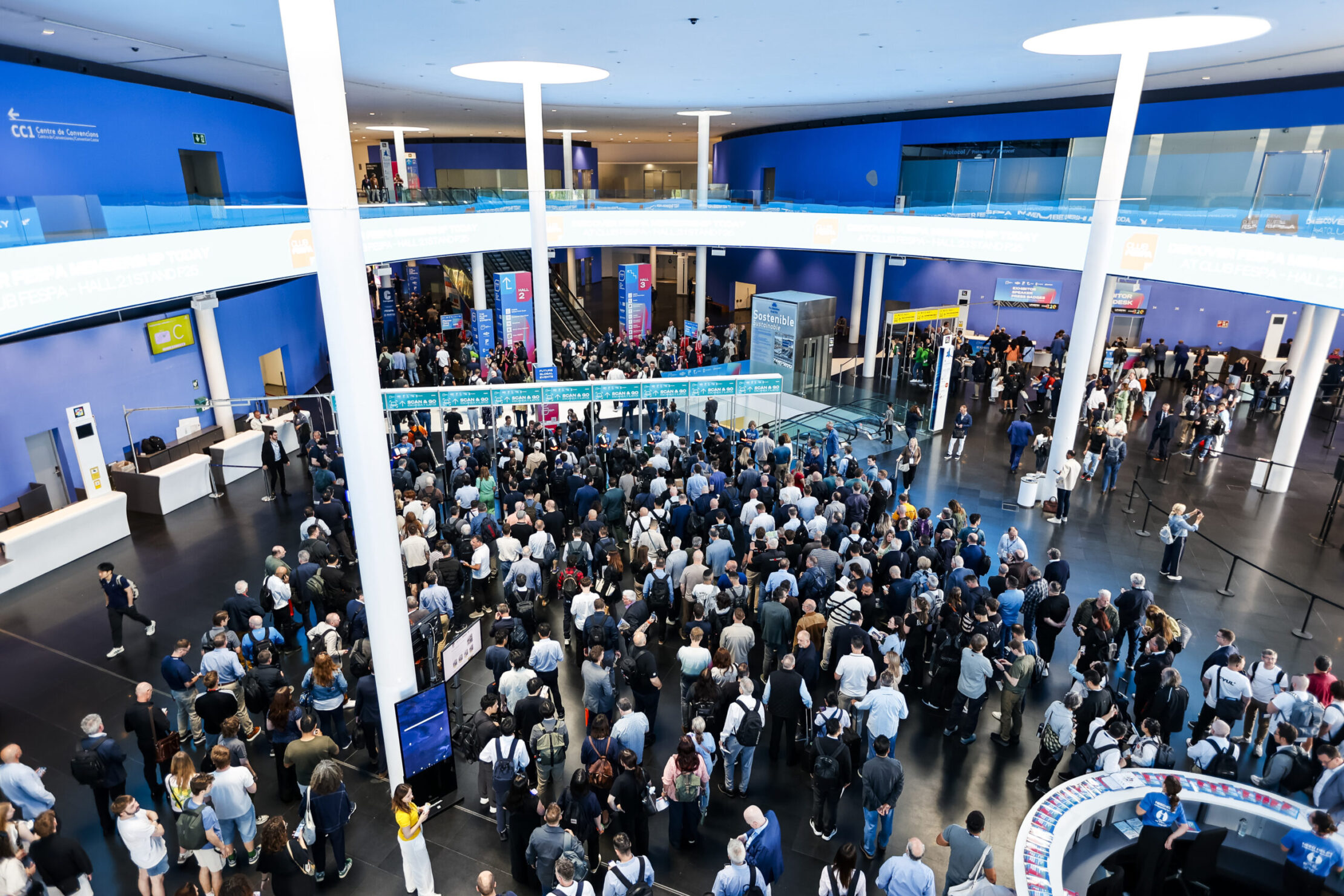
Spanish exhibitors highlight the event’s international reach, innovation, and business opportunities as the trade show returns to Spain.
Barcelona became the center of the international graphic arts industry with the hosting of FESPA Global Print Expo 2026. In this historic edition, for the first time, six events took place simultaneously at a single destination: FESPA Global Print Expo, European Sign Expo, Personalization Experience, WrapFest, Textile Printing, and Corrugated, bringing together the latest innovations in printing, signage, personalization, textiles, corrugated cardboard, and vehicle wrapping.
Visitors toured the fair’s two pavilions during the four-day event, which featured technology demonstrations, networking, and business opportunities. For many Spanish companies, FESPA’s return to Spain—after years of being held in other European countries—provided a strategic platform to gain international visibility and connect with new markets.
Innovation and International Expansion
Among the domestic exhibitors, the general sentiment was one of optimism. Antonio Belchi, from the Alicante-based company Ecotex, highlighted the international and professional profile of the visitors. “FESPA is always packed with people, and its attendees are the most professional,” he explained. The company presented Easybox, a modular lightbox system that requires no tools and is fully reconfigurable—one of its flagship products for this year’s event. “We expect to have a lot of visitors and make a lot of sales,” Belchi summarized.

Ecotex also took advantage of the trade show’s international setting to strengthen its presence in markets such as Portugal, France, and the United Kingdom. “We have a new product to launch, and this is the best place to do it,” said Belchi, who noted that FESPA remains the European trade show with the greatest draw for the industry.
From Málaga, the company Ádivin also spoke highly of the impact of the FESPA event in Barcelona. “It’s a unique opportunity we couldn’t pass up,” said Camilo González. The company arrived at the trade show with “very high” expectations and took advantage of the event to showcase new solutions, such as double-walled tents, custom counters, and new display formats.
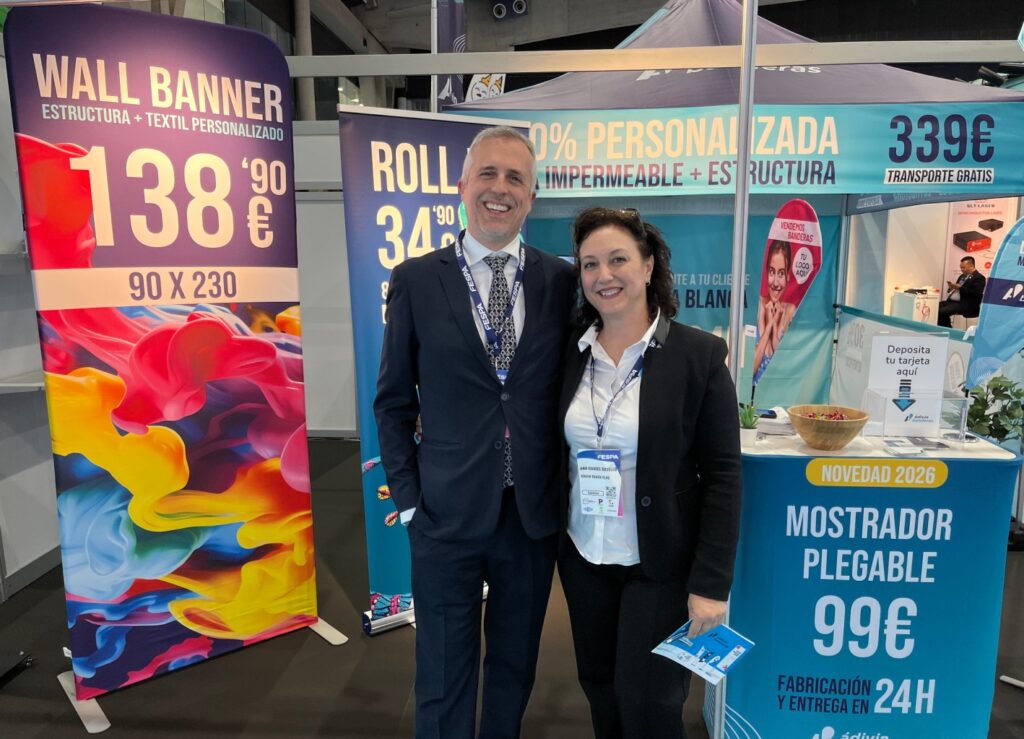
Ádivin, which specializes in rapid production and distribution throughout Europe, particularly highlighted the event’s international potential. “We are aware of the potential customer base at this trade show, which allows us to consider entering countries where we haven’t been present yet,” explained González.
New Opportunities for Spanish Manufacturers
Another Spanish company in attendance was VDK Visual, which specializes in the manufacture of flagpoles and flags. For Luis Vandekerckhove, the combination of industrial production and a local presence makes FESPA a strategic platform for both exports and the Iberian market. “It’s a win-win,” he explained. “It helps us both find distribution channels for our flagpoles and strengthen the domestic market for flags.”
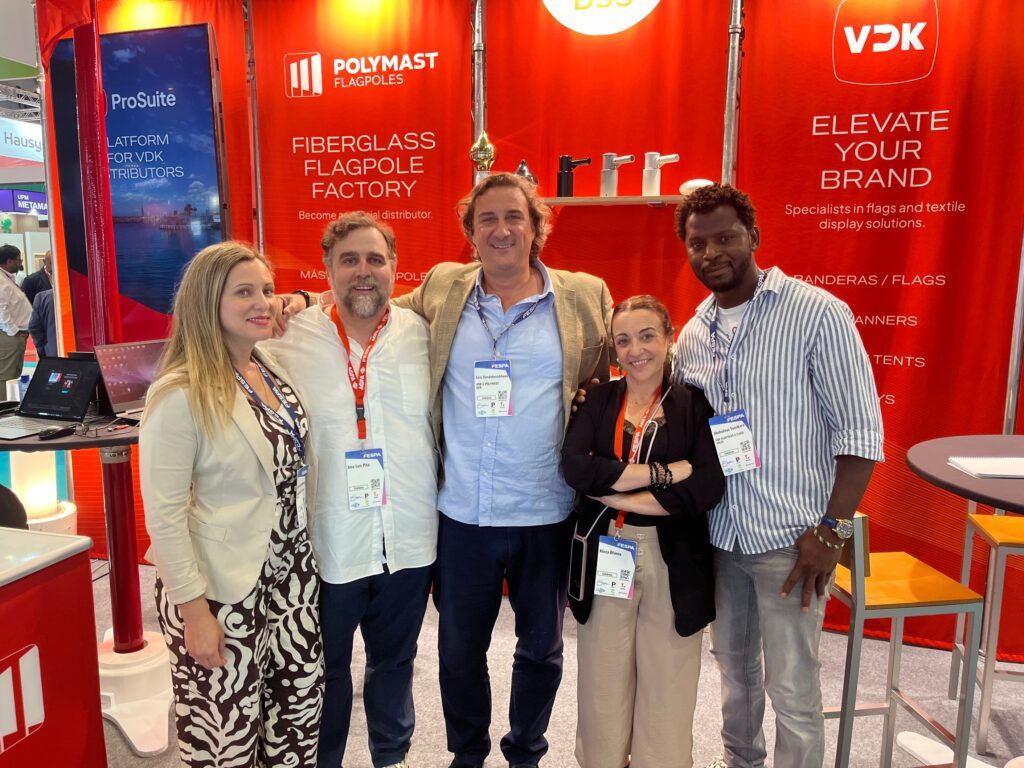
The company also highlighted the strong presence of international visitors, who were particularly interested in its fiberglass mast solutions. “A lot of people have come from outside Europe, and we’ve seen a high volume of traffic in that section,” Vandekerckhove noted. He also praised the fact that multiple events were held at the same venue, which encouraged interaction among different types of visitors and expanded networking and business opportunities.
One of the areas that drew particular interest during the trade show was Corrugated, which focused on corrugated cardboard and its applications in packaging, displays, and signage. There, Kongsberg presented its latest automated solutions for cutting and industrial production. Dimitri Van Garver, a company representative, noted that FESPA remains “the most important event” for the European market and emphasized the strategic importance of Iberia to the company.
Among the new products presented by Kongsberg, Ultimate stood out—an automated solution designed specifically for corrugated materials, capable of automatically feeding, cutting, and stacking. The company also introduced new inkjet marking tools for industrial identification and traceability, reinforcing the industry’s growing commitment to automation and production efficiency.
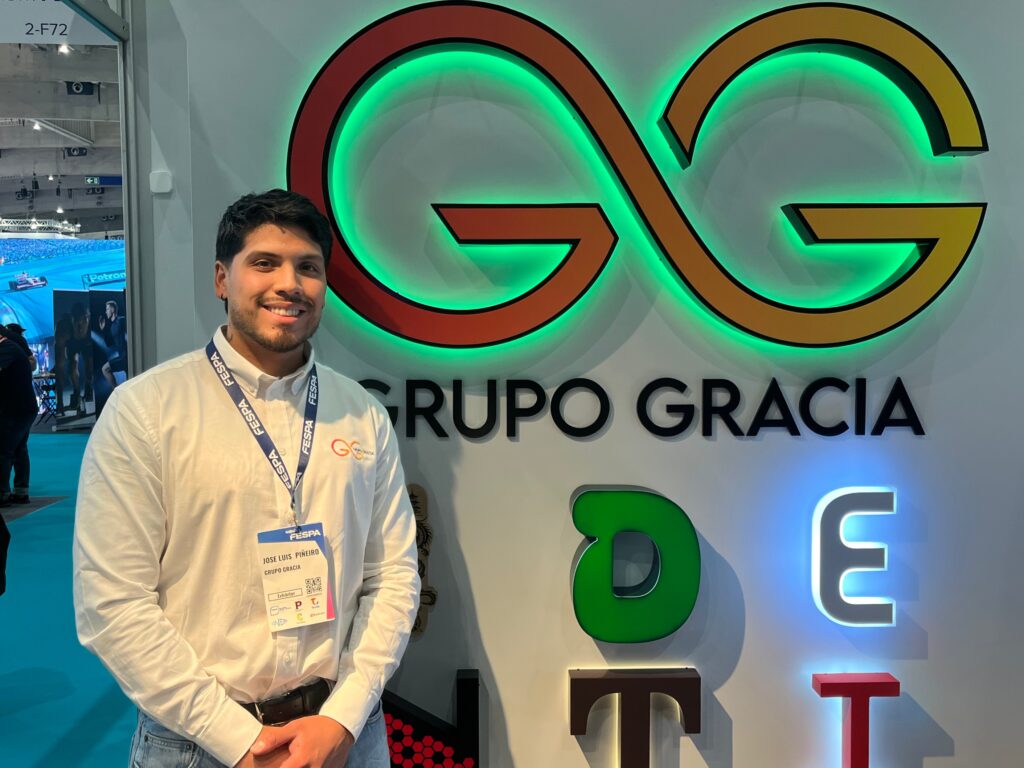
The trade show also served as a showcase for Spanish companies seeking to expand their presence both nationally and internationally. This is the case for Grupo Gracia, a manufacturer of dimensional letters based in Huesca, which participated as an exhibitor at FESPA for the first time. “We know how important this trade show is on an international level,” explained José Luis Piñeiro. “Our goal is to raise our profile much more nationally and even establish some international contacts.”
A gathering place for the entire industry
With six events taking place under one roof, FESPA 2026 underscored the growing convergence of printing, automation, packaging, personalization, and visual communication. Barcelona once again established itself as one of the industry’s leading international gathering places, bringing together innovation, business, and inspiration in a single venue.
Following Barcelona, FESPA has already confirmed that FESPA Global Print Expo 2027 will be held in Munich, Germany, further solidifying the itinerant and international nature of Europe’s leading event for the graphic arts and visual communications industries.