Driven by direct-to-film (DTF) technology, tactile surface effects and multi-layered embellishments are redefining garment decoration into premium territory. To capture this booming demand for personalised, high-value apparel, the industry must prioritise process stability, master workflow durability over cheap consumables, and leverage collaborative networks rather than trying to operate alone.
Walk into any apparel shop today and run your fingers across the garments on display. Chances are, the pieces that catch your eye – and your wallet – aren’t flat prints. They have texture. They have dimension. They feel like something. That tactile pull is no accident. It’s the leading edge of a transformation reshaping the entire garment decoration industry, and it formed the heart of a remarkable panel discussion that brought together some of the sharpest minds in the business.
The conversation made one thing abundantly clear: surface effects and embellishment are no longer the finishing flourish on a garment. They are becoming the main event.
Setting the Scene: Voices from Across the Supply Chain
What made this discussion so valuable was the breadth of expertise around the table. The panel, hosted by FESPA Textile Ambassador Debbie McKeegan, brought together perspectives from every link in the manufacturing relay race – because, as McKeegan rightly noted, “at every touchpoint of the relay race of manufacture, all of this wisdom and knowledge carries along the supply chain, and without it, we can’t move to seamless manufacture.”
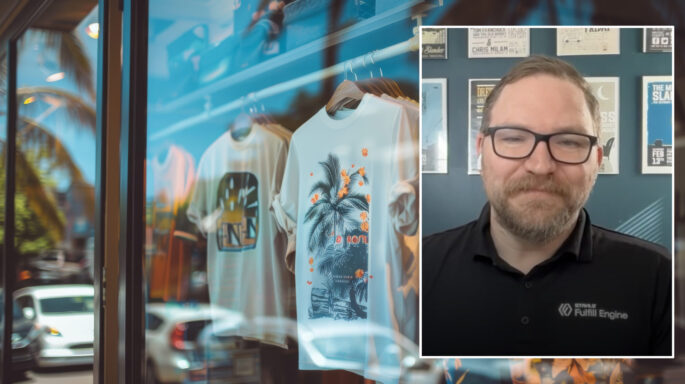
The lineup spoke to that ethos. Phil Oakley brought three decades of print experience spanning Kodak, HP and garment decoration, now focused on workflow automation. Jason Tompkins, Chief Digital Officer following his company’s Fullfil Engines acquisition by Stahls, offered the digital-native fulfilment view. Marco Pigatto of B-FLEX Italia and Niels Rask of NRConsulting added deep manufacturing pedigree, while Dan Savident of Cove.me contributed a materials-led perspective forged in heat transfer and photographic technology.
Together, they mapped out where the industry stands – and where it’s heading.
The Big Shift: From Niche Decoration to Mainstream Revolution
Ask anyone on the panel to name the single biggest market shift, and the answer came back with near-unanimous force: Direct-to-Film, or DTF.
The comparison drawn most often was to the analogue-to-digital revolution that transformed the signage industry two decades ago. As Niels Rask put it, “I think we’re seeing more or less the same as the sign industry did 20 years ago, where a lot of it was screen printing, and then the digital printer came, and they could print whatever on the vinyl and cut it.” That same trajectory is now playing out across textile decoration.
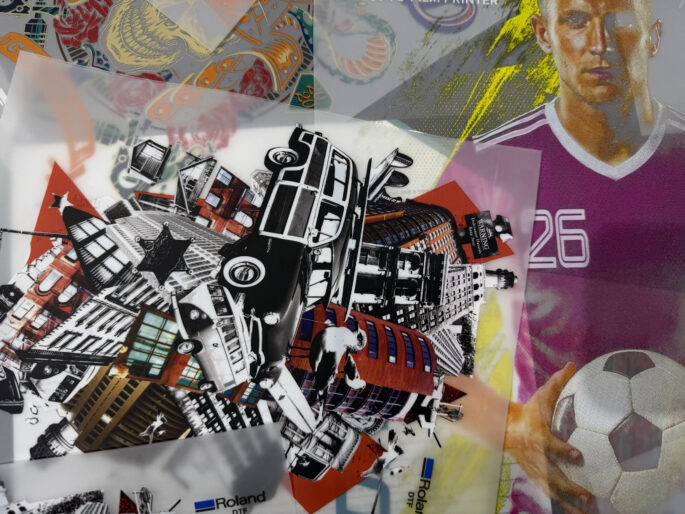
Marco Pigatto framed DTF as nothing short of a revolution – and explained precisely why it matters for embellishment. Where older heat transfer methods were constrained by the cutting blade, DTF removed that limitation entirely. “The DTF opened many more effective things,” he noted. “You can do very small details, and you can do that with a huge number of colours, which before it was impossible even to imagine.”
The implications run deeper than technical capability. Rask highlighted a striking commercial shift: where once over half his transfers were single-colour, the arrival of DTF changed that almost overnight. Customers now expect full-colour, detailed, “real” logos rather than a single block of white or black. That, in itself, is added value and it points to where the market is going.
Premiumisation: The Consumer Demand Driving Innovation
Perhaps the most compelling concept to emerge from the discussion was what Jason Tompkins called “premiumisation, the idea that on-demand production, once synonymous with low-quality basics, is now elevating to genuinely premium territory.
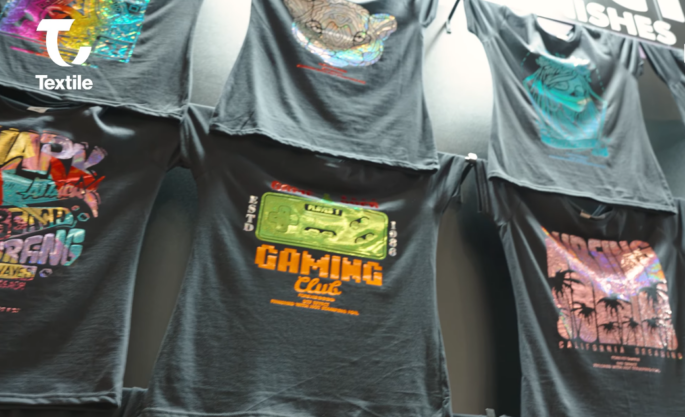
Tompkins shared a telling anecdote from a recent visit to Disney World with his children. Every shirt that caught their attention had something extra: “We either had puff, we either had multimedia. There was something unique about every one of those shirts.” The flat printed shirt held little appeal. The textured, layered, tactile pieces did.
This is the crux of the matter. As Tompkins observed, the value lies in making a garment feel “truly unique and personalised” a hyper-personalisation that turns a product into something that is unmistakably the customer’s own.
Oakley sharpened this point by tracing it back to a generational and cultural shift. The driver, he argued, isn’t merely the technology – it’s the context for change: e-commerce, social media and an audience that increasingly gravitates towards communities and niches rather than the mainstream. As he put it, there’s a reason no single print-on-demand platform dominates: “Communities and niches are what are exploding rather than the mainstream, and that’s going to drive an even further demand for personalisation, for different effects.”
In short, the modern consumer’s appetite for the unique is the engine of innovation across the entire industry.
The Tactile Frontier: Layered Effects and Mixed Technologies
The real artistry – and the real added value – lies in combining technologies. The panel explored how transfer, DTG and DTF can be layered and mixed to create products with genuine depth and dimension. These aren’t simply prints on a surface; they’re constructed effects, built up through multiple processes and applications.
This is where embellishment moves from decoration to differentiation. McKeegan referenced garments retailing at extraordinary prices—a UV-printed T-shirt at $1,000, limited-edition drops that generate genuine scarcity and desire. The technical sophistication beneath these products is considerable, but so is the commercial opportunity for businesses prepared to master it.
Yet the panel was refreshingly candid about the challenges that come with this territory.
The Honest Truth: Why Consumables and Process Matter
If there was a single piece of hard-won wisdom the panel wanted the audience to absorb, it was this: do not choose your consumables on price or print speed alone.
Dan Savident offered a clear-eyed assessment of where DTF still needs to mature. Speed remains a constraint, partly because the technology borrows from signage rather than being purpose-built for transfers. More significantly for the embellishment-hungry market, traditional films can leave a wax residue that prevents over-embellishment – precisely the layered effects consumers increasingly want.
Then there’s the question of durability. Savident pointed to the football and team-sports market – heat transfer’s largest -where dye migration on sublimated fabrics and the longevity demanded of a replica kit (which must last the two years until the next kit change) remain real hurdles for DTF. His verdict was measured but optimistic: DTF will get there, but the industry must work through these stages to truly delight the customer.
The manufacturers echoed this with practical urgency. Rask stressed machine stability above all: “Stability is very important. You lose a lot of money if you stand still for half a day or one day.” DTF printheads, he noted, weren’t originally built for the inks now being run through them and reliability separates the operators who succeed from those who struggle.
Pigatto reinforced the point on durability from the customer’s perspective. The very first question his distributors ask is how many washes a garment will withstand before the colour begins to fade. And crucially, washability isn’t determined by film alone – it depends on the entire process: the quality of the print, the speed, the temperature, the dwell time of the press, and the fixation in the oven. As Rask summarised, “Time and temperature is very important.” Get the process wrong, and even the finest film will disappoint.
The lesson for businesses is stark. McKeegan put it plainly: only around 10% of dissatisfied end-users complain, meaning a poor consumable choice can quietly erode 90% of your reputation and future revenue before you even know there’s a problem. Due diligence across the entire workflow isn’t optional – it’s survival.
Collaboration as Strategy, Not Convenience
A consistent thread ran through the entire discussion: no single business can do it all anymore.
Tompkins described how his own platform grew not by buying every machine, but by partnering with specialists first and bringing production in-house only once volume justified it. “Instead of taking that huge leap when you’re unsure, work with a partner,” he advised. The trend he sees most clearly across the industry is “more connected networks, people being able to work together.”
Oakley was even more emphatic: “I think you’re going to fail without it today. Things are moving so fast that you can’t know everything. It’s impossible.” His prescription was elegantly simple – focus on your core competence, collaborate with those who know better, and you’ll make fewer mistakes on the journey.
The AI Question: Accelerator and Equaliser
No contemporary industry conversation would be complete without addressing artificial intelligence and the panel handled it with welcome nuance.
Oakley described AI as both an accelerator and a source of confusion. It’s becoming remarkably easy to adopt and experiment with, which means businesses will inevitably make mistakes along the way. His advice mirrored his broader philosophy: focus on core competence, collaborate, and proceed thoughtfully.
Tompkins drew a vital distinction. While AI has made software easy to build, infrastructure remains hard. “AI can’t replace the human connection that we build, and it certainly can’t replace infrastructure that you build from trusted partners.” It’s a powerful reminder that in a manufacturing industry, the physical realities of quality, consistency and relationships cannot be shortcut by code.
Sustainability: The New Brand Advocate
Underpinning the entire conversation was an awareness that today’s consumers – and tomorrow’s – are watching how businesses behave. The shift towards full-colour, longer-lasting, higher-quality garments isn’t only about aesthetics; it’s also about reducing waste and creating products that endure.
The message was that sustainability has become a genuine business driver, sitting just behind personalisation in importance to the emerging generation of brand advocates. Businesses don’t need to be perfect, but they do need to be making a visible, documented, honest effort to do the right thing. That effort is increasingly what customers reward.
Key Takeaways and Action Points
For businesses looking to capitalise on the surface effects and embellishment revolution, the panel’s wisdom distils into several clear actions:
- Embrace texture and dimension. Flat prints no longer command premium value. Invest in the capability to deliver puff, layered effects and mixed-technology applications that consumers can feel.
- Choose consumables on longevity, not price. Test for washability, durability and over-embellishment compatibility. Remember that most dissatisfied customers won’t complain – they’ll simply leave.
- Master the whole process. Washability and quality depend on the entire workflow: film, ink, temperature, dwell time and fixation. There are no shortcuts.
- Partner before you purchase. Don’t buy equipment for capabilities you can’t yet justify. Work with trusted specialists and bring production in-house only when volume warrants it.
- Adopt AI thoughtfully and quickly. It’s a powerful equaliser that levels the playing field between large and small operators. Use it to enhance your core competence – but never expect it to replace infrastructure or human relationships.
- Make sustainability visible. You don’t need to be perfect, but you do need to demonstrate genuine, documented effort. The next generation of customers rewards brands that are seen to be doing the right thing.
- Treat collaboration as strategy. In a market moving this fast, no business can know everything. Focus on what you do best and build a network around the rest.
A Word of Thanks
The richness of this discussion was made possible only by the generosity of those who shared their hard-won insight. Our sincere thanks go to Phil Oakley, Jason Tompkins, Marco Pigatto, Niels Rask and Dan Savident for so openly sharing their experience, their candour and their vision for the future of the textile industry.
Their willingness to discuss not only the triumphs but the genuine challenges of this fast-moving sector is precisely the kind of knowledge-sharing that moves the whole industry forward.
The surface, it turns out, is just the beginning. The businesses that thrive will be those that look beneath it – mastering the process, the partnerships and the principles that turn a simple garment into something truly worth wanting.
Discover the latest content on garment printing