Visit Textile 2026
Textile 2026, launching alongside FESPA Global Print Expo in Barcelona (19–22 May 2026), is where function, print, and production converge to shape the future of textiles.
While higher productivity usually lowers costs, single-pass textile printing faces unique challenges. High pigment ink prices and complex engineering have slowed adoption compared to multi-pass systems. Although single-pass offers speed and sustainability, many producers currently prefer the flexibility, redundancy, and lower running costs of multi-pass printers for high-value apparel.
Right across all sectors of digital print, including large format and textile printing, there has been a general assumption that higher productivity would lead to reduced costs. This implies that those print service providers that invest in higher volume presses can hoover up more work. That might mean taking work from other digital print service providers, or competing directly against conventional printing companies if the costs are low enough to make longer print runs viable.
In theory this should apply equally to all sectors including textile printing. But in practice this has not always been true for textile printing. This logic – of higher productivity leading to lower costs – drove the development of single pass inkjet presses. And in the commercial print market such single pass inkjet presses have gone from strength to strength and replaced multiple toner printers and even some offset presses.
But the picture has been far more nuanced as far as single pass textile printers are concerned. Several major textile printer vendors do offer single pass textile machines and there are quite a number installed worldwide. But for the last few years the rate of installations has slowed to a trickle leading most vendors to quietly suspend the manufacturing and sales of these presses. There are a number of factors behind this but it mostly comes down to ink prices.
Single pass printers can churn out an enormous volume of printed fabric. That in turn means that they are consuming a lot of ink, and it is the potential ink sales that attracted the vendors to invest in developing these machines to start with. In theory, this higher ink volume should lead to lower ink prices per litre, a saving that can be passed on to customers.
However, a single pass printer only really makes sense if it’s configured with pigment ink, which is the most expensive of the various types of textile ink. The attraction of pigment ink is that it will work with a wide range of different fabrics so that it can satisfy all the various print jobs that a service provider might want to throw at it.
In addition, there’s no need for any further processing steps to finish the print once the fabric has been through the printer. Other types of ink still require washing, steaming and ironing to fully process the ink, which slows down the whole production process and eliminates the major speed advantage of using a single pass printer in the first place.
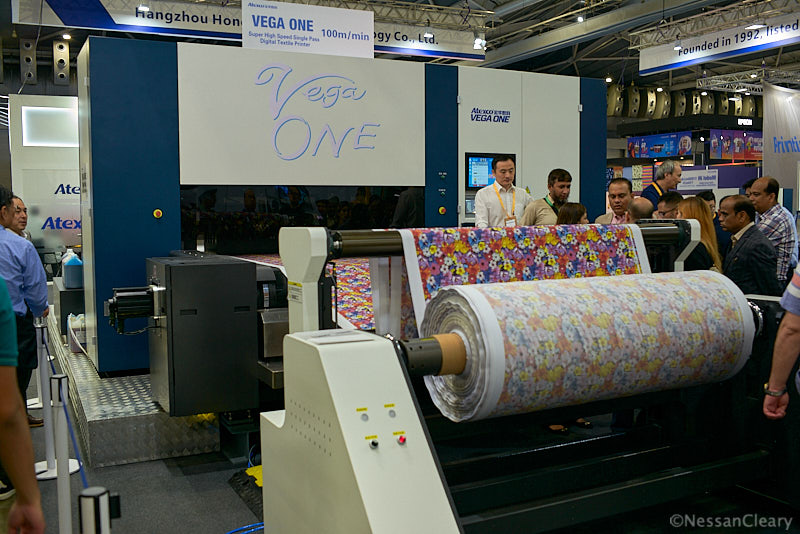
The market expectation is that the cost of pigment ink will eventually come down but the prices have remained stubbornly high. This is largely because pigment ink is a much more highly engineered ink that relies on keeping the pigment particles in suspension. In contrast, other textile inks such as reactive are dye-based and relatively cheap to produce. The sheer volume of ink that a single pass printer can get through means that even small differences in the price per litre have a big effect on the overall profitability.
In theory, using pigment ink should lead to much faster production, especially with a single pass printer, and this should translate into much faster time to market for the finished fabrics. However, very few segments within the printed textile market are set up to take advantage of this. Most production is still concentrated in Asia, typically India, Pakistan, Bangladesh and China. That in turn means there’s always going to be a delay in shipping those products to western markets, and that delay is already factored in to the marketing and sales chain. The obvious way to get around this delay is to move the production closer to the destination markets, and this is happening, but not at the sort of volume that would justify a high number of further installations of single pass printers.
That said, single pass printers have really scored when textile producers need to rapidly accelerate production, such as to satisfy seasonal trends, particularly around summer or winter fashion cycles but this kind of burst production is not sustainable throughout a whole year. The difficulty then becomes keeping a consistent level of work outside of those cycles to justify the cost of installing the printer.
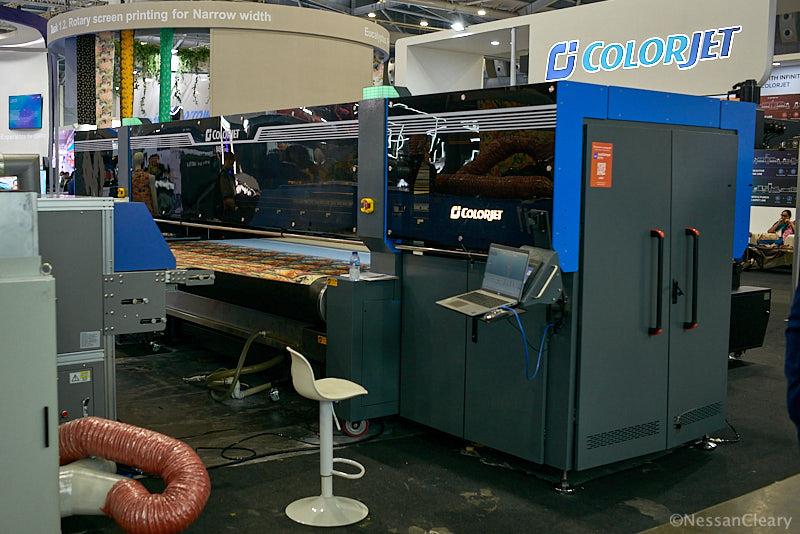
The alternative is multi-pass or scanning printers. There are a number of advantages to these but the most important is that they are much cheaper than single pass machines and compact enough to allow textile producers to run several printers side by side. That gives redundancy and means that each printer can be configured with a specific ink set, such as reactive in one for printing to natural fibres, acid for printing to silk in another and so on. That approach helps textile producers maximise the print quality for the higher value apparel products, whilst making use of the cheaper inks. It allows producers to cope with sudden bursts in production by splitting the work across multiple machines, while at the same time allowing producers to plan for a more consistent volume of work.
Despite all this, in the last couple of years a number of Chinese vendors have begun offering single pass printers. For now these are mainly going to the Asian market, particularly in China, where there are a great many textile producers all searching for ways to differentiate themselves. That includes those producing printed fabrics for the export market, knowing that western brands prize sustainability and will pay a premium for the use of pigment inks that they can market on such environmental concerns. The print quality is easily good enough for home decor products such as soft furnishing and curtains and in some cases is also able to challenge for apparel markets.
Both the print machine manufacturers and the textile producers are hoping that each single pass machine can take this export work from either rotary screen presses or several multi pass printers. The gamble of course is that in doing so, they can negotiate better terms on ink prices based on high volume usage for each printer but it may take several years to see if this strategy will pay off. And if this strategy does pan out then it will lead to a bigger question – what is the impact on textile print production within Western countries who are still hoping that digital printing will lead to more textile production being re-shored back to the US and Europe.

Textile 2026, launching alongside FESPA Global Print Expo in Barcelona (19–22 May 2026), is where function, print, and production converge to shape the future of textiles.