Automation is redefining textile printing, enabling faster production with higher quality and adapting to the demand for customization.
The garment printing industry is undergoing rapid transformation driven by process automation. From file preparation to final finishing, automated solutions are helping printers improve operational efficiency, reduce errors, and respond to a market that is increasingly focused on short runs and on-demand production.
In a landscape marked by the growth of e-commerce, fast turnaround, and mass customization, automation is no longer a competitive advantage but a strategic necessity for scaling up without sacrificing quality.
How does automation affect garment printing?
Automation is now integrated into multiple stages of the workflow:
- Automated prepress system with software that prepares files, manages colors, and optimizes layouts without manual intervention.
- Loading and unloading garments using robotic systems that reduce processing time and operational effort.
- Direct-to-garment (DTG) and DTF printing, with automatic adjustments based on the type of garment, color, and ink.
- Smart drying and curing, which optimize temperature and energy consumption for each job.
- Sorting and packaging, integrated into continuous production systems.
- These improvements make it possible to maintain consistent production even during periods of peak demand.
Key Technology in Automated Workshops
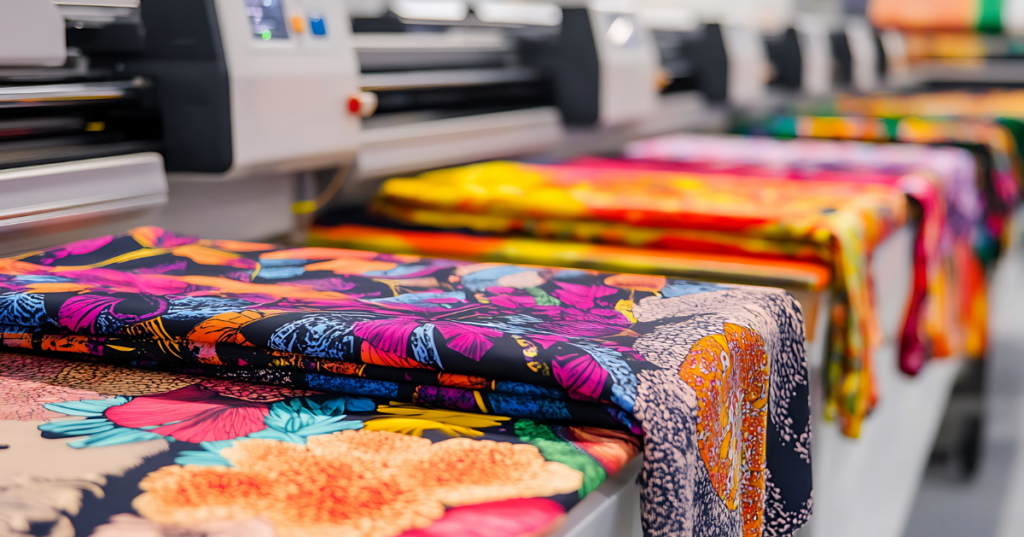
Manufacturers such as Kornit Digital, ROQ, M&R, Epson, and Brother are developing solutions that combine automated hardware with advanced software. Workflow management and automation platforms—such as Enfocus Switch, MIS systems, or AI-based tools—enable online orders to be connected directly to production, reducing turnaround times and human error.
Connectivity and real-time monitoring also facilitate quality control and traceability for each garment.
Clear Benefits for Printers
Automation in garment printing offers immediate benefits:
- Faster production without increasing staff.
- Consistent quality, even in large volumes.
- Reduced waste of ink, fabric, and energy.
- The ability to scale customization without sacrificing profitability.
- In addition, it improves working conditions by reducing repetitive and manual tasks.
Automation and Sustainability
More precise processes mean fewer errors and less rework. This translates into a more sustainable operation, especially when combined with water-based inks, print-on-demand, and efficient resource management. Automation also facilitates the adoption of responsible production models aligned with the expectations of brands and consumers.
Automation is laying the groundwork for smarter, more flexible, and more sustainable garment printing. For industry professionals, investing in these technologies means being prepared for a market that demands speed, customization, and efficiency—all at the same time.