Functional printing is redefining the role of textiles beyond fashion.
Smart textiles and functional printing are redefining the role of printed textiles, expanding their applications far beyond fashion design and opening up new opportunities for the graphic arts industry.
For years, textile printing has been closely linked to the fashion and apparel industry. However, looking ahead to 2026, the market’s most dynamic growth is in smart textiles and functional printing, where technology, advanced materials, and digital printing converge to create active, connected surfaces with specific functions.
From healthcare and sports to architecture, the automotive sector, and industry, printed textiles no longer merely convey aesthetics; they also measure, protect, react, and provide functional value, positioning printing as a key player in cross-sector innovation.
What are smart textiles and functional prints?
Smart textiles incorporate additional functionalities into the fabric, such as sensors, electrical conductivity, thermal properties, or the ability to respond to the environment. Functional printing, on the other hand, uses special inks and coatings—such as conductive, antibacterial, thermochromic, or photoluminescent ones—to give the textile new capabilities.

High-precision digital printing makes it possible to apply these features in a localized, scalable, and increasingly sustainable manner, paving the way for personalized products with high added value.
Key Applications Beyond Fashion
Advances in these technologies are driving new applications in strategic sectors:
Health and Wellness: Textiles printed with sensors to monitor vital signs, therapeutic garments, and antibacterial surfaces for clinical settings.
Sports and Performance: athletic apparel featuring thermal regulation, moisture management, and integrated motion analysis.
Architecture and interior design: curtains, upholstery, and textile coverings with acoustic, thermal, or light-control properties.
Industry and occupational safety: fabrics that are fire- and chemical-resistant, or that feature high-visibility printed markings.
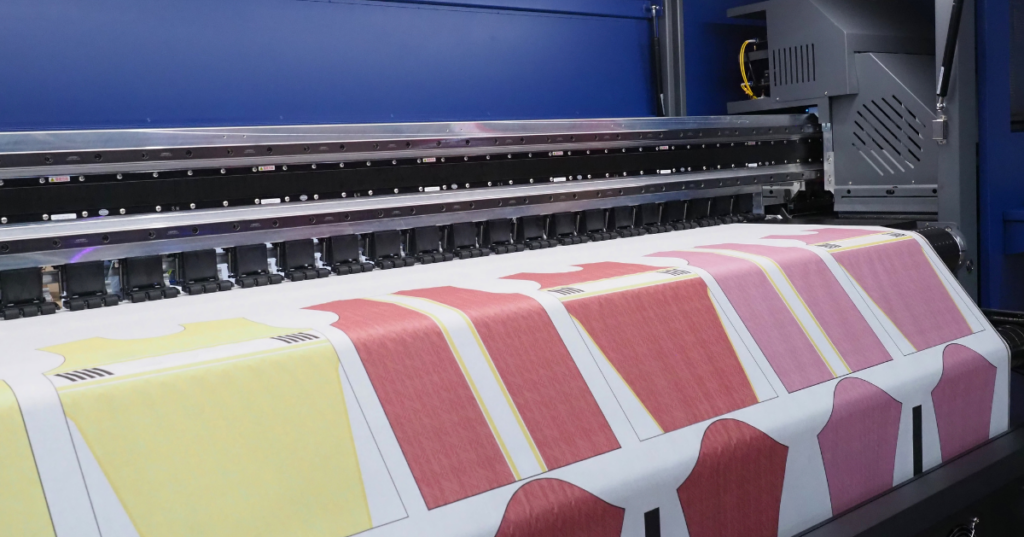
These applications turn printed fabric into a functional component of the final product, rather than just a decorative element.
Looking Ahead to 2026
By 2026, smart textiles and functional printing will solidify their role as one of the most significant drivers of innovation in the graphic arts industry. Beyond fashion, the future of printed textiles will be smart, connected, and performance-oriented.
For the FESPA community, this change represents a clear invitation: to rethink the potential of textile printing and explore new frontiers where design, technology, and function converge.
Textile: The Meeting Place for the Future of Printed Textiles
These advancements in smart textiles and functional printing will play a key role at Textile 2026, the new event from Textile From FESPA, which will be held alongside FESPA Global Print Expo in Barcelona from May 19 to 22, 2026. Designed as a platform dedicated to the global textile printing community, it will bring together the industry’s leading players in an environment where function, printing, and production converge, driving growth in the textile sector.