Plotter films remain a core product in sign-making. Which trends and products will matter in 2026?
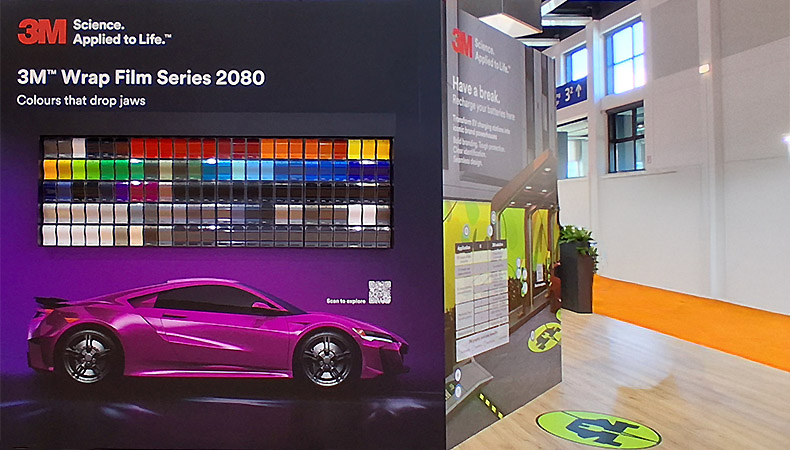
3M booth with Plotter films for vehicle wrapping at FESPA Berlin 2025. Photo: S. Angerer
What Are Plotter Films: A Definition
Plotter films are self-adhesive materials that are cut into individual shapes and lettering using cutting plotters. They are usually coloured films made from PVC or polymer blends.
Plotter films offer high durability and weather resistance. Manufacturers such as Orafol,3M, Avery Dennison, Hexis and Grafityp shape the market with a wide range of colours, finishes and adhesive technologies. This article focuses exclusively on unprinted plotter films.
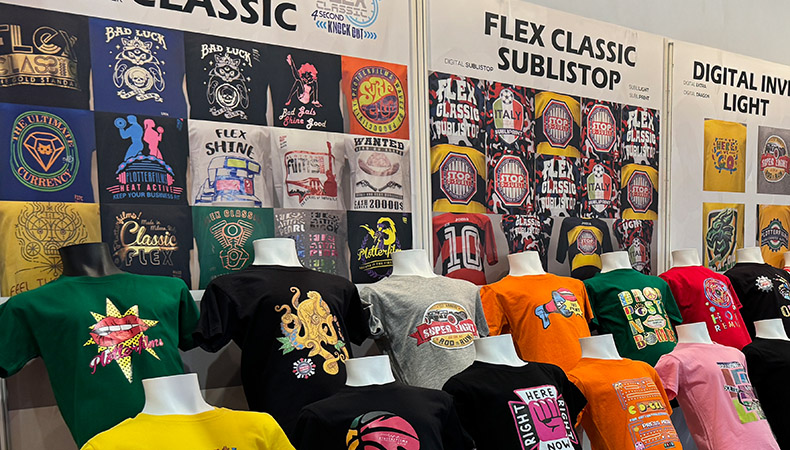
Plotter films are also used to decorate T-shirts. Photo: S. Angerer
Plotter Films for Textile Decoration
In addition to traditional applications on glass, metal or plastic, plotter films have been established for textile decorations, as Flex, Effect and Flock films with heat-activated adhesives are used for lettering on T-shirts and other garments. Each year, companies such as Stahls Europe introduce new materials to the market. These are increasingly popular not only among printing and advertising professionals, but also among a growing community of hobbyists and small businesses.
Demand for personalised textiles continues to grow, particularly for Merchandise and sportswear, making these markets especially attractive for sign-makers.
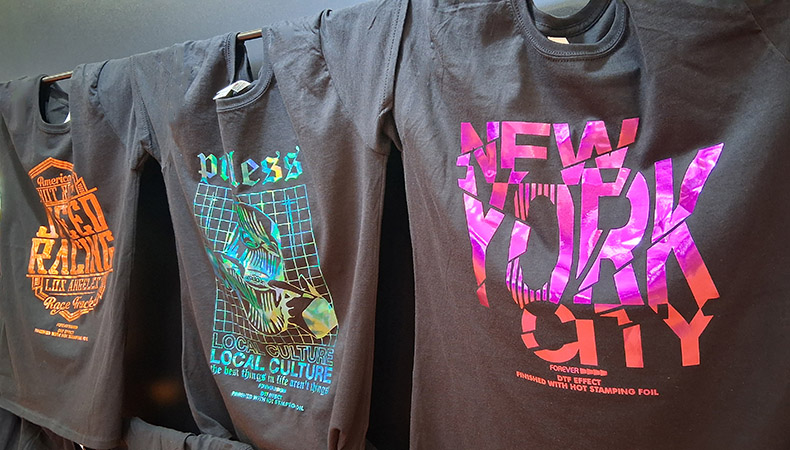
In recent years, Plotter films for textile applications have come under pressure from various ‘No Cut’ films, for example from Forever GmbH. The motif is printed in a single colour using a toner printer (e.g. from Oki), and then coated in a heat press coated with a colour and effects layer as well as with a heat-activated adhesive. Only the printed areas are transferred, eliminating the often-time-consuming steps of cutting and weeding required for traditional plotter films.
Recently, No-Cut film for DTF prints has also become available, another competition for the traditional Plotter film. Foto: S. Angerer
Technological Solutions and Innovations in Plotter Films
Adhesive technology has advanced significantly in recent years. Modern Plotter films feature air channel structures that allow bubble-free application.
The films are also easier to reposition. Full adhesive strength only develops after a few hours or at a certain temperature, making it easy to correct any mistakes.
Progress in graphic software in recent years has also greatly simplified the processing of Plotter films. Cutting plotters requires vector data, which for many years had to be created manually or edited meticulously. Today, vectorization results are often so good that automated cutting paths can be used without any manual adjustment.
Adobe Illustrator even offers the ability to generate editable vector graphics using only prompts in its latest version.
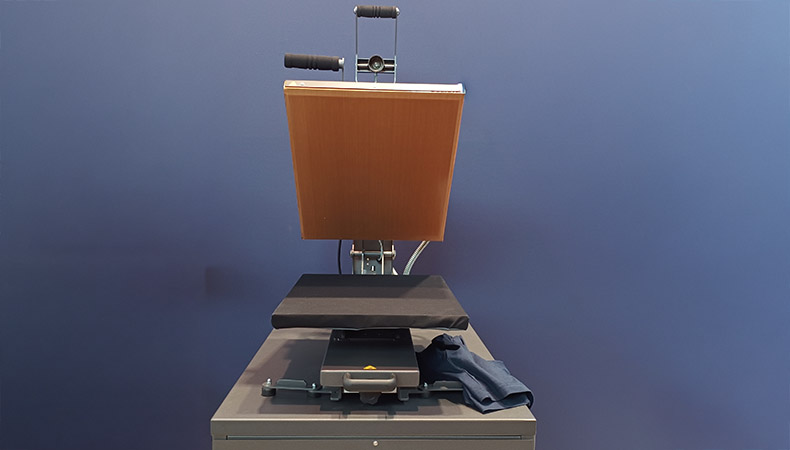
A heat press is essential for decorating T-shirts with Plotter film. Photo: S. Angerer
Plotter Films: An Outlook
Plotter films remain an indispensable part of sign-making due to their robustness, versatility and wide range of colours and effects.
Print Buyers are increasingly indifferent to the exact technologies used for their application. As a result, hybrid projects combining digital printing, Plotter films and even screen printing are becoming more and more common.
The use of Plotter films on textiles has changed again with the advent of DTF technology, as films that no longer require weeding are now available for use with DTF technology, and are expected to gain further momentum in the coming years.
PSPs and sign-makers should therefore pay close attention to trends like sustainable materials, innovative adhesive technologies and hybrid applications to remain competitive.
Discover Textile 2026
Textile 2026, launching alongside FESPA Global Print Expo in Barcelona (19–22 May 2026), is where function, print, and production converge to shape the future of textiles. Visitors can purchase super early bird tickets for €55 until 20 April by using the code FESG601.